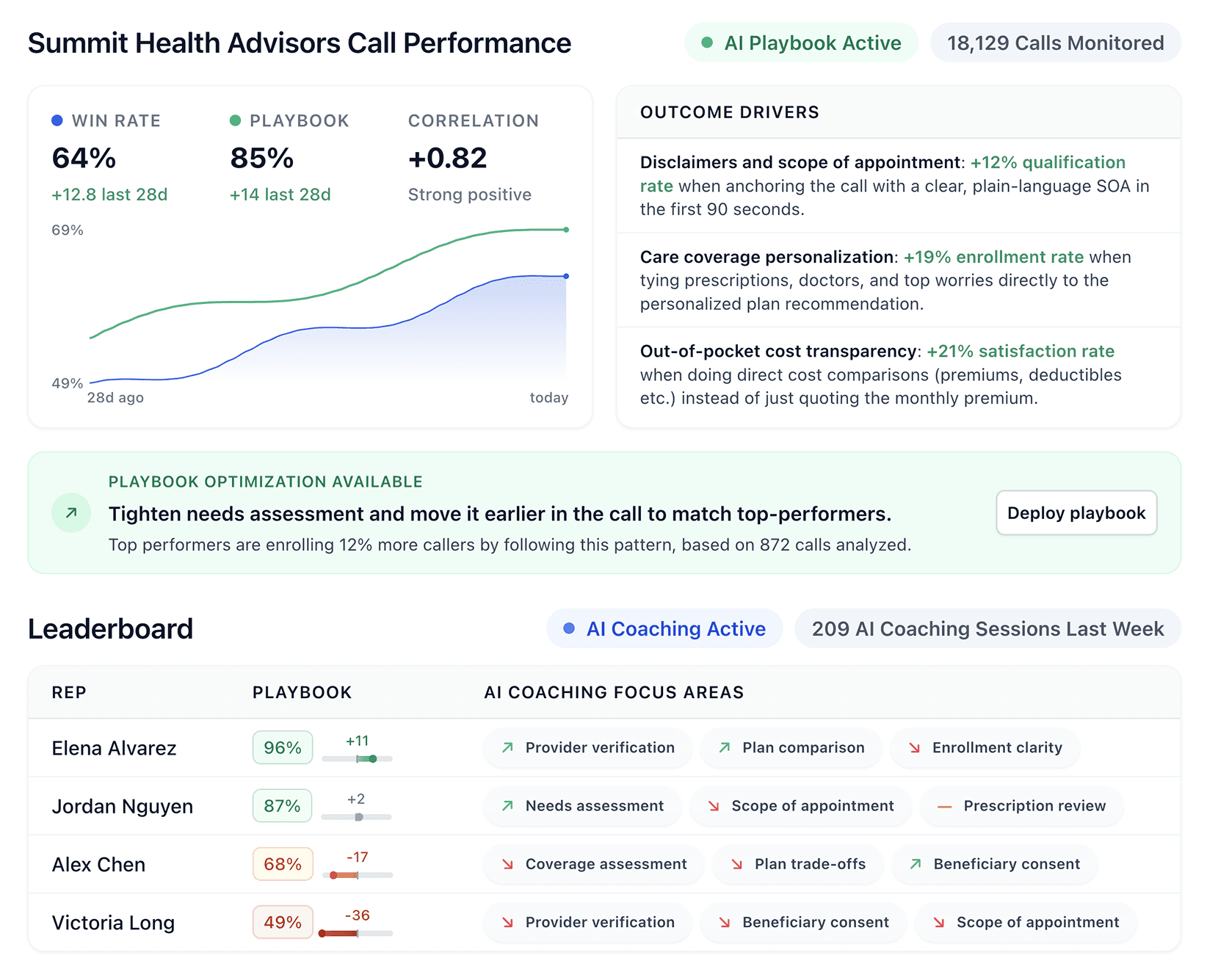


Genesys vs Zendesk depends on whether you need contact center infrastructure or support ticketing. We break down both below, plus how Alpharun layers onto Genesys to turn your best reps' calls into coaching for the whole team.
Genesys vs Zendesk vs Alpharun: Quick answer
Contact center teams often evaluate both Genesys and Zendesk when building their customer communication stack.
Genesys runs voice operations, call routing, and workforce management.
Zendesk tracks support tickets across email, chat, and social media.
Alpharun sits on top of your contact center to add sales coaching intelligence.
Key differences: Genesys powers the phone infrastructure. Zendesk organizes the support queue. Alpharun turns your best reps' behaviors into coaching for the whole team. (See our full list of alternatives to Genesys here).
Genesys vs Zendesk vs Alpharun: At a glance
Aspect | Genesys | Zendesk | Alpharun |
Primary focus | Contact center infrastructure | Customer support ticketing | AI sales coaching layer |
Starting price | $75/user/month | $19/agent/month | Custom pricing |
Best for | High-volume voice operations | Multi-channel support teams | Scaling top performer behaviors across every rep |
How they connect | Routes and manages calls | Manages support tickets | Integrates with Genesys to add coaching intelligence |
Sales coaching | Custom playbooks from your actual winning calls | ||
Call routing | Advanced predictive routing | Basic call handling | |
Workforce management | Built-in forecasting and scheduling | Sold separately | |
Ticketing system | Limited | Core feature |
What is Genesys?
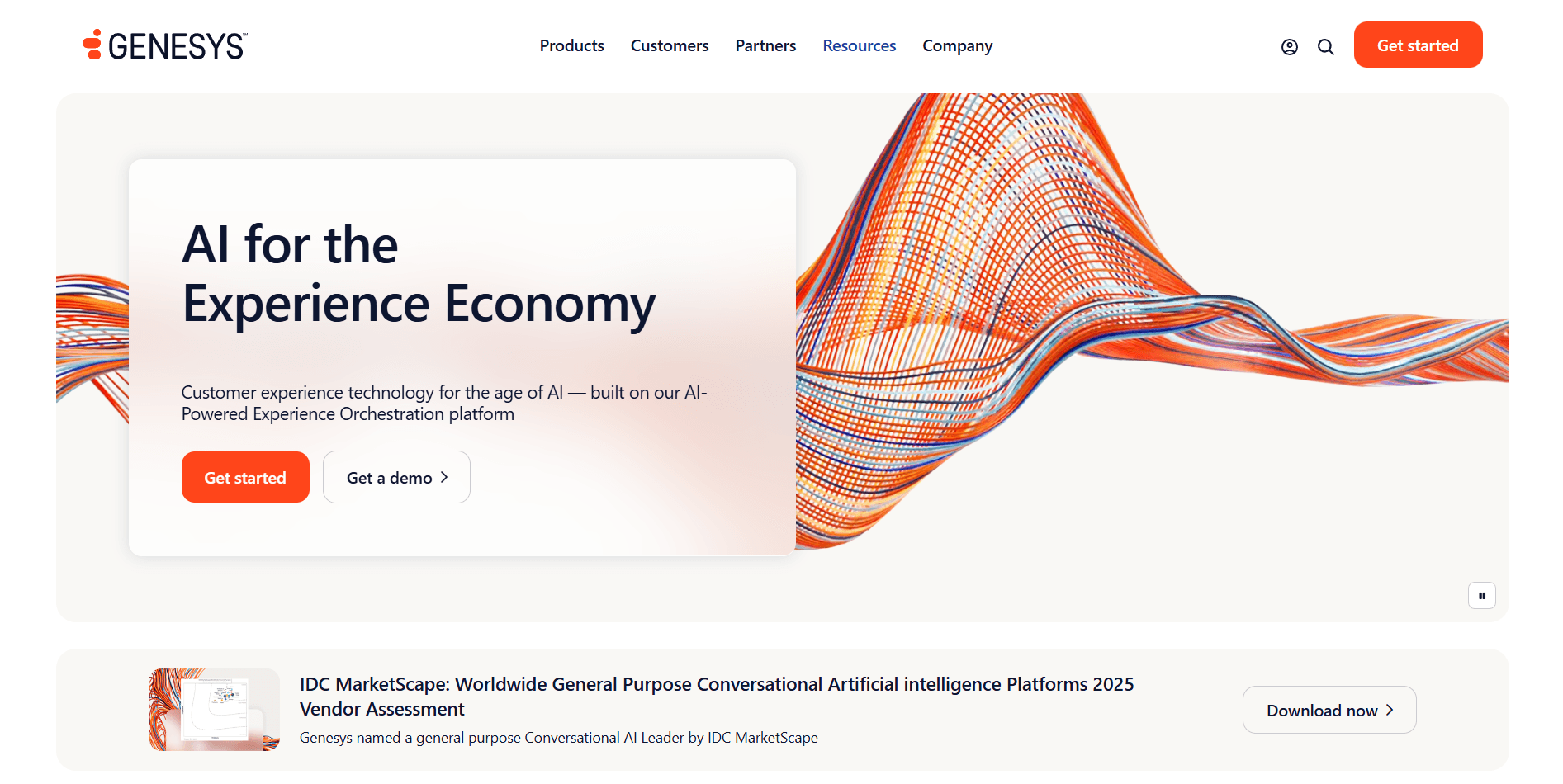
Genesys is an AI-powered contact center platform that manages customer calls, emails, chats, and social media messages.
The platform has two main products: Genesys Cloud CX handles the full contact center stack. Genesys Cloud EX focuses on workforce engagement management.
Genesys routes calls to the right agents based on skills and availability. It records interactions, tracks metrics, and provides analytics on team performance.
The platform connects with over 600 apps through their AppFoundry Marketplace. This includes CRMs like Salesforce, HubSpot, and Microsoft Dynamics.
What is Zendesk?
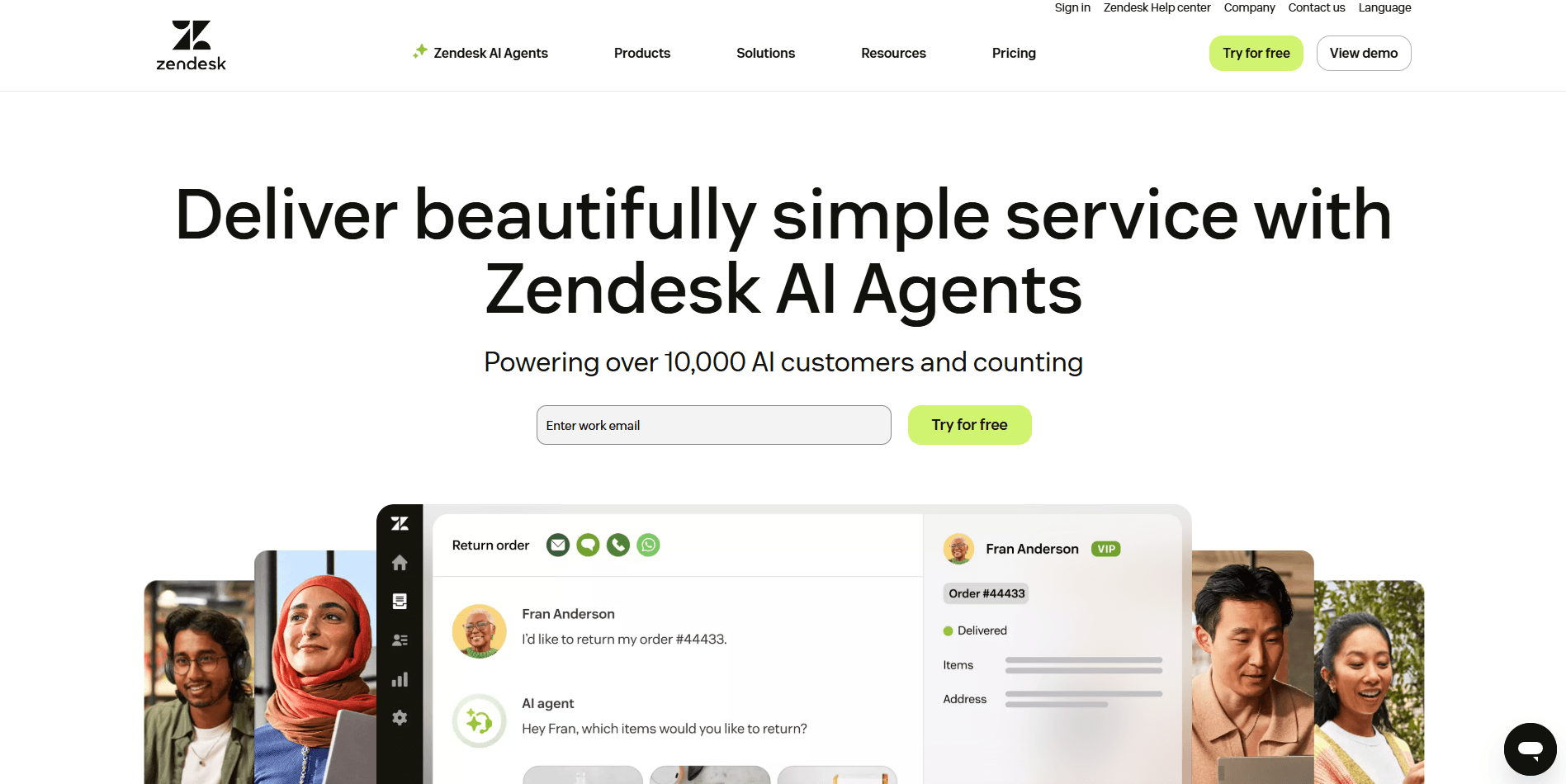
Zendesk is a customer service tool that puts email, chat, social media, and phone support in one system.
The platform tracks customer requests through a ticketing system. Agents see all messages in one place. This keeps communication organized and helps teams give consistent service.
Zendesk connects with over 1,500 apps in their marketplace. Teams can pull customer data from CRMs, e-commerce platforms, and other business tools.
What is Alpharun?
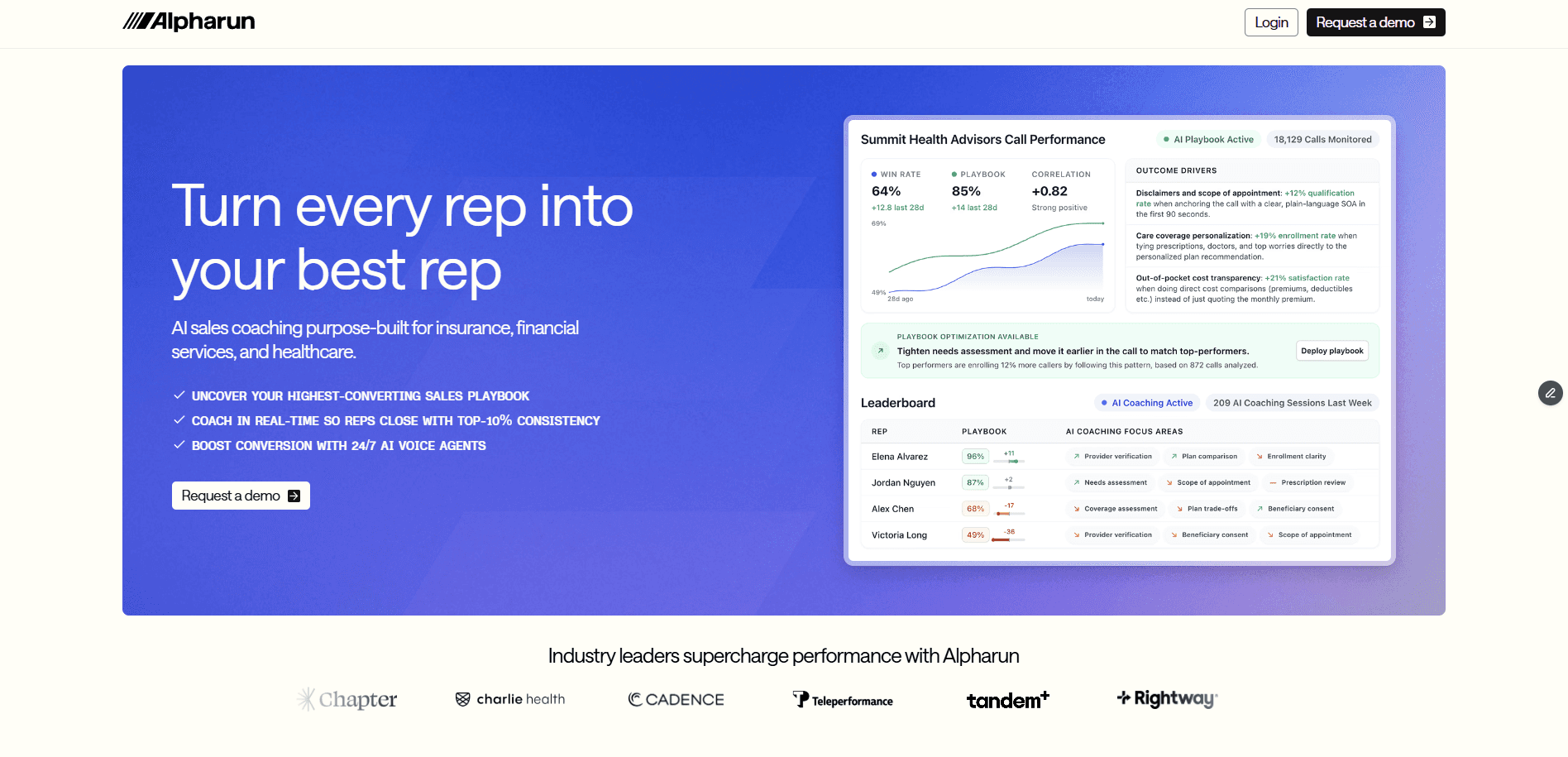
Alpharun is an AI-powered sales coaching platform that sits alongside your contact center. It connects to Genesys, Five9, and other major platforms to find what your top performers do differently and coach the rest of your team to match.
Most teams have a few reps who close far more than everyone else. Alpharun figures out why by analyzing your calls, then turns what works into a playbook the whole team can follow.
Custom playbooks from real calls: Learns what your top closers do differently and builds it into coaching for everyone else.
Real-time, sentence-level coaching gives reps feedback during live calls: Agents see exactly what to say next based on what works for your best closers.
Full QA coverage evaluates every call: Managers get full visibility and agents get short coaching notes directly after each call.
Security and compliance built in: Alpharun is SOC 2 Type 2 compliant, which matters for teams in regulated industries.
AI agents: Handle scheduling and after-hours leads so reps stay focused on closing.
The differences between Genesys and Zendesk
Both platforms handle customer communication. They solve different problems for different teams.
Call routing and voice operations
Genesys treats voice as the primary channel. Predictive routing matches customers to the agents most likely to get good results. The platform handles thousands of concurrent calls.
Zendesk added voice features to their support suite. Call handling works, but it's not the core strength. Some users report audio quality issues and disconnected calls.
Bottom line: High-volume voice operations need Genesys. Teams that occasionally take calls can use Zendesk.
Workforce management
Genesys includes forecasting and scheduling in CX 3 and higher plans. AI predicts call volumes and helps managers build schedules based on expected demand.
Zendesk offers AI-powered workforce management to any Basic or Suite plan customer. It includes forecasting, automatic scheduling, and real-time activity tracking. Managers can see how agents spend their time and customize shifts.
Bottom line: Both platforms offer WFM tools. Genesys bundles it into higher-tier plans. Zendesk sells it separately. Check which pricing model fits your budget.
Ticketing and case management
Zendesk excels at tracking customer requests. Every interaction becomes a ticket. Agents see full conversation history. Automation routes tickets to the right teams.
Genesys handles cases but lacks the depth of a dedicated ticketing system. One user noted ticket tracking isn't intuitive for occasional users.
Bottom line: Teams that track ongoing issues need Zendesk's ticketing system. Contact centers focused on single-call resolution can work with Genesys. Our full Genesys review covers how it performs on those calls day to day.
Pricing structure
Genesys Cloud CX pricing:
CX 1: $75/user/month
CX 2: $115/user/month
CX 3: $155/user/month
CX 4: $240/user/month
Zendesk pricing:
Support Team: $19/agent/month
Suite Team: $55/agent/month
Suite Professional: $115/agent/month
Suite Enterprise: $169/agent/month
Bottom line: Zendesk costs less per seat at entry level. Genesys includes more contact center features at each tier. Our full Genesys pricing breakdown covers what each tier actually includes.
When to use Genesys vs Zendesk
Use Genesys when:
Voice is your primary customer channel
You handle thousands of calls daily
You need workforce forecasting and scheduling
Call routing complexity matters for outcomes
You run a dedicated contact center operation
Use Zendesk when:
You manage support requests across many channels
Ticket tracking and case history are priorities
Your team handles support, not high-volume sales
You want faster setup with less technical overhead
Budget is a primary concern
What neither platform does: Sales performance coaching
Genesys handles your call routing. Five9 tracks your metrics. But here's what neither platform does: teach your reps how to close more deals.
You already know the real problem if you're running a high-volume sales floor. Some reps crush quota every single month. Others, sitting in the same room with the same leads, struggle to hit 50%.
That performance gap doesn't shrink on its own. It widens.
Better dialer software won't fix it. Another dashboard won't either.
Making the right choice
Choose Genesys if you run a contact center where voice operations drive revenue. The platform handles call routing, workforce management, and multi-channel coordination at scale.
Choose Zendesk if you manage customer support across email, chat, and social media. The ticketing system keeps requests organized and agents accountable.
Add Alpharun if you run high-volume sales and struggle with inconsistent rep performance. The coaching layer works on top of your contact center infrastructure.
Turn your best calls into everyone's playbook
Sure, choosing between Genesys and Five9 gets your calls routed and your metrics tracked. But what actually happens during those calls? That's where deals get won or lost.
Your best reps aren't closing because they have better software. They're winning because they know how to handle objections, which questions cut through the noise, and when to push versus when to pull back.
That insight stays trapped in their heads. Until now.
Alpharun extracts those winning behaviors from thousands of your actual calls and delivers coaching to every rep in real time. Not next week in a training session. In the moment, when it counts.
Book a demo to see how we turn your top 10% into your new baseline.
Frequently asked questions
Is Genesys better than Zendesk?
The right choice depends on your primary use case. Genesys is better for contact centers that prioritize voice operations and workforce management. Zendesk is better for support teams that track customer requests across multiple channels.
Can Zendesk handle high-volume calls?
Zendesk can handle calls, but voice is not its core strength. High-volume contact centers with thousands of daily calls typically need a dedicated platform like Genesys.
Does Genesys have a ticketing system?
Genesys tracks interactions but lacks the ticketing depth of Zendesk. Teams that manage ongoing customer cases across multiple touchpoints may find Zendesk's approach more effective.
What is the cheapest option between Genesys and Zendesk?
Zendesk starts at $19/agent/month for Support Team. Genesys starts at $75/user/month for CX 1. Zendesk costs less at entry level, though feature sets differ at each price point.
Can I use Alpharun with Zendesk?
Alpharun works with major contact center platforms like Genesys and Five9, with onboarding in about a week. For teams on other systems, contact Alpharun to explore integration options.