

The best sales teams win because their coaches ask the right questions. Here are 50 sales coaching questions that help reps think better, improve faster, and close more deals.
10 questions about goals and strategy
Goal clarity drives performance. These sales coaching questions help reps connect daily actions to bigger outcomes.
What does success look like for you this quarter?
Get specific numbers. "Hit quota" isn't enough. You want: "Close $150K in new business and move three deals into final negotiations."
What stands in the way of reaching that goal?
Reps often point to outside problems. Help them see what they can control and change.
Which clients bring you the most value, and why?
This shows whether they understand your ideal customer. If they cannot answer, that becomes your coaching focus.
What's your main outcome for this week?
Weekly goals keep reps focused on what truly matters. One clear outcome gives them direction and prevents scattered effort.
How will you know you've reached that outcome?
Measurable markers matter. "Better discovery calls" needs definition. "Ask three budget questions on every call" works.
Which deals should you walk away from?
Strong reps know when a deal is not worth the time. Teaching them to disqualify early helps them protect energy and focus on buyers who are ready to move.
What has to happen before you can close this deal?
Breaking the deal into steps exposes blockers and hidden risks. This helps both you and the rep see what support or actions are still missing.
Which skill or knowledge do you need to achieve your next goal?
Self-awareness accelerates growth. Let them identify gaps before you point them out.
How does your personal strategy align with our company's sales strategy?
Ownership happens when reps see how their goals support bigger team objectives.
What will make you go the extra mile to achieve this goal?
Understanding motivation helps you coach what matters most to each rep.
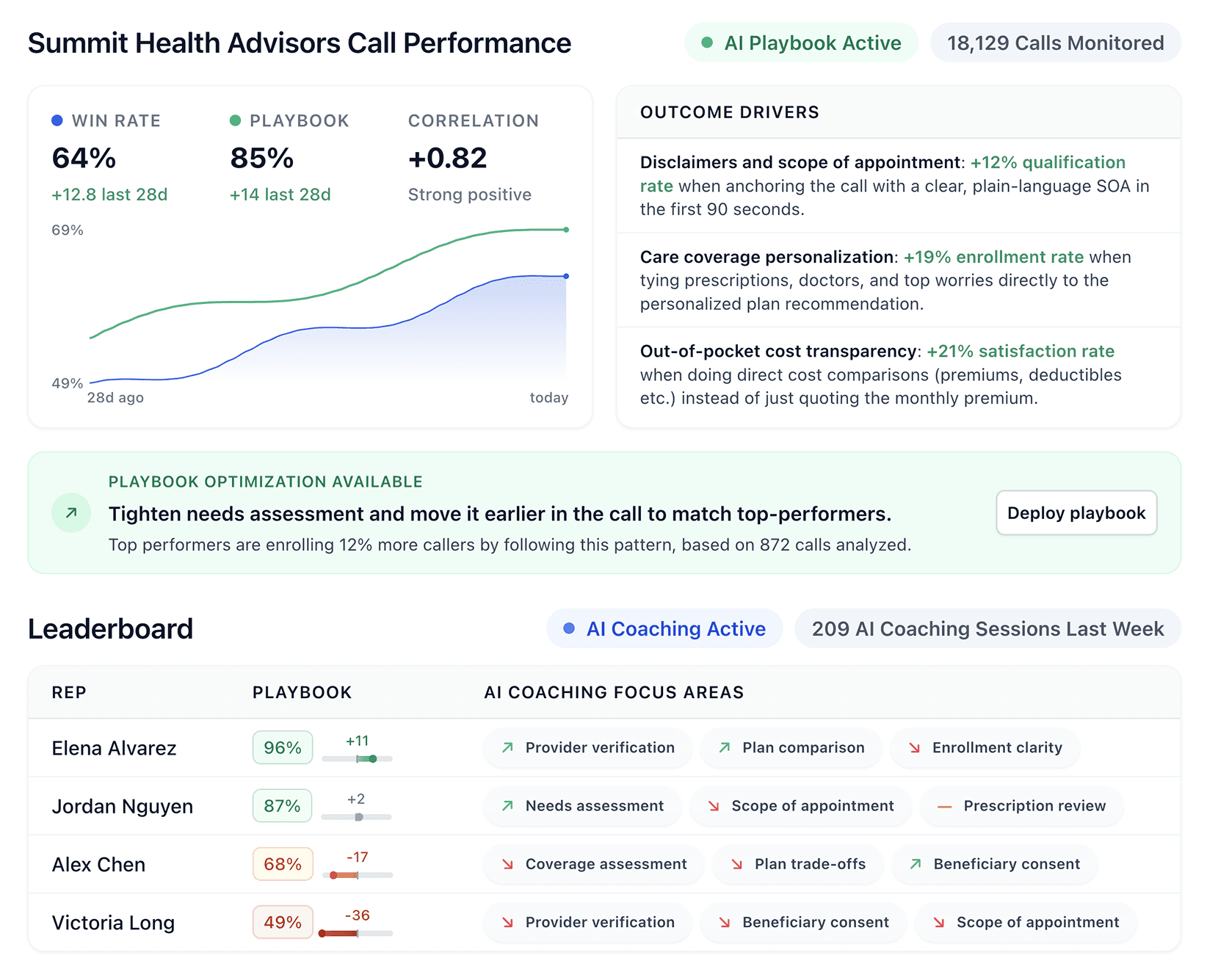
By the way, Alpharun makes these coaching conversations more powerful by grounding them in actual call data, not hunches. When you can see exactly which playbook steps a rep followed, and which they missed, every question you ask becomes sharper.
10 questions about pipeline health
Pipeline coaching helps salespeople become clear about the actual state of their pipeline and develop strategies for improving it. Your forecast depends on an accurate pipeline assessment.
These questions expose the truth:
How do you feel about your pipeline right now?
Start with a gut check. Their confidence or concern tells you where to dig and which deals need more attention or support.
Why are these specific deals in your pipeline?
Strong pipelines come from intentional prospecting, not random leads. This shows whether each deal has a real chance to move forward.
Which opportunities aren't as promising as you initially thought?
Every rep has deals that looked good at first but now feel shaky. Find them early.
What happens if your biggest deal goes silent?
Backup plans give you control. Relying on a single deal makes your pipeline unstable.
What's stopping you from moving this deal forward?
Sometimes the issue is not the buyer but internal gaps like unclear messaging or missing materials. This question uncovers the real cause.
Which stage of your pipeline is hardest to move through?
Patterns emerge. If discovery always stalls, that's your focus area.
Looking at your win rate, deal size, and sales cycle, where can you improve?
If you're setting a lot of appointments but not a lot of demos, something is falling short in your process. Pick one metric to fix.
What needs to happen to fill your pipeline next month?
Future planning protects momentum. This helps reps think about accounts, activities, and outreach needed to stay ahead.
Are you assuming anything about this deal that might not be true?
Assumptions hide risk. Challenging them early prevents surprises late in the cycle.
When should we meet again to look at your progress on this?
Clear checkpoints build accountability. Regular sales performance reviews help reps stay on track and make steady improvements.
10 questions about skills and performance
Skill gaps hold reps back. These sales coaching questions help them see where to focus:
What could you be doing differently to be more effective?
This helps reps look at their own habits so they can spot patterns that slow them down.
Which part of the sales process feels hardest right now?
Naming the problem helps you focus coaching where it will make the biggest difference.
How did your competition beat you on the last deal you lost?
Lost deals reveal what buyers value. Use that information to adjust your approach.
What value do you bring that makes prospects want to talk to you?
Reps who know their value speak with more confidence and connect faster with buyers.
Would your customers pay to access your knowledge?
Strong reps act like trusted advisors. If the answer is no, help them build deeper expertise.
What would you like to do more of? What should you do less of?
This clarifies how they spend their time and highlights high-impact work.
Which skills from your top performers could you adopt?
If one rep excels in prospecting and another excels in demos, put them together so they can help each other in the weaker areas.
What resources or support do you need from the company to improve?
Sometimes the barrier is not skill but systems. Remove blockers so that reps can focus on selling.
How have you helped a teammate this month?
Peer support builds stronger teams and lifts performance for everyone.
What's one thing you'll commit to working on this week?
Focused improvement builds momentum. One clear goal is easier to act on and measure.
10 questions for call planning and preparation
Preparation separates good calls from great ones. These questions help reps think ahead so they can run smarter, smoother, and more productive conversations.
What's your goal for this call?
Reps who set specific goals, such as checking the budget or timeline, run tighter calls and progress deals faster.
Who should be on this call that isn't?
Missing decision makers slow down deals. Get the right people in early so the call leads to real progress.
What questions might they ask to shoot you down?
Anticipate tough questions before the meeting. Preparation lowers risk and keeps the call on track. Maintaining call center agent scorecards can help with this step.
What would make them choose your solution over doing nothing?
Learn the real business problem from their point of view. If you cannot beat the status quo, you cannot win the deal.
What kind of support can you get from an internal champion in this meeting?
Lean on people who already support you. Champions open doors and help guide internal conversations you cannot see.
If they said X, what would you say?
Practice responses to tough scenarios. Reps who rehearse handle pressure better and keep calls under control.
How likely is this outcome?
This question checks assumptions and removes guesswork. Honest forecasting helps you coach smarter and keep the pipeline grounded in reality.
What's your next action to progress toward closing this deal?
Seek the specifics of every deal. Find out the challenges and criteria to determine how great the deal really is. Concrete next steps matter.
Who will be on the call, and what does each person care about?
Know every stakeholder’s priority. When reps tailor the message, calls feel more relevant and persuasive.
What have you tried so far with this prospect?
Context shows what is working and what is not. This prevents repeated missteps and helps the rep build on the progress already made.
10 questions about customer understanding
Understanding your customer is the foundation of every strong deal. Here are questions that reveal what buyers truly care about:
What are the customer's biggest business problems?
If a rep leads with features, they miss the real issue. Start with the problems buyers care about so that the solution feels meaningful. For example, the Sandler Pain Funnel technique helps sales reps move from surface problems to the key motivators to buy now.
What does the economic buyer care about most?
Closing deals depends on understanding what success looks like for the person who approves the spend. When reps know this, their message lands.
Why should they even care about this?
Value must be clear and practical. If a rep cannot explain why the customer should care, the customer will not care.
What would cause them to do nothing?
Inertia kills more deals than competitors. Identify why they might stay put so you can address those fears early.
Who are you talking to? Who should you be talking to?
Talking to the wrong person stalls deals. Confirm you’re speaking with someone who can influence or approve the decision.
What is stopping them from leaving the status quo?
Change feels risky for buyers. Name their concerns so you can guide them through the uncertainty.
How strong is the incumbent?
Replacing a current solution takes clear, measurable value. Reps must know how big the gap is before they position their offer.
What do they need to believe to buy from you?
Every deal hinges on belief shifts. Identify the beliefs that must change so your message supports those shifts.
What would the customer say about you right now?
This builds empathy and awareness. When reps consider the buyer’s point of view, they adjust their approach and build stronger trust.
How will the competition try to win this deal?
Competitors will position their strengths first. Knowing their likely approach helps you prepare counterpoints before they influence the buyer.
How to use these questions effectively
Sales coaching questions work best when they follow a clear framework. Without one, they lose impact.
Match questions to situations
Don't use all 50 in one session. Pick 3-5 that fit the rep's specific challenge.
Struggling with the pipeline? Use those questions.
Lost a big deal? Focus on reflection questions.
Preparing for a key call? Pull from your call detail reporting software.
Ask, then keep quiet
Don't rush it. Coaches facilitate learning through questions that direct their learning.
The silence after your question is where growth happens. Let them think. Let them struggle a bit. That's where discovery occurs.
Follow up with more questions
Follow-up questions instantly uncover a remarkable amount of valuable information. When they answer, dig deeper:
"How so?"
"Can you tell me more about that?"
"Why?"
Three simple questions that reveal everything.
Help them solve their own problems
When a sales rep comes to you with a challenge, don't get into the habit of solving their problems for them. Help them solve the problem themselves.
Resist the urge to give answers. Guide them to discover solutions.
Your reps need to think critically in the moment with prospects. Practice that skill in coaching sessions.
Track progress over time
Tracking progress ensures continuous growth. Document what you cover. Reference previous sessions. Show them how far they've come.
Making sales coaching questions part of your company culture
You get the full value of these questions when coaching becomes a steady habit in your team.
Schedule a weekly 30-minute session and stick to it. Consistency builds trust and steady growth.
Use the same questions with every rep. Patterns will show you when the whole team needs support.
Celebrate wins that come from coaching. Proof builds belief and keeps reps engaged.
Ask reps to share what they learn from each other. This spreads good habits and builds real teamwork.
Build a team of top closers with Alpharun
Pick three questions and use them in your next Alpharun session. You will see reps think faster, take more ownership, and uncover their own solutions when you guide with questions.
Your reps already have what they need to win. Alpharun brings it out. These questions turn simple conversations into real coaching that lifts performance.
Great coaching starts with great questions. Put these sales coaching questions to work in Alpharun and watch your team improve fast:
Alpharun brings your coaching questions to life with real call data. Every session links to playbook adherence scores, criterion breakdowns, and AI-generated coaching notes that reference your actual top performers.
No more manual call review. No more inconsistent feedback. Alpharun gives managers clarity on rep performance and targeted coaching opportunities.
Teams using Alpharun see measurable lift in quota attainment and reduced rep churn because coaching finally sticks.
Want to see it in action? Book a demo and watch Alpharun transform your coaching.