

Sales performance reviews create pressure, but they can transform your inside sales team when used as coaching. This guide shows you how to run reviews that make standout performance the norm across your call center.
What is a sales performance review?
A sales performance review is a one-on-one meeting to discuss results, goals, and challenges. It brings clarity to strengths and next steps. A strong sales review feels collaborative, with reps sharing their view and managers offering data-backed guidance to create a clear action plan.
Here’s what makes reviews valuable:
Reps get clear feedback they can act on.
Managers spot patterns across the team.
Both sides align on priorities and resources.
Everyone leaves with a concrete plan.
Reviews help you document wins and give reps the recognition they need to stay engaged. With many inside sales reps missing quota, a strong sales performance review closes the gap between expectations and reality.
Why sales performance reviews matter
Sales performance reviews matter because they drive engagement and retention in high-volume call centers. Many inside sales reps feel burned out or disconnected from leadership, so regular reviews help you stay close to them and support their growth.
When done right, reviews deliver three key advantages:
Boost engagement by making reps feel heard.
Gain customer insight from reps on the front lines selling to individual consumers.
Build accountability with clear expectations and follow-through.
The payoff is real. Companies with strong performance management systems see major gains in revenue. Done right, reviews strengthen your entire team and your bottom line.
How to implement sales reviews across your team
Rolling out performance reviews takes planning and consistency. Here’s your roadmap for a stronger, fairer, and more effective sales evaluation of management across your team:
Set clear standards first
Define what good performance looks like for each role. New hires, experienced sales reps, and team leads all have different goals to hit.
Create role-specific rubrics. What does excellent, good, and needs improvement look like for each position?
Document these standards. Make them accessible to everyone. No one should guess what you're measuring.
Schedule reviews consistently
Pick a cadence and stick to it. Weekly or bi-weekly works well for high-volume call centers. Monthly can work for new reps or those on improvement plans.
Block time on your calendar now. Don't let reviews get pushed back because you're busy. Consistency matters more than perfection. A good review on schedule beats a perfect review that never happens.
Train your managers
Not every manager knows how to give effective feedback in a fast-paced call center environment. It pays to take the time to teach them.
Run training sessions on:
How to prepare for reviews
How to deliver difficult feedback
How to create action plans
How to track progress between reviews
Practice with role-play scenarios. Let managers coach each other before they coach their teams.
Create review templates
Build simple templates that cover all key areas for inside sales. This ensures consistency and completeness across your call center.
Your template should include:
Rep name and role
Review period
Key metrics and performance data
Strengths and achievements
Areas for improvement
Action plan with specific steps
Next review date
Templates support a fair and repeatable sales performance evaluation across roles and teams in your call center.
Track progress between reviews
Don't wait until the next formal review to check in. Schedule brief weekly or bi-weekly conversations.
Ask simple questions:
"How's progress on your objection handling?"
"What obstacles have you hit?"
"What support do you need?"
These quick check-ins keep momentum going. They also prevent small problems from becoming big ones.
AI-powered tools can automate much of this tracking, freeing up manager time while keeping sales coaching effectiveness measurements consistent at scale.
Document everything
Keep clear records of every review, action plan, and follow-up. Good documentation creates consistency and makes each conversation more productive.
Here’s what to start documenting:
Track goals, commitments, and progress over time.
Capture feedback and coaching moments as they happen.
Keep notes that protect you if performance issues escalate.
Look for patterns across the team that signal training needs.
The tool you use doesn't matter. Your CRM, a shared folder, or a simple spreadsheet all work. What matters is building the habit and keeping it consistent.
Celebrate wins publicly
Recognition matters in high-volume call centers. When reps make progress on their action plans, call it out so they see their effort paying off and stay motivated. For example, share wins during team huddles.
Go beyond highlighting progress in company updates to give specific praise that others can learn from. Then point to the behaviors that led to the improvement to encourage the team to do the same.
Public recognition lifts the individual and inspires the team. It shows that performance reviews lead to real growth and visible progress.
Adjust your approach based on feedback
Make the review process better by listening to your reps. Ask them how the process feels and what would make it more useful in the following ways:
Ask reps what parts of the review help them most.
Run anonymous surveys after each review cycle.
Look for patterns in the feedback to spot improvement areas.
Adjust your approach when something isn't working.
The goal is growth. Keep improving the process so conducting annual sales reviews stay meaningful and effective.
Common mistakes to avoid
Focusing only on numbers
Metrics matter, but they never tell the whole story. A rep hitting quota through bad habits or non-compliant language will create problems later, while someone missing quota might face challenges outside their control.
Look at effort, approach, compliance adherence, and growth potential along with results.
Surprising people with feedback
No one should hear new criticism during a formal review. Address issues in real time so the review becomes a summary, not a shock. Keep feedback fresh, timely, and ongoing.
Making it one-sided
A review should feel like a conversation. Ask questions, listen, and create space for reps to share their perspective. You'll learn more, and they'll feel more invested.
Skipping the action plan
Feedback without clear next steps doesn't help anyone improve. Give specific, measurable actions with timelines and follow-ups. Clarity builds momentum.
Forgetting to follow up
A review is the starting point, not the finish line. Check progress regularly, adjust the plan when needed, and keep coaching consistent. Follow-through shows the process matters.
How to lead a sales performance review
Leading a strong sales performance review requires preparation, clear communication, and a thoughtful approach. Here’s how to run a fair and effective evaluation of sales management:
Start with solid preparation
Strong reviews begin before the meeting. Prepare with real data so your feedback feels clear, fair, and connected to the rep's work.
Follow these preparation steps:
Gather input from multiple sources like call recordings, quality scores, compliance flags, and conversion rates.
Review their responsibilities and goals to make sure your feedback matches what they're aiming to achieve.
Create a simple rubric based on your performance standards to keep evaluations consistent.
Write notes ahead of time so that you stay focused and avoid missing key points.
Good preparation sets the tone. It shows you respect their time and creates a smoother, more productive conversation.
AI tools can pull this data automatically, giving you call highlights, compliance issues, and performance patterns in minutes instead of hours.
Lead with real empathy
Set the tone by treating the rep with respect and giving them your full attention. Challenging reviews become easier when the rep feels safe and supported.
Turn off your phone and close your laptop so that you're fully present. Listen actively and ask questions to understand their perspective.
Avoid interrupting or planning your response while they talk.
Then frame the review as a growth opportunity. You can say, "This conversation helps us both get better. I want to understand what's working and what's not so we can plan the next steps together."
Align on performance expectations
Start by making sure you and your rep agree on what good performance looks like in your call center. Key Performance Indicators (KPI) should already be in place, but this is the moment to confirm expectations and remove any confusion.
Check their activity expectations. A rep might think 80 calls a day is strong when the target is 120.
Review their approach along with their numbers. Activity alone doesn't tell the full story.
Look at how they reach results. A rep who hits quota through aggressive tactics may violate compliance rules, while someone missing quota might have solid skills but needs better lead quality.
Numbers matter, but the path to those numbers matters just as much. The goal is to align on both performance and the behaviors that lead to it.
Begin with wins
Begin the review on a positive note. Highlight specific wins and behaviors that show real progress. This helps the rep feel supported and ready for the tougher parts of the conversation.
Call out recent achievements that show growth. Point to strengths that consistently help them perform. Reinforce habits you want them to keep doing.
Critical feedback should feel familiar. Use the review to gather the coaching moments you have already covered.
Ask sales coaching questions that spark reflection
Don't just give feedback. Help reps think through their own performance.
Ask things like:
"How do you feel about your recent deals?"
"What do you think are your biggest strengths right now?"
"Where do you see room for growth?"
This approach creates ownership. When reps identify their own gaps, they're more motivated to fix them. You might also learn something. Their perspective can reveal blind spots in your process or strategy.
Provide clear coaching
Set aside time to coach during the review instead of only evaluating sales performance. When you agree on what needs improvement, build an action plan together.
Be specific. "Improve discovery" is too vague. "Ask the three qualifying sales performance review questions in every call this week" gives them something concrete to execute.
Use actual call recordings to show exactly what to change. Point to the sentence where they lost the customer and show them what top performers say instead.
Alpharun makes it easy to analyze the transcripts of each call to show reps exactly what they need to change.
Create a shared vision for success
Make sure every rep understands what good performance looks like in your call center. Use your organization's rubric to keep evaluations consistent and fair across the team.
Match job descriptions with clear performance standards.
Set individual targets based on each rep's needs. One may need help with objection handling; another may need to improve compliance scores.
Create a single source of truth where reps can track their progress.
Keep the alignment going with regular communication. Daily or weekly check-ins help maintain momentum between formal reviews.
Use the right tools
Your CRM and call center tools give you a clear view of what's happening across your team. They show call activity, conversion rates, and where each rep might need support.
For example, consider how these tools can help:
Dashboards make sales effectiveness metrics easy to track and understand at a glance.
AI tools spot patterns, highlight top and low performers, and cut hours of manual analysis.
CRM systems reveal call volume, conversion rates, and coaching opportunities (including remote sales coaching).
AI tools can also handle repetitive tasks like scheduling follow-up calls and qualifying leads after hours, freeing your human reps to focus on conversations that require skill and judgment.
AI-powered sales tools will be part of 80% of companies' tech stack by the end of 2025. The technology is here. Use it to make your performance reviews faster, clearer, and more effective for everyone.
Types of sales performance evaluation
Different review types serve different purposes. Each one gives you a unique angle on a rep’s performance, so choose the approach that fits your goal and the situation.
Review type | What it is | Why it works | Example |
|---|---|---|---|
Self-evaluation | Rep reflects on their own performance, goals, and obstacles. | Builds ownership. Reps commit more to the plans they create. | A rep notes: "I booked 30% more appointments but struggled with price objections." |
Peer evaluation | Teammates give each other feedback and new perspectives. | Peers spot patterns managers miss. Sharing tactics boosts team skills. | A high performer says: "Handle the price objection early, before explaining benefits." The other rep applies it and improves the close rate. |
Manager evaluation | The manager gives feedback based on data and direct observation. | An evaluation works well when paired with specific call examples. | You say: "Your 85% compliance rate is strong. Let's work on shortening your intro to get to qualification faster." |
360-degree evaluation | Sales performance feedback comes from managers, peers, and quality assurance. | It gives a fuller view of strengths and gaps across different listeners. | Peer praises teamwork. Manager notes follow-up speed. QA flags one compliance issue. |
Choose the review type that fits your goal. The right format helps you guide reps, uncover blind spots, and build a stronger team over time.
Key performance areas to review
Cover these core areas in every sales performance review to get a full picture of each rep's strengths and opportunities in your call center.
Sales quota attainment
Review whether each rep meets or exceeds their targets. This gauges their effectiveness at converting calls and contributing revenue.
Positive feedback example: "You exceeded quota by 15% this quarter by focusing on qualified leads in the Medicare market."
Improvement feedback example: "Let's break your monthly goal into weekly targets. This helps maintain steady progress instead of end-of-month scrambles."
Customer relationship building
Evaluate how well reps follow required scripts, disclosures, and compliance rules. This protects your company and ensures quality in regulated industries like Medicare, insurance, and financial services.
Positive feedback example: "You hit 95% compliance this month. Your recording disclosures are clear, and you follow the qualification process and sales cadence every time."
Improvement feedback example: "You missed two required disclosures this week. Let's review the script together so you feel confident hitting every checkpoint."
Objection handling
Assess how reps respond to common objections like price concerns, timing issues, or competitor comparisons. Strong objection handling converts hesitant prospects.
Positive feedback example: "You turned four price objections into enrollments this week by walking through the value breakdown. That's the approach we want everyone using."
Improvement feedback example: "When prospects say 'I need to think about it,' ask what specifically they're considering. This keeps the conversation moving forward."
Call quality and efficiency
Look at each rep's ability to move through calls efficiently while maintaining quality. Can they hit their talk time targets while still building rapport?
Positive feedback example: "You handle 120 calls per day while maintaining an 18% conversion rate. Your sales efficiency measurements and quality both stay high."
Improvement feedback example: "Your average call time is 12 minutes when the target is 8. Let's identify where you can tighten your pitch without rushing customers."
Product knowledge
Review their understanding of your product, including features, benefits, pricing, and how it compares to competitors.
Positive feedback example: "You explain plan benefits clearly and answer detailed questions without hesitation. Your product knowledge builds customer confidence."
Improvement feedback example: "Brush up on the new plan options we launched last month. This will help you answer questions faster and close more enrollments."
Turn this guide into results
Pick three reps to start with and schedule their reviews this week. Put the meetings on the calendar so that they actually happen.
Use the framework in this guide to prep:
Review call recordings and quality scores in advance.
Lead with empathy and specific examples from real calls.
End each review with a clear action plan.
After those first three reviews, look at what worked and what didn't, then roll the process out to the rest of your team.
When your reviews run through a consistent system, they build trust, align goals, and help every rep improve faster.
Scale coaching across your entire call center
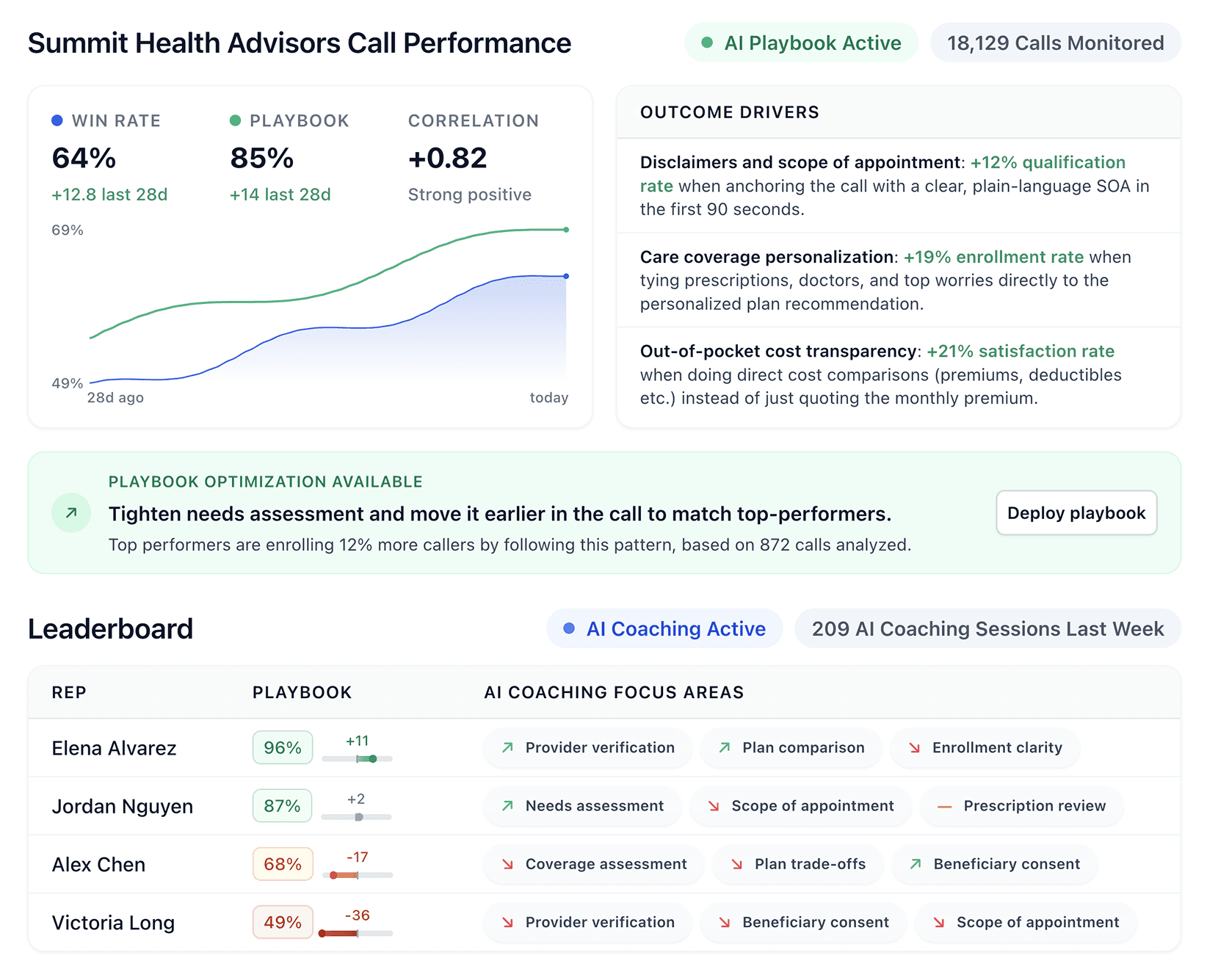
Alpharun learns from your top performers and builds playbooks that guide every rep while AI agents handle repetitive tasks like scheduling and qualification. Your human team performs at its best, and AI takes care of the routine work.
Here’s how Alpharun looks in action:
The system listens to winning calls and finds the exact words and phrases that work.
Then it gives reps sentence-level feedback right where they need it.
Managers get weekly digests that show who's improving and who needs help.
Reps get notes sent straight to them after each call.
Compliance checks are built into every score, so you catch problems before they grow.
Book a demo to see how inside sales leaders turn real call data into clear coaching while keeping their teams compliant and productive.