

What is a sales cadence? And why is it important for your sales team?
After analyzing thousands of calls across high-volume sales teams, top performers follow the same pattern: they reach out at the right time, through the right channel, with the right message. A sales cadence captures that pattern so every rep can follow it.
What is a sales cadence?
A sales cadence is a planned sequence of sales activities and touchpoints spread out over set intervals. Reps use this sequence to contact prospects and follow up until they close the deal or move on.
Those touchpoints can include:
Phone calls (inbound follow-ups and callbacks)
Voicemails
Text messages
Emails
The sequence defines when reps reach out and how often. It also defines what they say at each step. Every touchpoint builds on the last one.
A basic cadence might look like this:
Day 1: Call the lead within 5 minutes of inquiry
Day 2: Follow-up call if no answer
Day 3: Text message with callback number
Day 5: Second follow-up call
Day 7: Final call attempt
The key is finding a cadence that fits your sales process and delivers results.
Why sales cadence matters for high-volume call centers
Sales teams have limited time. A Salesforce study found that reps spend at least 70% of their time on non-selling tasks, like administrative work and searching for the right content. That leaves less than a third of their day for actual selling.
A defined cadence removes guesswork. Reps know exactly when to call, what to say, and when to move on. This creates several benefits:
Faster lead response: When a lead comes in, reps follow a cadence rather than deciding what to do next. Response time drops. Conversion rates rise.
Consistent prospect experience: Every lead receives the same level of attention. Whether a new hire or your top closer handles the call, the process stays the same.
Easier onboarding: New reps ramp faster when they follow a proven sales onboarding checklist. They don't need to figure out timing or messaging on their own.
Scalable results: What works for one rep can work for fifty. A documented cadence turns individual success into team success.
Key elements of an effective sales cadence
Strong cadences share several traits. Here's what to include:
1. Clear timing between touchpoints
Spacing matters. Call too soon, and you seem pushy. Wait too long, and the lead forgets you. Most high-volume teams start with frequent contact and space out later attempts. For example:
Day 1: Two call attempts
Days 2-3: One call attempt each day
Days 5-7: Final attempts with longer gaps
Test different intervals to find what works for your leads.
2. Multiple channels (where appropriate)
Phone calls drive most B2C sales conversations. But text messages and voicemails can support your efforts. If a lead doesn't answer, a voicemail creates recognition. Your next call shifts from an unknown number to a known caller.
3. Scripted messaging for each step
Each touchpoint needs a purpose. The first call introduces your solution. Follow-ups address objections or provide new information.
Scripting keeps messaging consistent across the team. It also makes coaching easier. During sales performance reviews, managers can see whether reps followed the script and where they strayed.
4. Exit criteria
Define when to stop. After how many attempts should a rep move on? What actions remove someone from the cadence?
Common exit criteria include:
Lead requests no further contact
Lead converts to customer
Rep marks lead as unqualified
Maximum attempts reached
Clear exit rules prevent wasted effort and awkward duplicate outreach.
How to build a sales cadence for your team
Follow these steps to create a cadence that fits your sales process:
Step 1: Understand your leads
Who calls in? What questions do they have? What motivates them to buy? For Medicare or insurance leads, the person on the phone is often the decision-maker. They want clear answers and guidance through the process. Build your cadence around their needs, not your convenience.
Step 2: Define your goal
What action do you want at each stage? Schedule an appointment? Complete the enrollment? Close a sale? Every cadence needs a clear outcome. Track whether each step moves leads toward that outcome.
Step 3: Map out touchpoints and timing
Decide how many attempts make sense. Industry data suggests that reps need an average of 8 or more attempts to reach a prospect.
Spread those attempts across multiple days. Vary the time of day. Afternoon calls might connect better with your audience than morning calls.
Step 4: Write your scripts
Create messaging for each touchpoint, and make sure your first contact differs from follow-up number three. This is where custom playbooks matter because generic scripts don't capture what your top performers say to close deals.
Alpharun analyzes your best calls to build scripts that actually work for your business.
Step 5: Test, measure, and adjust
No cadence is perfect on day one. Track results and refine based on data.
Key metrics to watch:
Connection rate: How many attempts result in a conversation?
Conversion rate: How many leads become customers?
Drop-off points: Where do leads stop responding?
Cycle length: How long from first contact to close?
Signs your sales cadence needs improvement
Even good cadences drift over time. Watch for these warning signs:
Inconsistent follow-up. Reps skip steps or wait too long between attempts. Leads fall through the cracks.
Low connection rates. Your timing or channel mix may need adjustment.
Reps freelancing the process. When everyone does their own thing, you lose visibility into what works.
Top performers outpacing everyone else. If a few reps close far more than the rest, their approach isn't captured in the cadence.
This last point matters most. Every team has top performers who crush quota while the rest struggle, and that gap exists because winning behaviors aren't documented or taught.
How real-time coaching improves cadence execution
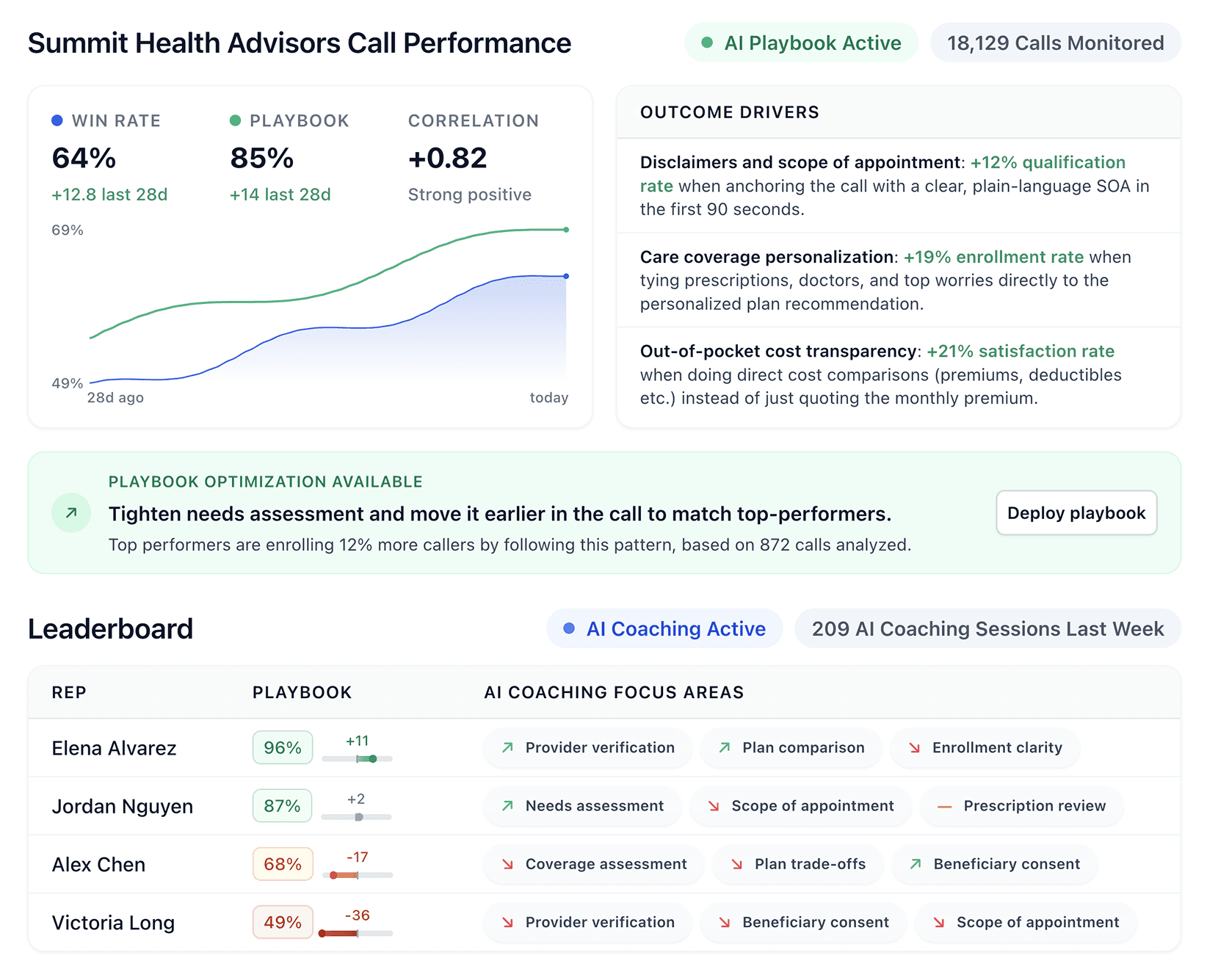
A cadence tells reps when to call. Coaching tells them what to say at each step. Alpharun reviews thousands of real calls to surface what your best reps say at each touchpoint.
Those behaviors become a playbook that maps to your cadence:
First contact: What hooks prospects and builds immediate interest.
Follow-ups: How to re-engage leads who didn't convert on the first call.
Late-stage attempts: What moves hesitant prospects to a decision.
Key features of Alpharun for high-volume B2C teams:
Custom playbooks: Built from your real calls, capturing the exact behaviors that drive conversions in insurance, Medicare, home services, and similar markets.
AI coaching: Sentence-level feedback with clear notes during and after calls so reps improve faster.
Manager visibility: Dashboards that show where reps follow or miss the playbook, including compliance steps and qualification flow.
Faster onboarding: New reps learn proven behaviors rather than generic advice, shortening ramp time.
Coaching builds better habits at each step, and AI agents handle routine tasks like scheduling so reps focus on conversations that close deals.
Start building your sales cadence today
We covered what is a sales cadence. Now build one that converts. A sales cadence gives your team a repeatable process for converting leads. It defines timing, channels, and messaging so reps don't have to guess.
But the cadence is only half the equation. Execution matters just as much. When reps follow the cadence and apply winning behaviors on every call, results compound.
Ready to scale what your top performers do? Stop guessing what works. Schedule a demo to start scaling what your top closers actually say.