Not all QA software improves sales. Check out the 5 call center quality assurance software tools we tested to find which actually coach reps and drive revenue.

Every sales call reveals why deals stall or close, if you know where to look. This guide reviews five call center QA platforms that turn real conversations into performance scores and coaching that drives more wins.
5 best call center quality assurance software: At a glance
Tool | Best for | Starting price | Key strength |
Alpharun | Scaling top performer tactics across teams | Custom pricing | Custom playbooks from your actual winning calls |
Observe.AI | Compliance-heavy contact centers | Custom pricing | Automated compliance monitoring |
Balto | Real-time script guidance | Custom pricing | Live prompts during calls |
CallMiner | Speech analytics at scale | Custom pricing | Deep conversation analytics |
Talkdesk | All-in-one contact center with QA | $85/user/month | Full platform with built-in QA |
1. Alpharun
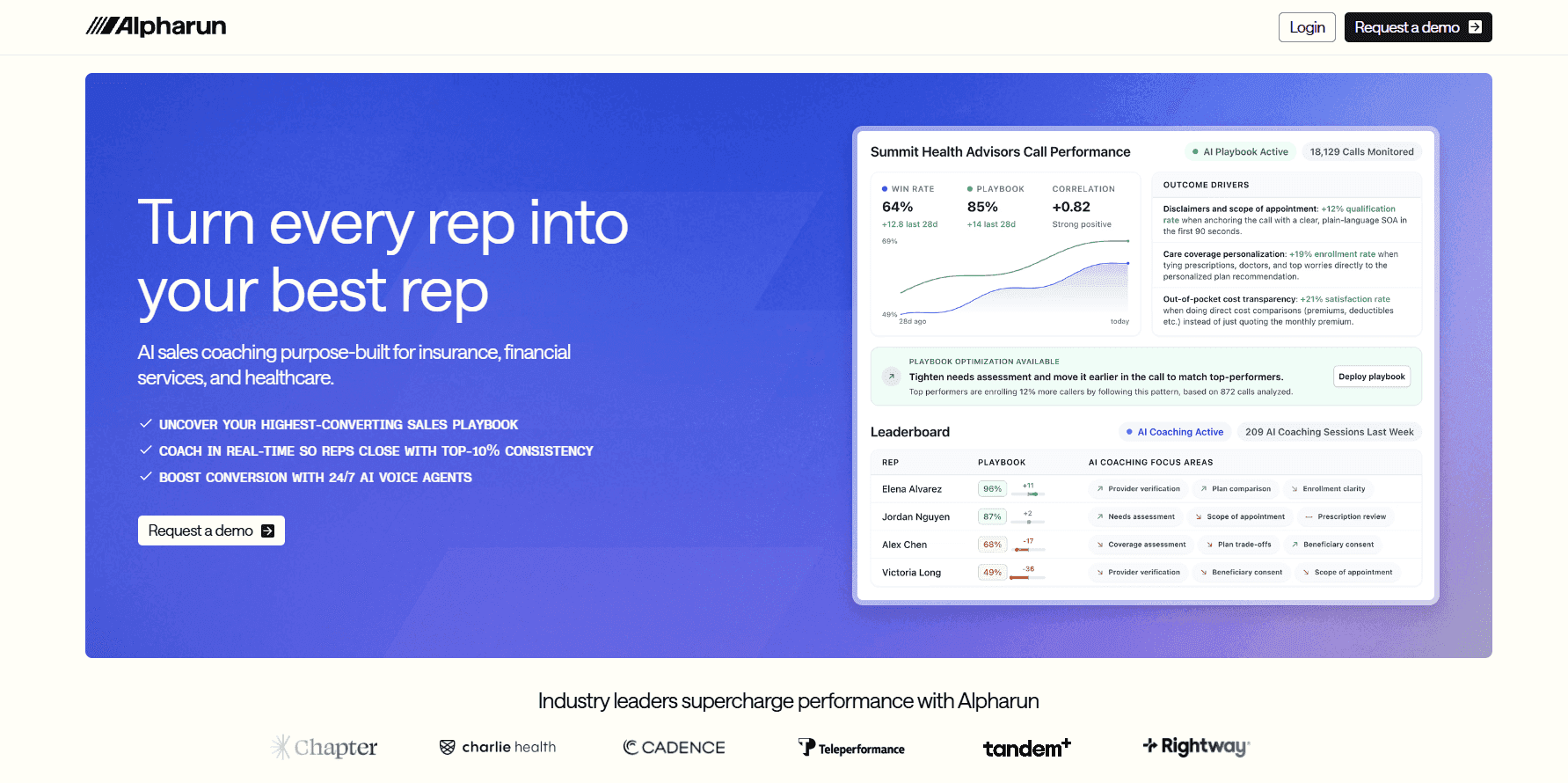
Most QA tools tell you what happened on a call. Alpharun tells you what should have happened based on what your winners actually do. The platform pulls patterns from your best closers and turns tribal knowledge into a repeatable system.
What it does: Alpharun analyzes thousands of your sales calls to find what your top performers do differently, then builds those exact tactics into custom playbooks and coaches every rep to match.
Who it's for: High-volume B2C sales teams in Medicare, insurance, home services, and other industries where phone conversations drive revenue.
Key features of Alpharun
Custom playbooks from your calls: Alpharun analyzes real conversations from your top reps to spot what actually drives closes. Those behaviors become your coaching standards.
100% call coverage: Alpharun scores every call, not just a sample. Managers see exactly which reps need help and why.
Sentence-level coaching: The platform ties feedback to exact moments. Reps learn where top performers ask about the spouse or decision maker being present.
Compliance built into scoring: You set the rules that matter to your business, from recording disclosures to qualification and discovery. Alpharun tracks what closes deals and what stays compliant.
Manager dashboards: Weekly summaries show who needs coaching and why. Reps also get short coaching notes automatically, reducing manual follow-ups for managers.
Pros and cons of Alpharun
Pros | Cons |
Reps get guidance during or right after calls while the conversation is fresh | Built for teams with 50+ reps; smaller operations may not need this depth |
Integrates with Five9 and Genesys for fast setup (about one week) | Pricing fits enterprise budgets rather than startups |
SOC 2 Type 2 compliant for regulated industries like Medicare and insurance | Focused on sales coaching, not a full contact center platform |
AI voice agents handle scheduling and after-hours qualification, so reps focus on selling |
Alpharun pricing
Alpharun provides custom pricing based on team size and feature requirements.
Bottom line
Alpharun turns the instincts of your best salespeople into a system everyone can follow. If your team has standout performers and you want the rest to catch up, this platform bridges that gap faster than manual coaching ever could.
2. Observe.AI
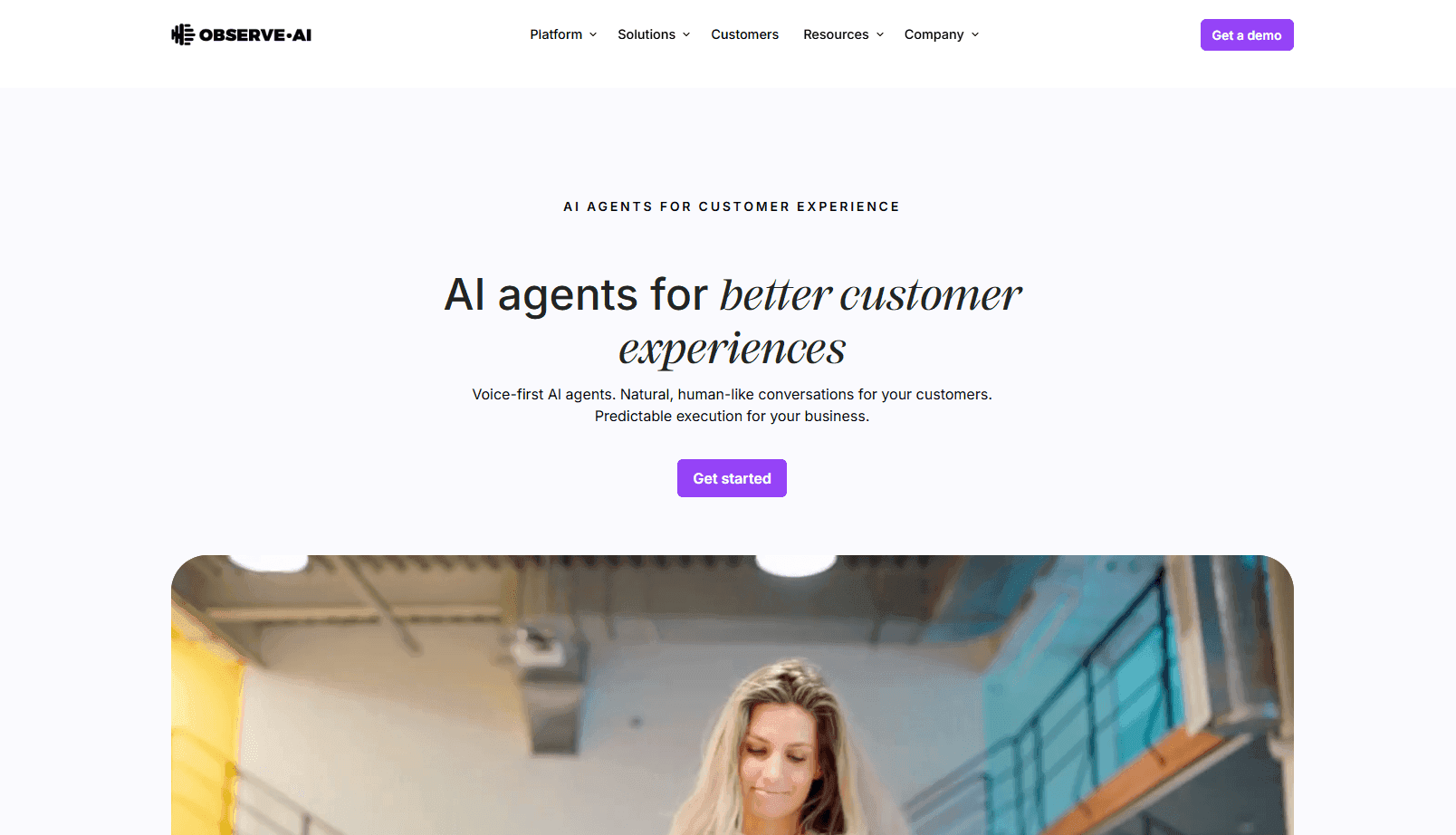
Observe.AI focuses on AI agents that handle calls end-to-end or intelligently route them. The platform includes guardrails, auditing, and compliance features to keep automated conversations on track. Its primary offering is conversation intelligence software, Auto QA, and post-interaction AI analytics.
What it does: Observe.AI transcribes and analyzes calls to surface compliance risks, coaching opportunities, and performance trends across your contact center.
Who it's for: Teams in healthcare, financial services, and other regulated industries where compliance violations carry serious consequences.
Key features of Observe.AI
Automated compliance checks: The system scans every call for regulatory requirements and company policies.
Agent performance scoring: Calls receive scores based on criteria you define, with trends visible over time.
Transcription and search: Find specific conversations or phrases across your entire call library.
Pros and cons of Observe.AI
Pros | Cons |
Strong compliance monitoring for regulated industries | Coaching focuses more on what went wrong than replicating what works |
Handles large call volumes without manual review | Sentiment analysis can produce inaccurate signals |
Detailed reporting on agent performance trends | No quick dashboard to spot issues at a glance |
Pricing of Observe.AI
Observe.AI offers custom pricing based on seat count and features. Contact their sales team for details.
Bottom line
Observe.AI works well for teams where compliance is the primary concern. If your goal is to catch violations and monitor adherence, it delivers. For teams focused on revenue growth through better selling, the coaching depth falls short of platforms built for that purpose.
3. Balto
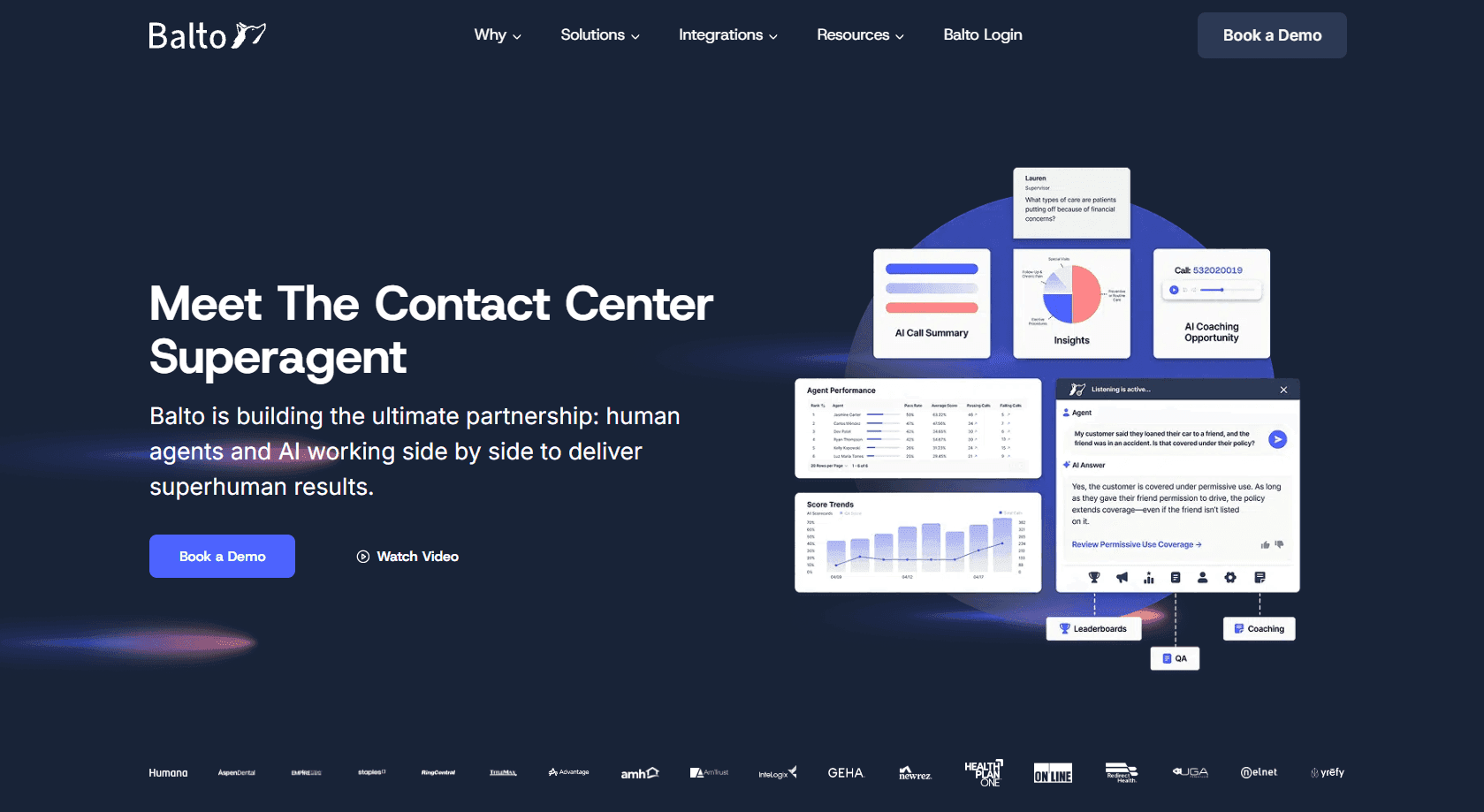
Balto connects to your phone system and monitors calls as they happen. When reps hit certain moments, the platform shows suggested responses on screen and notifies managers if a call goes off track.
What it does: Balto listens to live calls and prompts reps with the right words at the right moment. Think of it as a teleprompter for sales conversations.
Who it's for: Teams with strict scripts or newer reps who need guardrails during conversations.
Key features of Balto
Live prompts: Reps see suggested responses as the conversation unfolds.
Real-time alerts: Managers get notified when calls need intervention.
Script adherence tracking: See which reps follow the playbook and which go off-script.
Pros and cons of Balto
Pros | Cons |
Immediate guidance helps newer reps sound confident faster | App bugs like timeouts and blank screens can disrupt calls |
Reduces compliance slip-ups by prompting required disclosures | Suggestion overlays block key content and interrupt workflow |
Easy for managers to spot struggling calls in real time | Long calls don't get automatic summaries |
Pricing of Balto
Balto provides custom pricing. Reach out to their team for a quote.
Bottom line
Balto keeps reps on script and catches problems as they happen. It works best for teams prioritizing consistency and compliance. For teams wanting to elevate average performers to match the best, the one-size-fits-all approach limits growth.
4. CallMiner
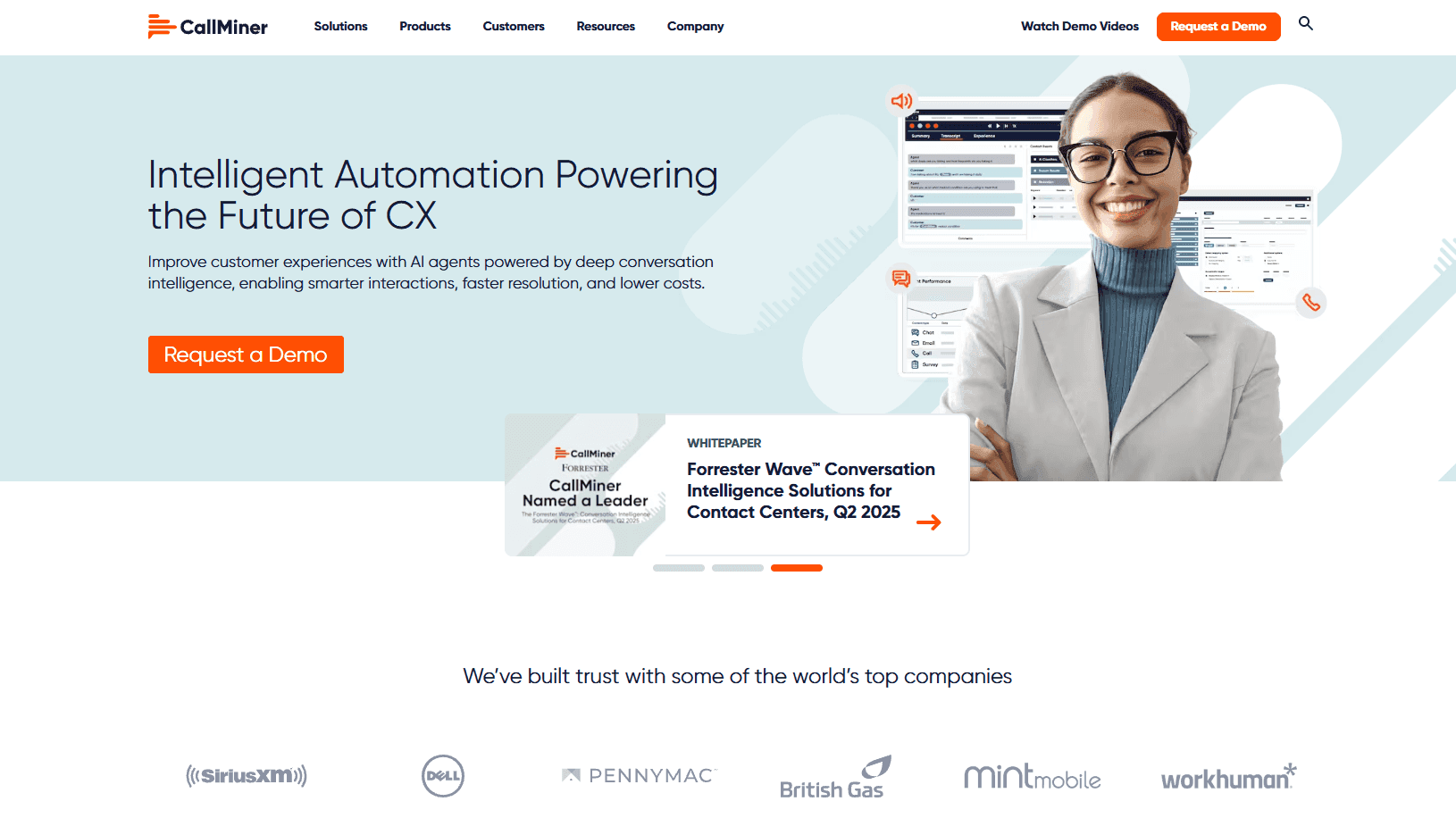
CallMiner has been in the speech analytics game for years. The platform processes massive call volumes and surfaces insights on emotion, silence, talk patterns, and topic trends.
What it does: CallMiner analyzes conversations using AI to identify patterns, sentiment, and trends across millions of interactions.
Who it's for: Large contact centers that want deep analytics on customer conversations and agent performance.
Key features of CallMiner
Sentiment analysis: Track customer emotion throughout calls to spot friction points.
Topic discovery: The system identifies emerging themes across your conversations.
Customizable scorecards: Build evaluation criteria that match your business needs.
Pros and cons of CallMiner
Pros | Cons |
Powerful analytics for teams drowning in call data | Timeout on one tab disconnects all other pages |
Identifies trends that human reviewers would miss | Interface slows down with large datasets or multiple filters |
Strong reporting and visualization tools | Transcription accuracy drops with noisy or complex audio |
Pricing of CallMiner
CallMiner offers enterprise pricing based on usage and features. Contact sales for details.
Bottom line
CallMiner excels at turning call data into insights. The platform answers "what's happening" better than most. For teams asking "how do we make reps better," the path from analytics to action requires more manual effort.
5. Talkdesk
Talkdesk bundles QA into a broader contact center suite. You get call recording, evaluation forms, and basic coaching tools along with your dialer and routing.
What it does: Talkdesk provides a full contact center platform with built-in quality management, workforce tools, and AI features.
Who it's for: Teams looking for one vendor to handle phones, routing, and quality assurance together.
Key features of Talkdesk
Built-in QA tools: Score calls, leave feedback, and track agent performance without a separate platform.
Workforce management: Schedule agents and forecast volume in the same system.
AI-powered insights: Surface trends and flag calls that need review.
Pros and cons of Talkdesk
Pros | Cons |
One platform for phones and QA simplifies your tech stack | QA features exist alongside the core product, not as the focus |
Evaluation tools cover the basics well | Setup takes time to learn; pricing scales fast |
Strong integration ecosystem | Copilot often fails to generate call notes |
Pricing of Talkdesk
Talkdesk starts at $85/user/month for basic plans. QA features may require higher tiers.
Bottom line
Talkdesk makes sense if you need a contact center platform and want QA included. Teams already happy with their phone system will find more value in dedicated QA tools that dive deeper into coaching and performance.
How to choose the right call center quality assurance software
The right QA platform depends on what problem you need to solve most.
If your top performers crush quota while others struggle
Look for platforms that analyze winning behaviors and turn them into coaching everyone can use. Generic scorecards miss what makes your best reps different. The gap between your top 10% and everyone else is where the biggest revenue gains hide.
If compliance violations keep you up at night
Prioritize call center monitoring software that catches risks before they become fines. Make sure the system handles your specific regulatory requirements. For Medicare, insurance, and financial services teams, look for SOC 2 Type 2 and HIPAA compliance built in.
If new reps take too long to ramp up
Real-time guidance during calls shortens the learning curve. But consider whether you want reps following preset scripts or learning from your actual winners. Platforms that coach based on real top-performer calls cut ramp time faster than generic training.
If you're drowning in call data
Speech analytics platforms surface patterns you'd never find manually. Just make sure insights connect to action, not just dashboards. Data without a clear path to coaching is just noise. (Check out our call center quality assurance checklist).
If you want one vendor for everything
All-in-one platforms simplify procurement but often sacrifice depth. Decide whether convenience outweighs capability. Teams serious about improving sales performance outgrow bundled QA features fast.
Which call center quality assurance software should you choose?
Choose Alpharun if you:
Run a high-volume sales team with 50+ reps
Want coaching based on what your top performers actually do
Need 100% call coverage without adding headcount
Operate in regulated industries requiring SOC 2 Type 2 compliance
Already use Five9 or Genesys and want fast integration
Choose Observe.AI if you:
Prioritize compliance monitoring above sales coaching
Need detailed audit trails for regulatory requirements
Choose Balto if you:
Have strict scripts that reps must follow exactly
Want real-time prompts to keep conversations on track
Choose CallMiner if you:
Need deep analytics across millions of conversations
Care more about understanding trends than coaching individuals
Choose Talkdesk if you:
Want QA bundled with your contact center platform
Prefer one vendor over best-in-breed tools
What separates reporting from results
Manual QA catches a fraction of calls and takes forever. By the time you spot a pattern, reps have repeated the same mistakes hundreds of times.
Every platform in this guide automates call reviews, but automation alone won't make your reps better. What matters is what happens after the score. Does the tool just report problems, or does it actually fix them?
What makes Alpharun different is the connection between QA and revenue. The platform learns what your top performers do to close deals, builds those tactics into playbooks, and coaches every rep to match. At the same time, AI agents handle the repetitive stuff so reps stay focused on selling.
For teams where every percentage point in close rate means real money, that connection between insight and action separates tools that report from tools that improve.
Schedule a demo to see how Alpharun builds custom playbooks from your actual winning calls.

