Compare the best contact center gamification software for 2026. See top tools, features, pricing, and what actually improves agent performance in practice.

Most contact center gamification software promise better engagement, but few actually move the needle on how reps perform.
After reviewing the leading platforms used by high-volume B2C teams, these are the seven that consistently help reps improve where it matters.
7 best contact center gamification software: quick comparison
💻 Tool | ⚡ Strengths | 🎯 Best for | 💰 Pricing |
AmplifAI | Deep performance-based gamification tied to QA, coaching, and KPIs | Enterprise teams (50+ agents) needing data-driven gamification | Custom pricing |
Cresta | AI coaching with lightweight gamification tied to conversation data | Teams already using Cresta that want simple gamification | Custom pricing |
Aspect | Strong coaching + gamification alignment with retention focus | Teams prioritizing engagement, coaching, and QA integration | Custom pricing |
Centrical | Full gamification suite with rewards, learning, and performance tracking | Mid-to-large teams wanting structured gamification programs | Custom pricing (per user) |
NICE CXone | Built-in gamification integrated with existing performance data | Large enterprises already using CXone | $110 to $249/user/month + add-on |
Genesys Cloud CX | Multi-metric gamification across omnichannel operations | Teams already on Genesys needing cross-channel tracking | $75 to $240/user/month (add-on in lower tiers) |
Five9 | Simple, easy-to-use gamification for outbound teams | Outbound-heavy teams wanting basic competition features | $119 to $159+/user/month + add-on |
How we researched and tested these contact center gamification tools
Our approach was based on how these tools show up in day-to-day sales operations, where adoption, speed, and impact on performance matter more than feature lists.
We reviewed feature docs and product pages, then validated them against real feedback from G2 and Gartner. Where possible, we tested workflows directly to see how these tools perform on a live floor.
For enterprise tools without pricing, we used demos and user insights to spot how they’re actually used and where friction comes in.
We focused on what matters on a high-volume sales floor:
Features: How well the platform runs leaderboards, contests, recognition, and rewards without adding friction
Performance connection: Whether it ties into real KPIs like conversions and QA, or just tracks activity
Integrations: How easily it connects with your CCaaS, CRM, and QA stack
Pricing: What you actually get at each tier and where key features are gated
Use cases: How it performs when reps are taking back-to-back calls and performance directly impacts revenue
The goal was to find which tools actually help reps improve, and which ones just make the floor feel more active without changing results.
1. AmplifAI: best for performance-tied gamification in enterprise call centers
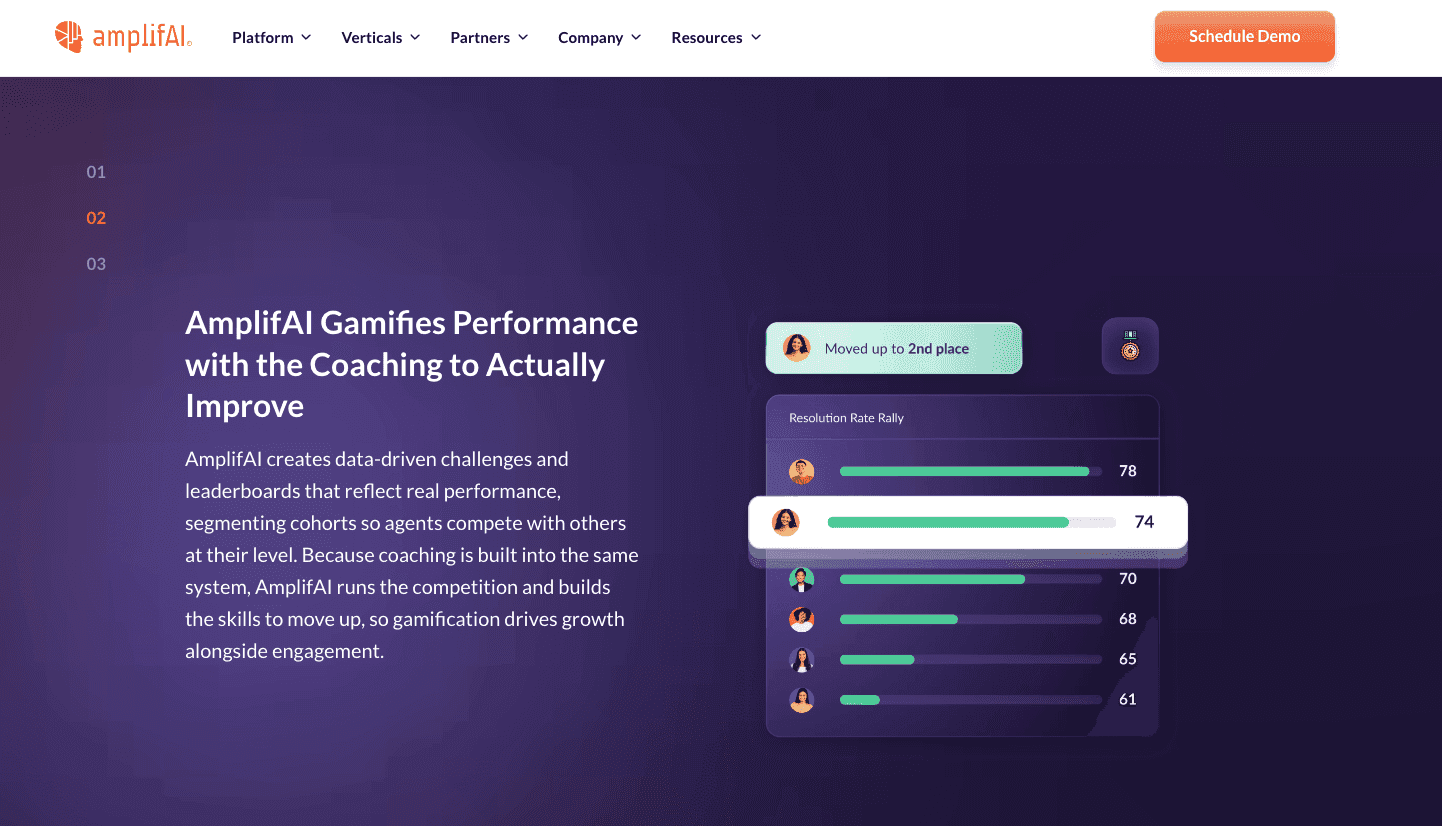
What it does: Connects gamification, recognition, and rewards directly to QA scores, coaching outcomes, and performance KPIs across 150+ integrated data sources.
Best for: Enterprise and BPO contact centers with 50+ agents where gamification needs to connect to real performance data, not standalone engagement mechanics.
AmplifAI is built as a dedicated gamification platform, with most features tied directly to performance data instead of surface-level engagement. Its focus is on reinforcing the behaviors that actually impact results and drive better outcomes on the floor.
Recognition is driven by QA and real outcomes, so when a rep improves or hits a compliance milestone, it’s picked up and rewarded automatically. That makes the system feel consistent and grounded in what matters on the floor.
It works well for teams that want gamification tied closely to performance. If you’re looking for simple engagement without deeper tracking, it may feel more structured than you need.
Key features
Gen AI Recognition: Automatically recognizes performance improvements and key behaviors in real time, without manual tracking.
Data-Powered Games: Runs contests based on real performance data like KPIs, tenure, and skill level.
Real-Time Leaderboards: Shows live rankings to keep reps engaged and focused during active campaigns.
Incentive Tracker and Calculator: Lets reps see progress toward bonuses and projected earnings based on performance.
Performance-Based Participation: Groups reps by skill level or performance tier to keep competition fair and motivating.
Pros and cons
✅ Pros | ❌ Cons |
Gamification ties directly to QA scores and coaching outcomes | Setup can take longer due to multiple data integrations |
Gen AI Recognition removes manual tracking for managers | May feel too broad for teams needing simple leaderboards |
150+ integrations unify performance data across the stack | Pricing is not transparent and requires a custom quote |
What users say

Pro: “The platform offers clear, data-driven insights that help improve employee performance and coaching effectiveness.” — IT Manager, Gartner Reviews

Con: “When a lot of users are logged in, it takes time to load the site or move from one page to another.” — Kathryn V., G2 Review
Pricing
AmplifAI pricing is custom and depends on your team size, integrations, and performance data setup, so you’ll need to request a quote for accurate details.
Our thoughts on AmplifAI
AmplifAI stands out when you have clear performance metrics in place and want to scale that across the floor. It helps automate recognition and keeps everyone aligned to the same standards, which is hard to do manually. Without that foundation, a lot of its value can be underused.
2. Cresta: best for teams that want AI coaching with light gamification built in
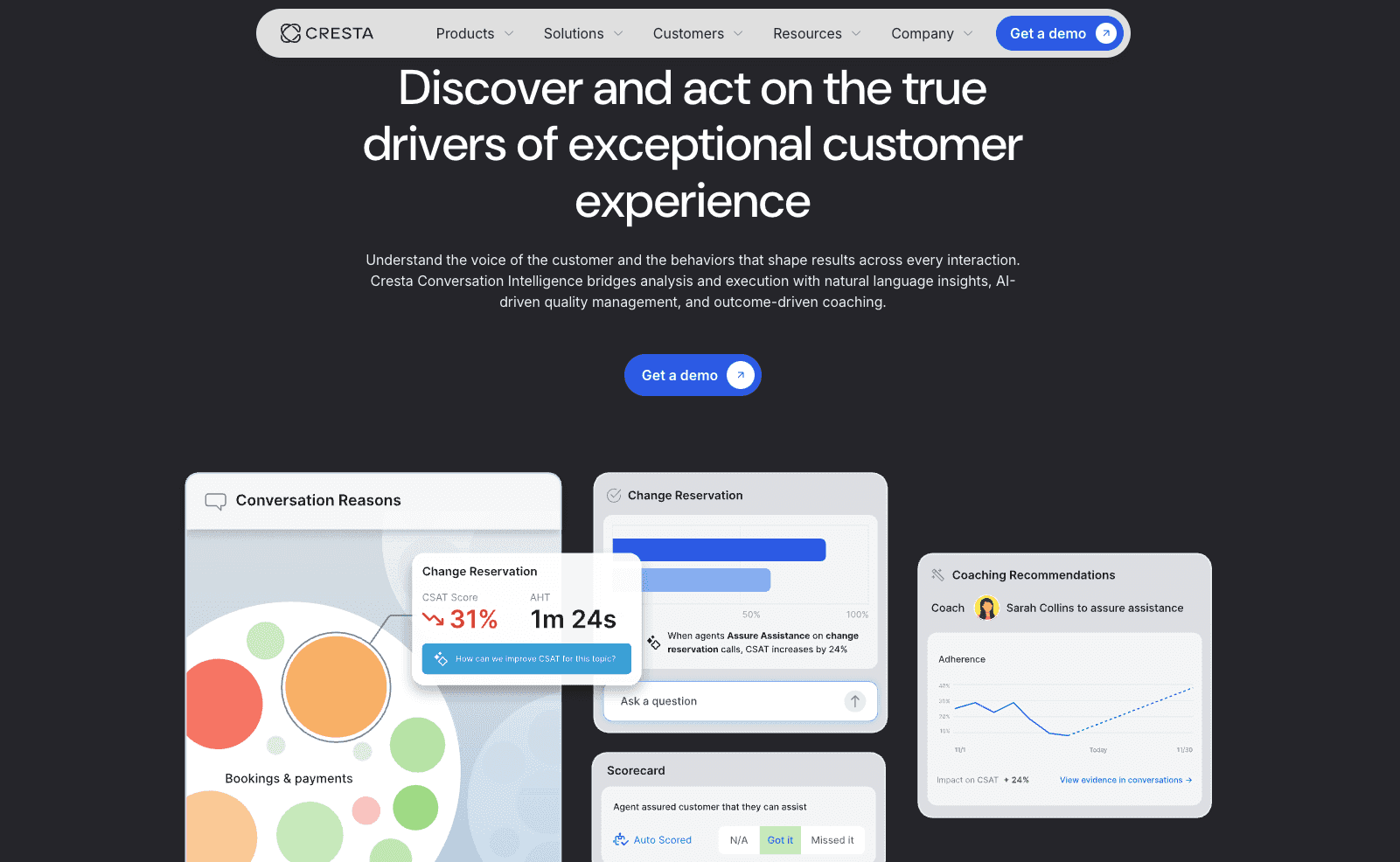
What it does: Conversation AI platform with real-time agent assistance, coaching, and basic gamification features including data-driven games and custom contests.
Best for: Contact centers already using Cresta’s conversation AI platform that want to add light gamification without bringing in a separate vendor.
Cresta does include gamification, but it’s not a dedicated gamification platform. Its focus is AI-powered coaching and real-time agent assist, with light gamification layered in to support performance.
The games are tied to real conversation data, which makes them more meaningful than basic activity tracking. But features like rewards, recognition systems, and deeper gamification mechanics are limited.
It works well if you want simple competition built into your coaching workflow. If gamification is a core part of your strategy, you’ll likely need a more focused tool.
Key features
Data-driven games: Competitions built from real-time conversation AI insights tied to actual interaction quality metrics.
Custom contest creation: KPI-focused competitions that integrate with conversation analytics for streamlined performance tracking.
Real-time agent assist: AI surfaces relevant guidance during live calls, which is the core product that gamification builds on top of.
Conversation analytics: Performance insights from every interaction to inform coaching and competition design.
Pros and cons
✅ Pros | ❌ Cons |
Gamification ties directly to conversation quality metrics rather than generic KPIs | No avatars, badges, rewards integration, or dedicated recognition analytics |
Removes vendor complexity for teams already using Cresta | Gamification is a secondary feature and limited for full programs |
Real-time AI assistance improves live call performance | Lacks QA-driven recognition and deeper coaching automation compared to dedicated tools |
What users say
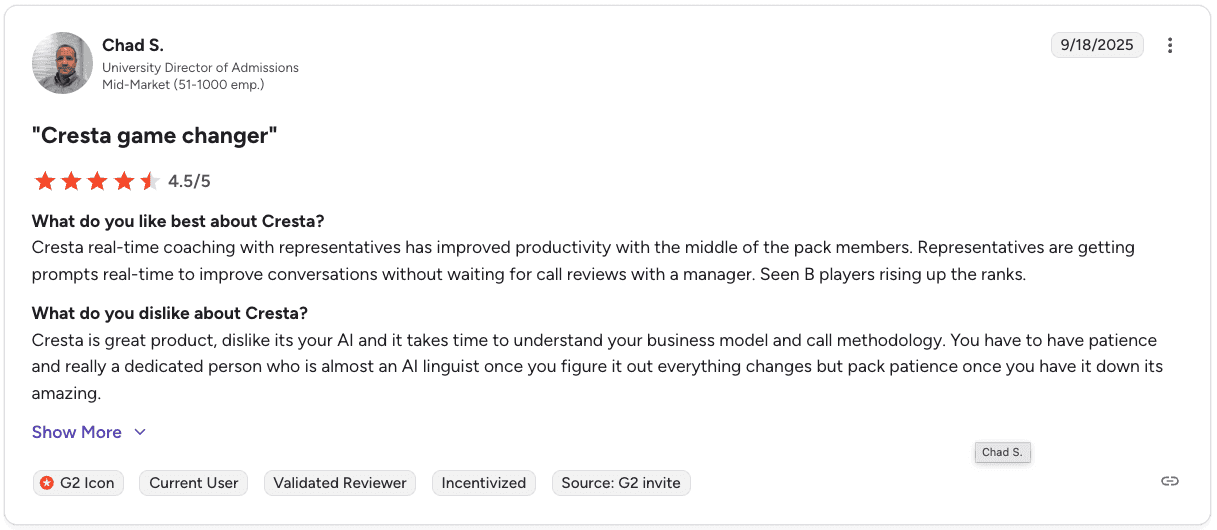
Pro: “Cresta real-time coaching with representatives has improved productivity.” — Chad S., G2 Review
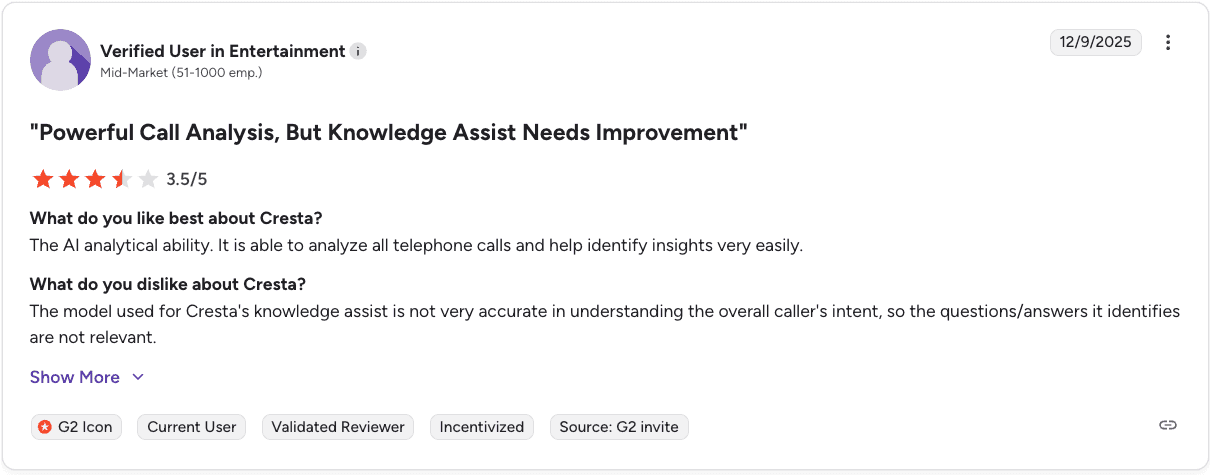
Con: “The model used for Cresta’s knowledge assist is not very accurate in understanding the overall caller’s intent.” — Verified User, G2 Review
Pricing
Cresta pricing is custom and varies based on team size, features, and implementation scope, so you’ll need to request a demo for exact details.
We’ve also put together a detailed Cresta Pricing and Products Guide to break down how it’s structured and where costs tend to scale.
Our thoughts on Cresta
Cresta fits best when coaching is the priority and gamification plays a supporting role. It keeps things simple and tied to real performance data.
But for teams looking to drive motivation through rewards, recognition, and deeper tracking, it can feel limited over time.
3. Aspect: best for gamification with coaching alignment
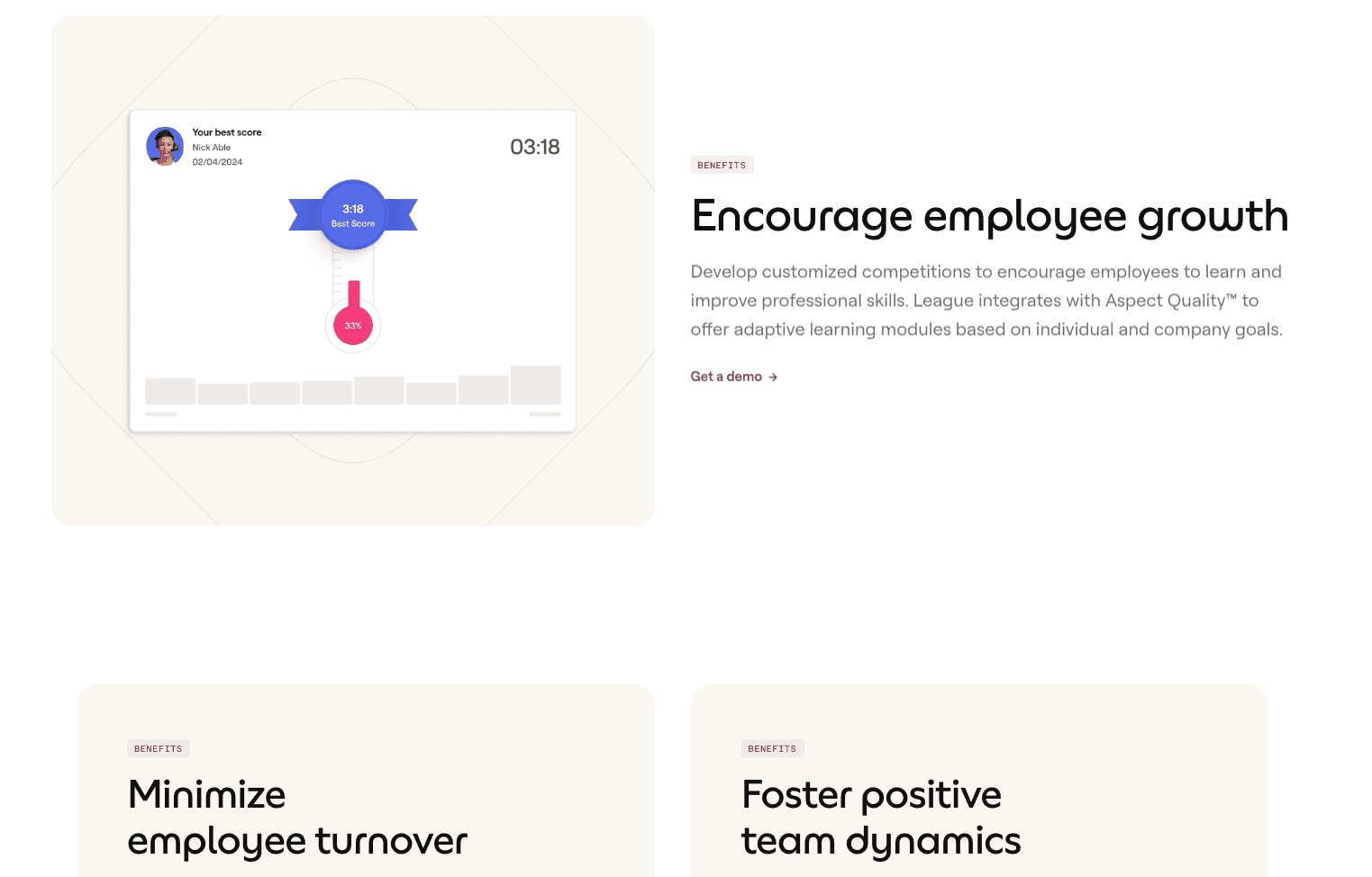
What it does: Dedicated contact center gamification platform with tournaments, head-to-head competitions, real-time leaderboards, and built-in coaching tools, integrated with Aspect Quality for performance-driven learning.
Best for: Contact centers that want gamification tied to coaching, quality management, and long-term agent development, with a strong focus on retention and team engagement.
Aspect League is built for teams focused on keeping agents engaged over time while improving performance.
The mix of competition, rewards, and built-in coaching makes it easier to connect performance with actual skill growth. The outcomes they highlight are strong, but it’s worth looking at how those would translate to your own setup.
Key features
Head-to-head competitions and tournaments: Run structured matchups and bracket-style contests to drive engagement
KPI tracking and goal alignment: Tie challenges directly to business metrics with clear progress visibility for agents
Coaching management tools: Deliver feedback and skill development based on real performance data
Aspect Quality integration: Connect gamification with adaptive learning and QA-driven insights
Team collaboration features: Built-in communication tools to encourage peer motivation and participation
Pros and cons
✅ Pros | ❌ Cons |
Strong focus on engagement and retention with rewards, competitions, and recognition | Impact metrics like retention and productivity gains may vary by team and need validation |
Flexible competition formats including head-to-head matchups and tournaments | May require setup to align challenges with KPIs and business goals |
Integrates with Aspect Quality for coaching and adaptive learning | Best suited for teams already using Aspect ecosystem for full value |
What users say
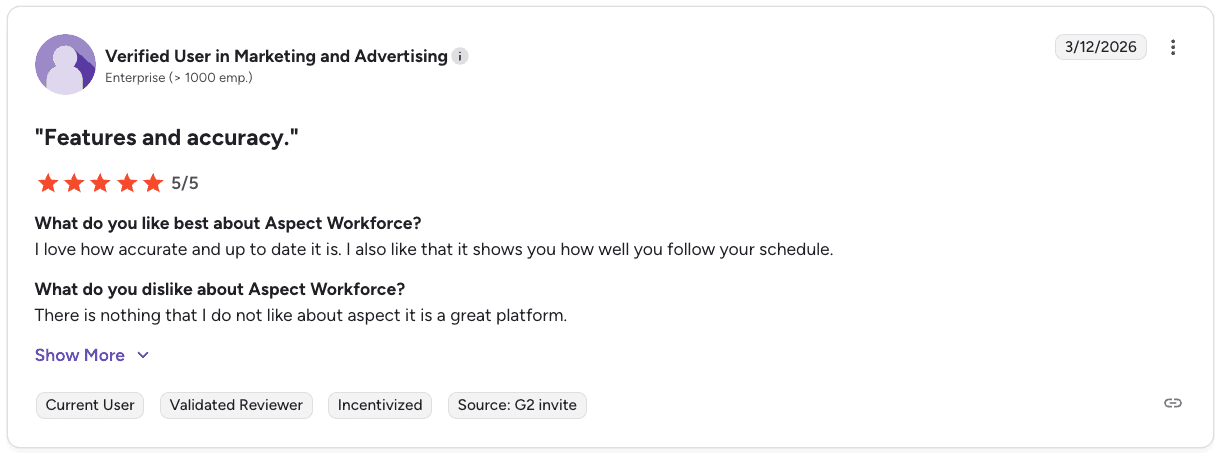
Pro: “It’s very accurate and shows how well you follow your schedule.” — Verified User, G2 Review
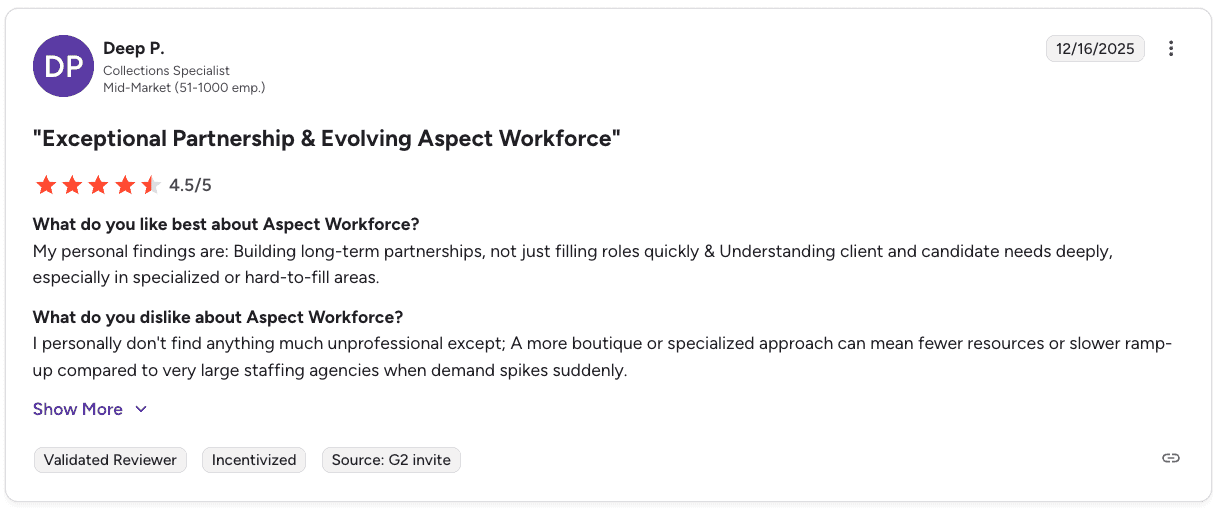
Con: “A more specialized approach can mean fewer resources or slower ramp-up when demand spikes.” — Deep P., G2 Review
Pricing
Aspect uses custom, quote-based pricing tailored to your team size, setup, and workforce management needs, so you’ll need to request a demo to get exact costs.
Our thoughts on Aspect
Aspect League brings gamification, coaching, and quality management into one platform, which can simplify things for some teams. The value is stronger if you’re already using Aspect tools. For others, integration and fit will be key factors to evaluate.
4. Centrical: best for traditional gamification mechanics with rewards integration
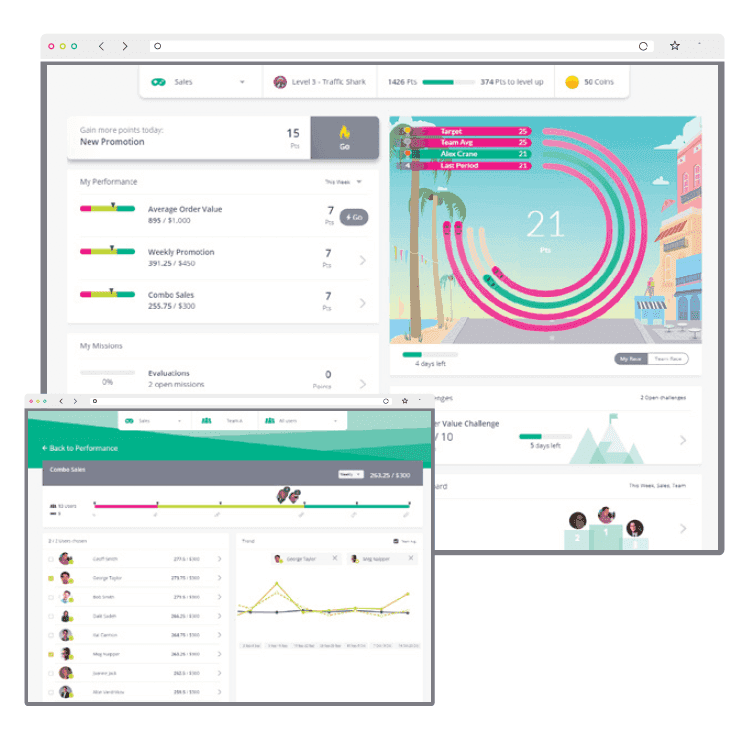
What it does: Provides gamification, personalized learning, and performance management with leaderboards, contests, peer comparisons, and direct rewards integration.
Best for: Mid-to-large contact centers that want reliable gamification mechanics with strong rewards integration but don’t need advanced AI-driven recognition or QA workflow automation.
Centrical is a dedicated gamification platform built to drive engagement and performance across frontline teams. It combines leaderboards, contests, rewards, and microlearning to keep agents motivated and improving.
Competitions are flexible, leaderboards update in real time, and rewards tie directly to performance metrics and incentives. Centrical also layers in AI-driven feedback and coaching, though how tightly this connects to QA workflows depends on how teams configure it.
Key features
KPI-driven gamification: Tie games, challenges, and rewards directly to performance metrics to drive the right behaviors
Real-time leaderboards and competitions: Keep agents engaged with live rankings, team challenges, and dynamic contests
Rewards and recognition system: Use points, badges, and redeemable rewards to motivate and retain agents
AI-powered coaching and feedback: Deliver personalized insights, guided improvement, and continuous performance support
Microlearning and training modules: Combine gamification with quizzes, simulations, and learning paths to improve onboarding and skill development
Pros and cons
✅ Pros | ❌ Cons |
Ties gamification directly to KPIs, performance, and coaching for measurable impact | Requires setup to properly align KPIs, coaching, and gamification |
Combines gamification with microlearning and training to improve onboarding and skills | Feature set may feel heavy for teams needing simple engagement tools |
Strong rewards, recognition, and engagement features that support retention | Success depends on consistent manager involvement and adoption |
What users say
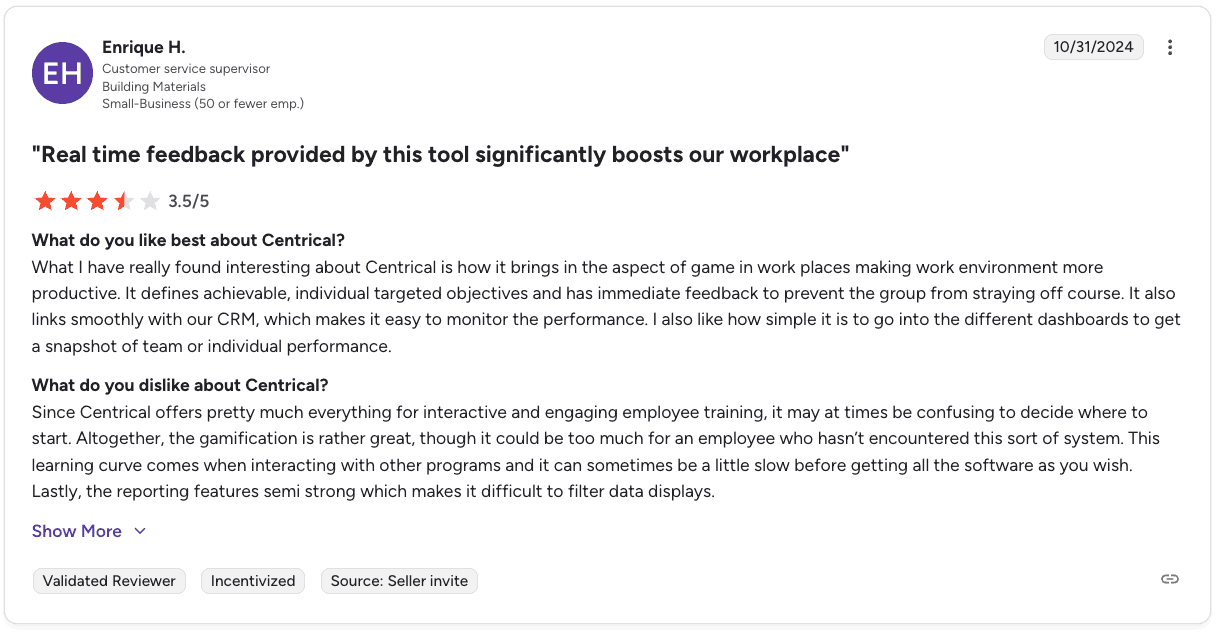
Pro: “It defines achievable, individual objectives and provides immediate feedback to keep teams on track.” — Enrique H., G2 Review
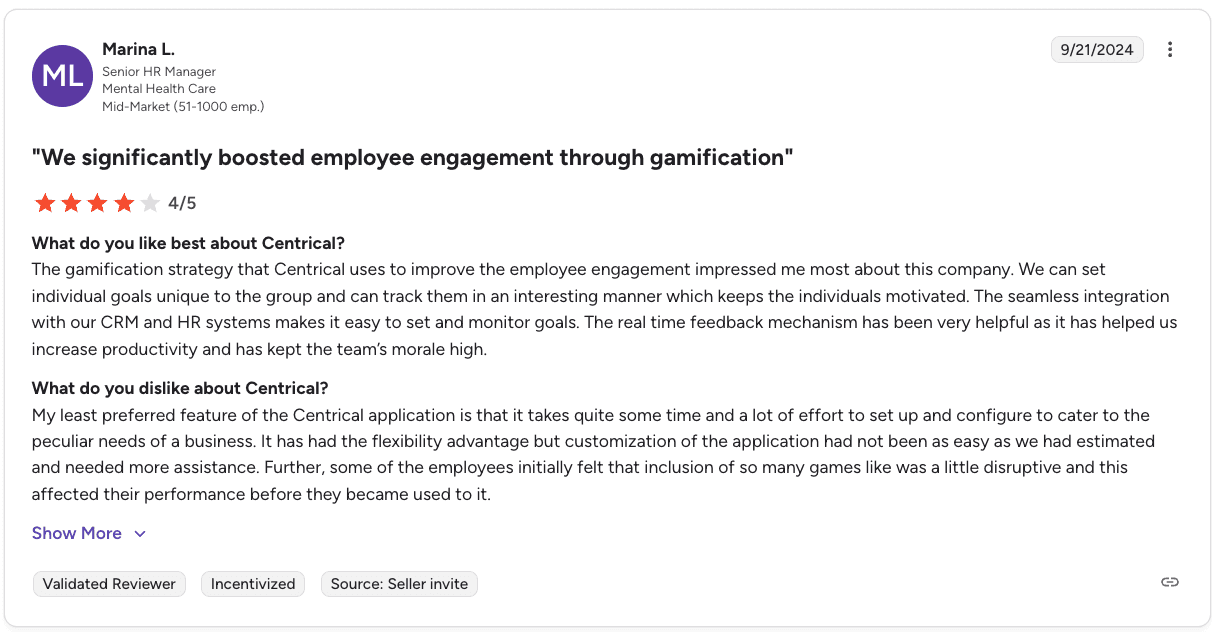
Con: “It takes quite some time and effort to set up and configure to meet specific business needs.” — Marina L., G2 Review
Pricing
Centrical uses a per-user pricing model with custom quotes based on license type and features, so you’ll need to contact their team for a detailed breakdown.
Our thoughts on Centrical
Centrical goes beyond basic leaderboards and actually connects gamification to how your team performs and improves. It’s powerful once everything is set up, especially with coaching and training built in. Just be prepared for a bit of a ramp before you see the full value.
5. NICE CXone: best for large teams wanting gamification inside their existing platform
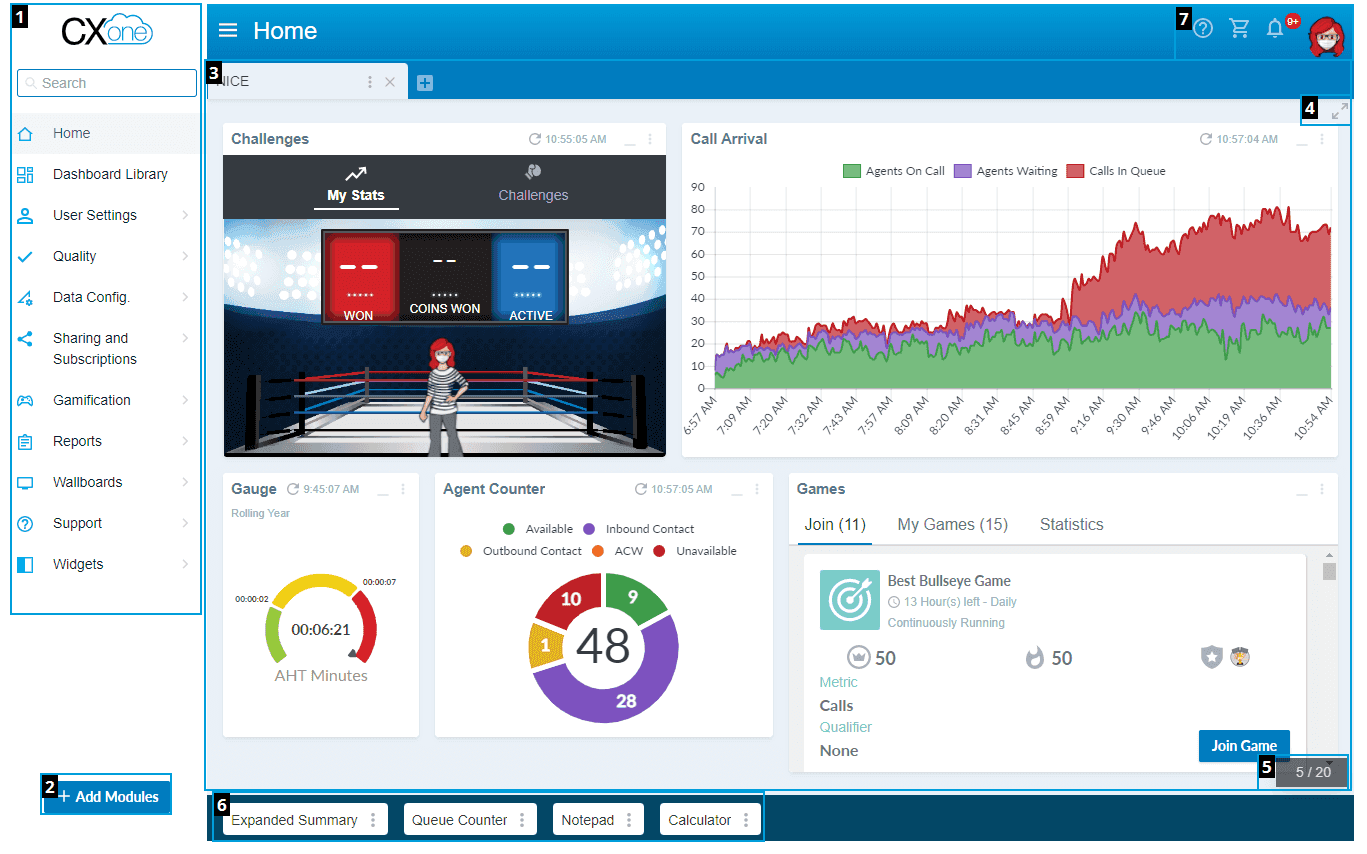
What it does: Enterprise contact center platform with built-in gamification features including leaderboards, contests, team competitions, and peer-performance comparisons integrated into workforce management workflows.
Best for: Large enterprise contact centers already committed to NICE CXone that want gamification without adding another vendor to the stack.
NICE CXone includes solid built-in gamification through its Performance Management suite, with leaderboards, competitions, recognition, and rewards all tied into the same system your team already uses.
Because it pulls from existing performance data, everything stays aligned with how your floor actually operates, so it feels like an extension of the platform rather than something separate.
That makes it easy to roll out if you’re already on CXone, since it’s more configuration than a new tool. The limits show up on the intelligence side, with less automation and fewer AI-driven features, and it can take time to fully dial in.
Key features
Flexible competition formats: Run individual, team, or multiplayer challenges based on your goals.
Executive dashboards: Track key KPIs and identify where agents should focus.
Points-based rewards system: Let reps earn and redeem rewards through a built-in marketplace.
Game management hub: Easily create, launch, and monitor contests from one place.
Agent performance dashboards: Give reps visibility into their progress, points, and rewards.
Live wallboards: Keep competitions visible across the floor to drive engagement.
AI-driven game suggestions: Get recommendations for contests based on performance trends.
Pros and cons
✅ Pros | ❌ Cons |
No additional vendor needed if you’re already using NICE CXone | No Gen AI recognition for automatic performance-based callouts |
Leaderboards and competitions pull from real operational data | Requires setup and configuration to unlock full value |
Scales easily across large, multi-site teams | Advanced features are gated behind higher pricing tiers |
What users say
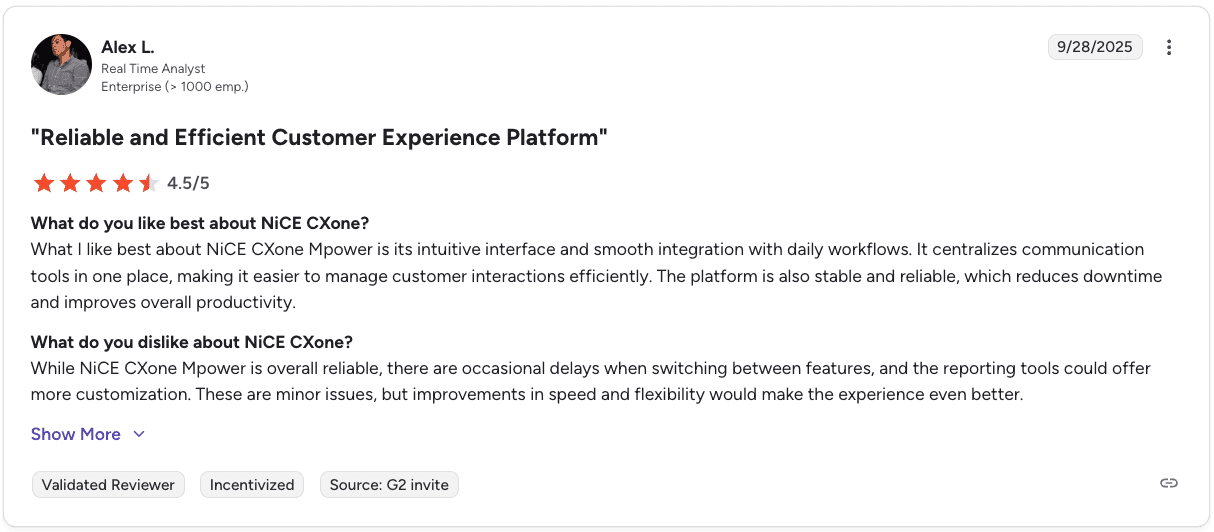
Pro: “It centralizes communication tools in one place, making it easier to manage customer interactions efficiently.” — Alex L., G2 Review
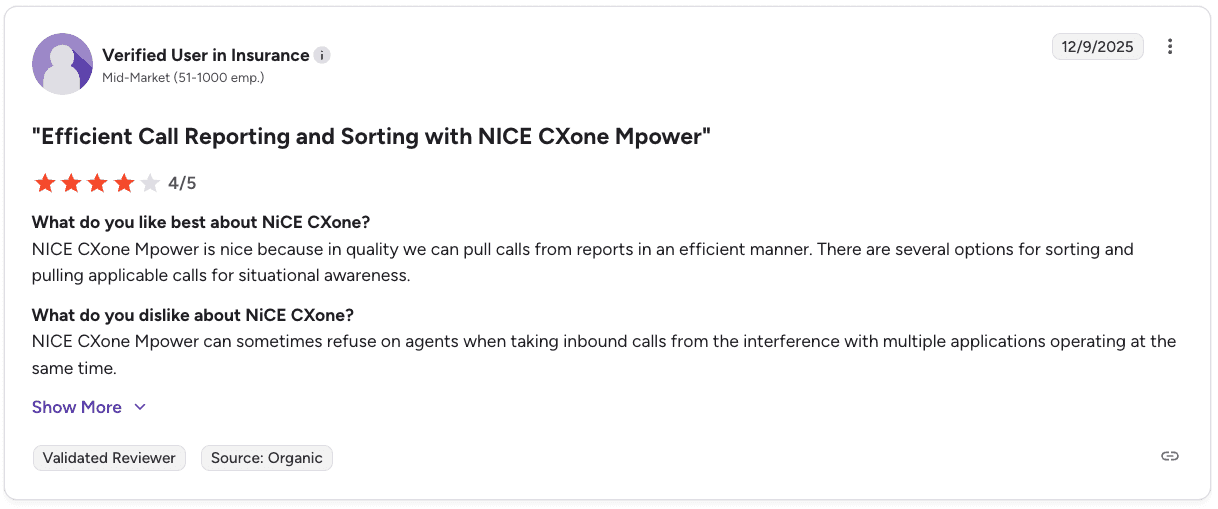
Con: “NICE CXone Mpower can sometimes refuse on agents when taking inbound calls from the interference with multiple applications operating at the same time.” — Verified User, G2 Review
Pricing
NICE CXone pricing ranges from $110 to $249 per agent/month depending on the suite, with higher tiers unlocking features like workforce management, analytics, and AI capabilities.
Gamification sits as an add-on across plans, so it’s not included by default and typically requires upgrading or additional configuration.
Our thoughts on NICE CXone
If your team already runs on NICE CXone, adding gamification as an add-on can feel like a natural extension. You keep everything in one system, which is a plus, but it’s not plug-and-play. It leans more on configuration than automation, so expect some ramp time.
6. Genesys: best for multi-metric gamification inside an omnichannel platform
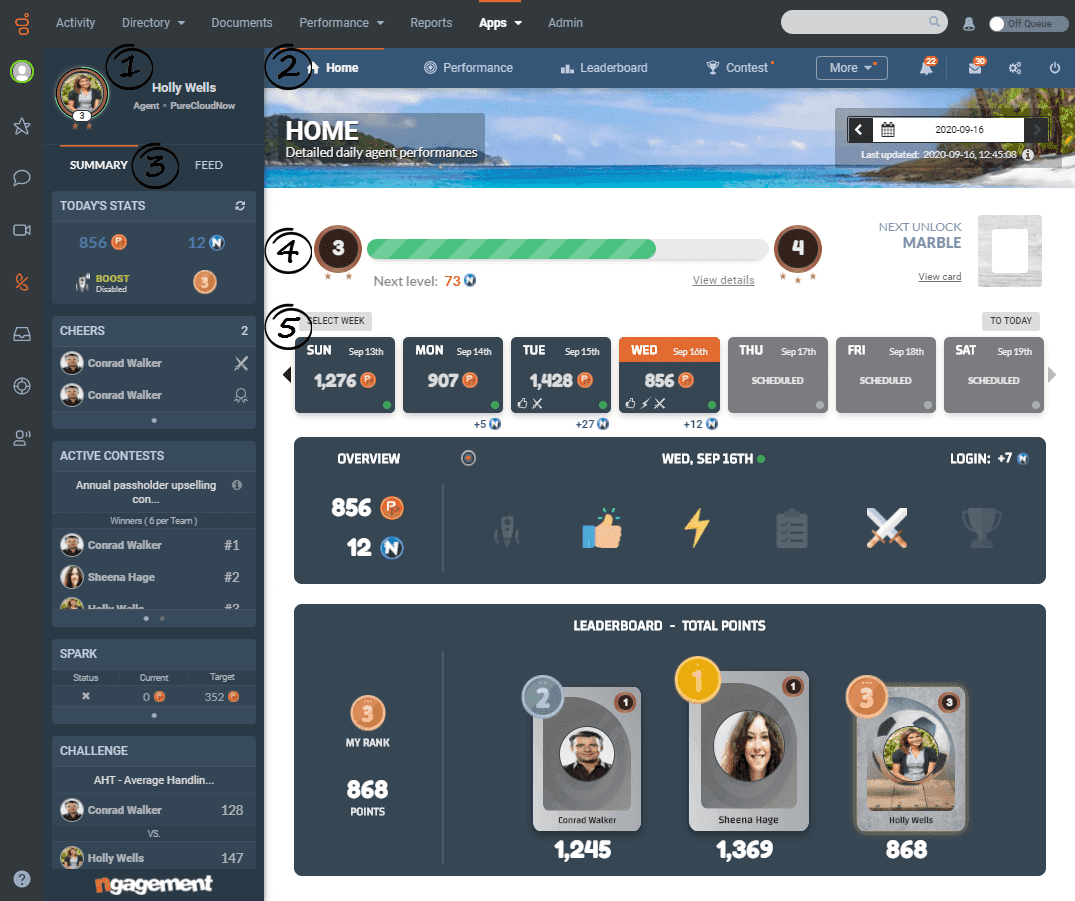
What it does: Enterprise contact center platform with built-in gamification including real-time leaderboards, multi-metric games, team competitions, and custom contests integrated into the Genesys Cloud ecosystem.
Best for: Enterprise contact centers already running Genesys Cloud that need gamification across multiple channels and operational metrics without a separate tool.
Genesys handles gamification well when you’re tracking multiple KPIs across channels, since it pulls everything into one place.
Features like leaderboards, badges, and contests are built into the platform and connected to real performance data. But like other all-in-one systems, it leans more on configuration than intelligent automation, and works best when you’re fully invested in the Genesys ecosystem.
Key features
Dual point system: Agents earn performance points for hitting KPIs and engagement points for participating in activities like challenges and peer recognition.
Leaderboards and rankings: Track agent performance, engagement, and overall standing in real time.
Contests and challenges: Run team or individual competitions tied directly to performance metrics.
Rewards and recognition system: Use badges, points, and peer recognition to reinforce achievements and milestones.
Interactive training and self-assessment: Built-in quizzes and learning modules to support onboarding and skill development.
Pros and cons
✅ Pros | ❌ Cons |
AI-driven performance insights help identify trends and guide agents toward KPI goals | Requires full Genesys Cloud setup and doesn’t work as a standalone tool |
Real-time data sync pulls live call activity, presence, and performance metrics into one system | AI-driven recognition is still limited compared to dedicated gamification tools |
Strong manager controls and reporting for running contests and tracking team performance | Setup and configuration can take time before teams see value |
What users say
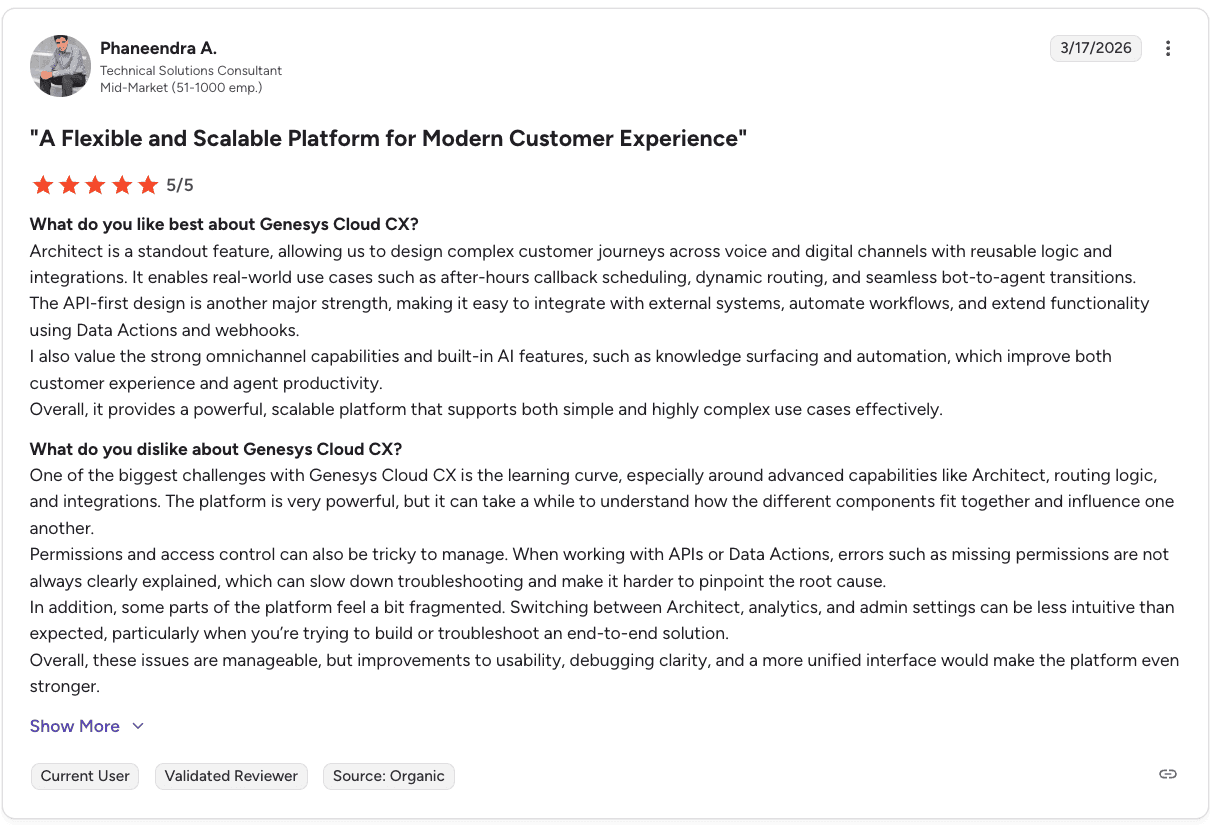
Pro: “It provides a powerful, scalable platform that supports both simple and highly complex use cases effectively.” — Phaneendra A., G2 Review
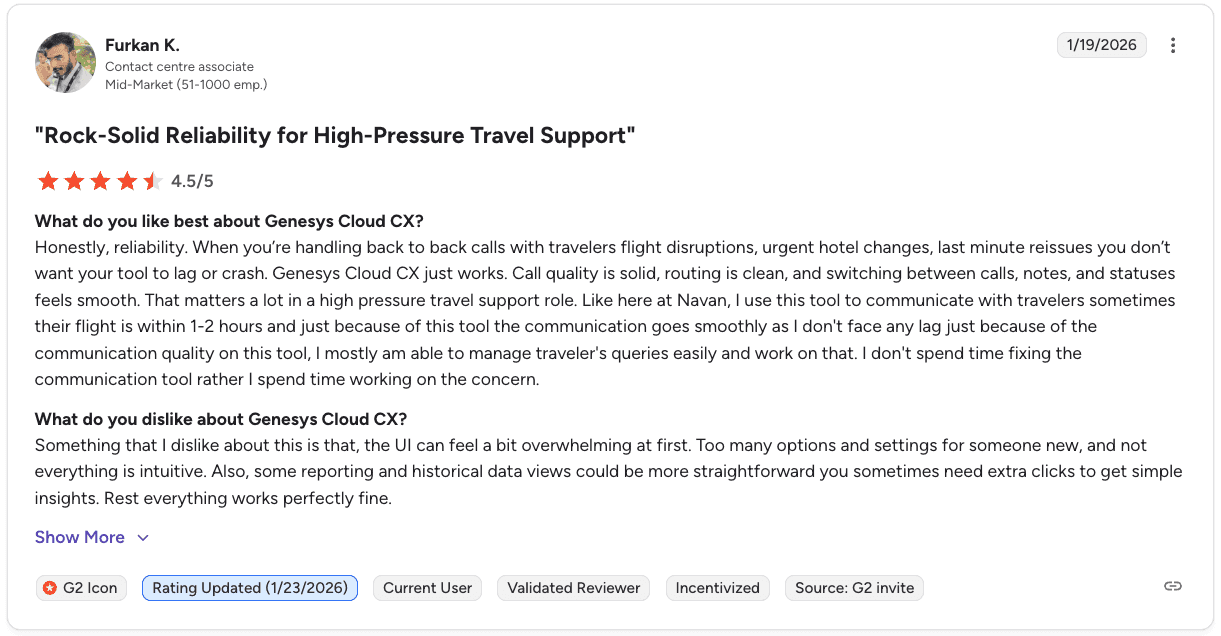
Con: “The UI can feel a bit overwhelming at first, with too many options and settings for someone new.” — Furkan K., G2 Review
Pricing
Genesys Cloud CX pricing starts at $75/user/month for CX1 and goes up to ~$240/user/month for CX4, with higher tiers unlocking full WEM and AI capabilities.
Gamification is an add-on in CX1 and CX2, and only becomes included in higher-tier plans like CX3 and CX4.
We’ve also put together a complete Genesys pricing breakdown, including which plans make the most sense based on your use case.
Our thoughts on Genesys
Genesys is a good fit when gamification is part of a broader system you’re already using. It handles performance tracking well, especially across multiple KPIs. If you’re mainly looking for gamification, though, paying for higher tiers or add-ons can feel unnecessary compared to standalone tools.
7. Five9: best for basic gamification inside an outbound-focused platform
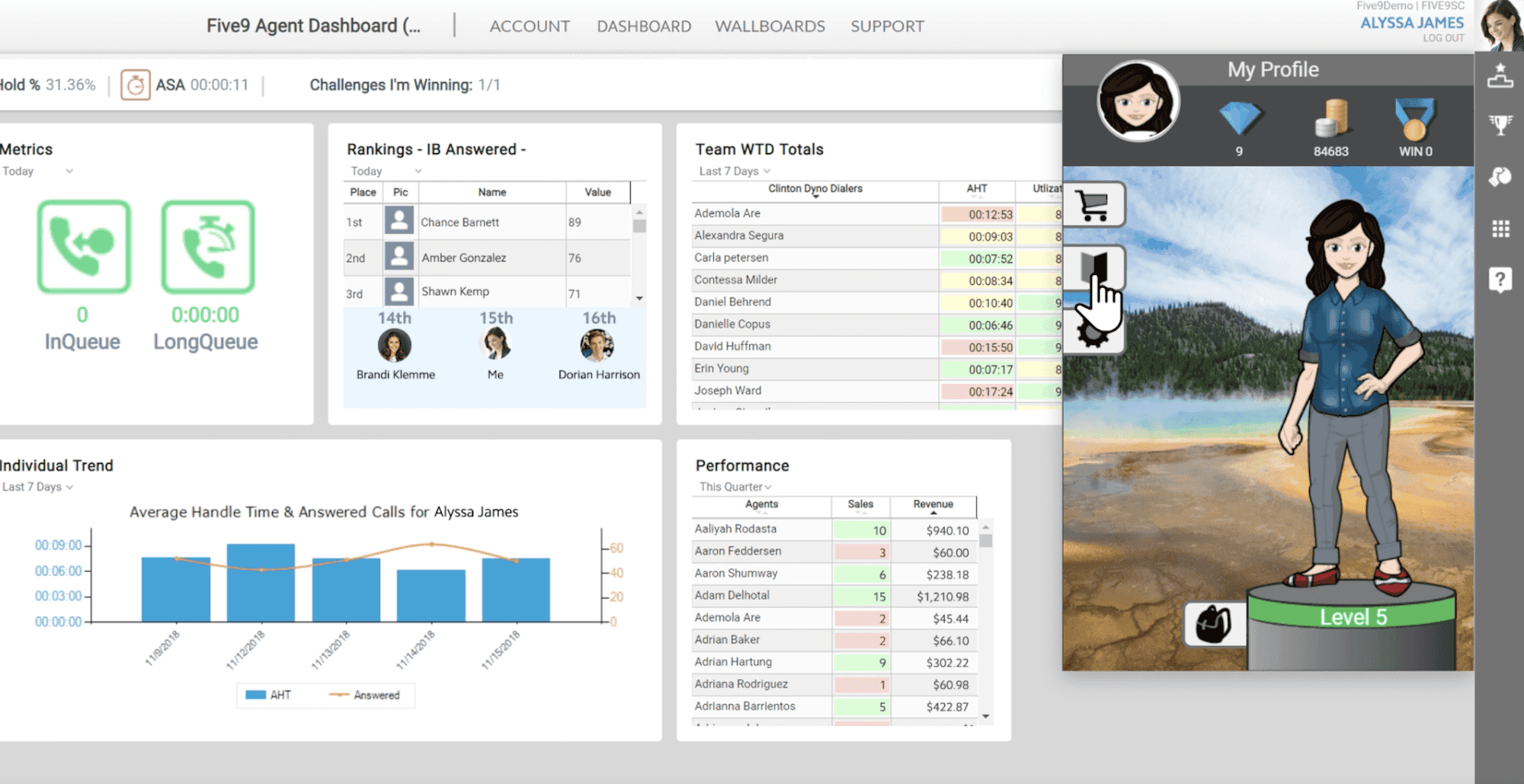
What it does: Cloud contact center platform with basic gamification features including real-time leaderboards, peer comparisons, team competitions, and custom contests integrated into outbound call center workflows.
Best for: Contact centers already running Five9 for outbound-heavy sales that want simple competition features without managing a separate gamification tool.
Five9 includes a fairly comprehensive gamification layer designed to keep agents motivated and connected, especially in remote setups. Everything runs inside the Performance Dashboard, making it easy to tie games directly to daily metrics.
You get flexible rewards, team challenges, customizable avatars, and game simulation before rollout. It’s strong for engagement and visibility, but may feel surface-level for coaching-driven gamification.
Key features
Built-in performance tracking + gamification: Access real-time metrics and join games directly within the Five9 Performance Dashboard.
Custom games and team challenges: Create competitions tied to long-term goals or let agents challenge each other during key periods.
Flexible rewards system: Offer points, badges, and real-world prizes through an integrated rewards marketplace.
Clear goals and performance visibility: Set targets, track progress, and increase transparency across the team.
Peer engagement for remote teams: Encourage collaboration and friendly competition across distributed agents.
Pros and cons
✅ Pros | ❌ Cons |
No additional vendor needed if you’re already using Five9 | No AI-driven recognition or automated coaching insights |
Leaderboards connect directly to live outbound call data | No QA-based rewards or recognition tied to quality improvements |
Simple to use for both agents and managers with minimal training | Limited depth compared to dedicated gamification platforms |
What users say
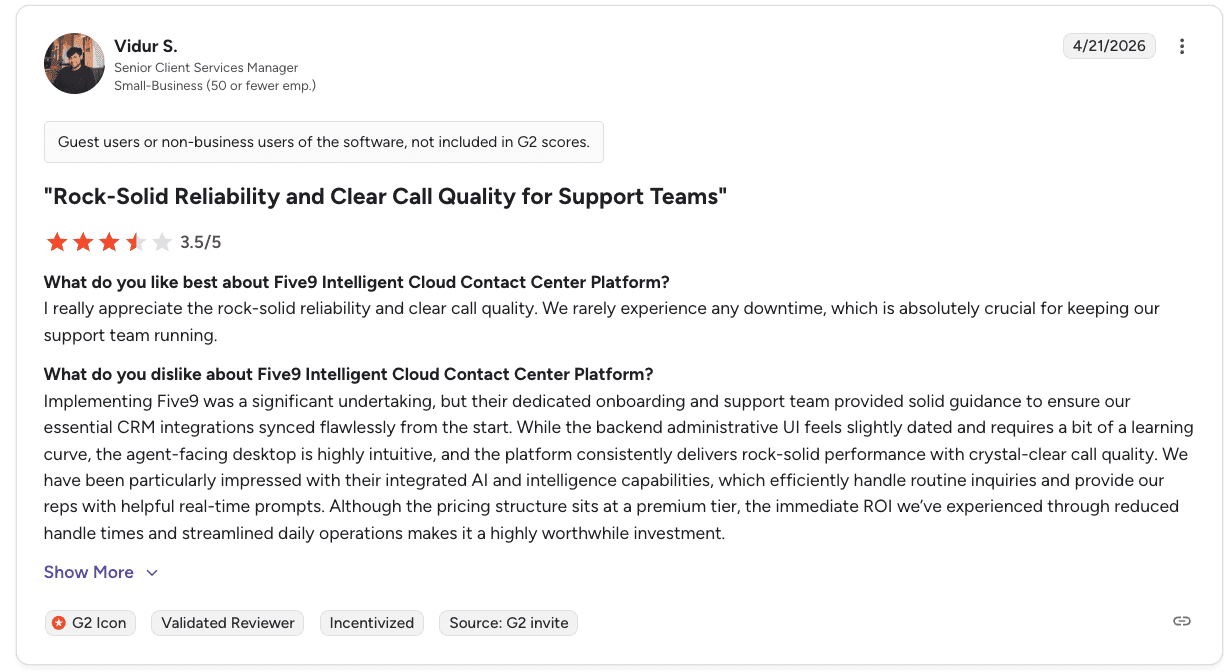
Pro: “We rarely experience any downtime, which is absolutely crucial for keeping our support team running.” — Vidur S., G2 Review
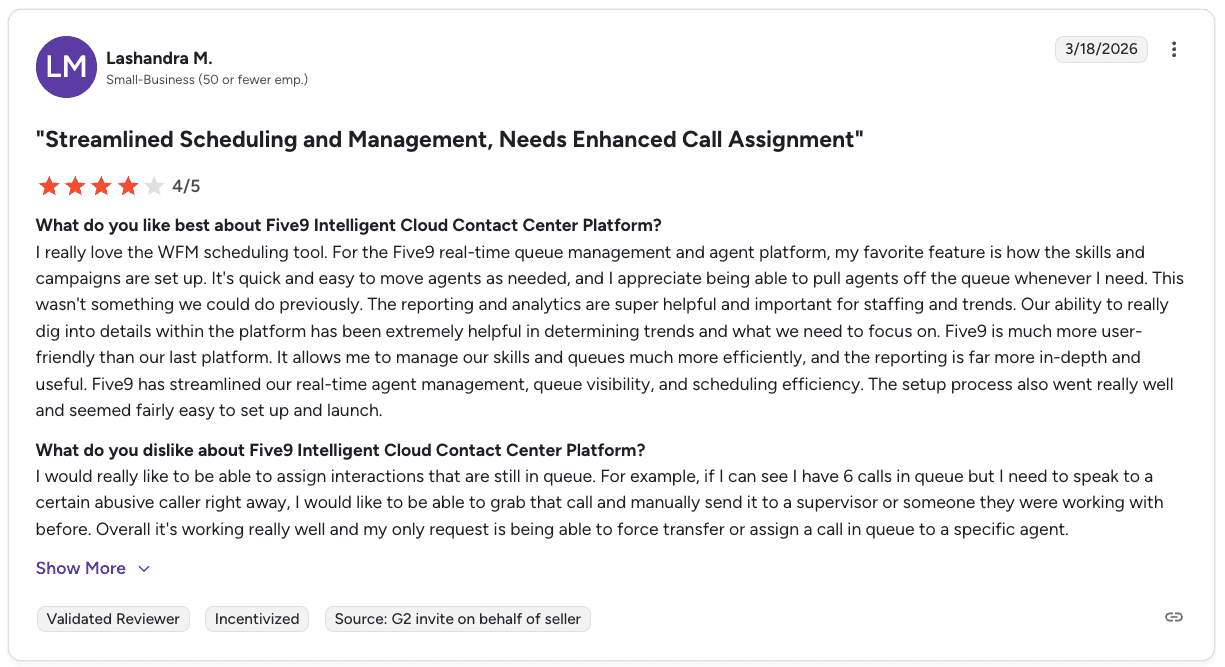
Con: “I would like to be able to grab that call and manually send it to a supervisor or specific agent.” — Lashandra M., G2 Review
Pricing
Five9 pricing starts around $119 per seat/month for digital-only plans and ~$159 for Core + AI tiers, with higher plans moving to custom pricing based on scale and features.
Gamification is not included by default and comes as an add-on, requiring additional setup or integrations.
We’ve analyzed Five9 pricing in detail, including plan breakdowns and where it stands compared to alternative platforms.
Our thoughts on Five9
Five9’s gamification is easy to roll out as an add-on and works well for visibility, rewards, and team competition. It’s strong for engagement in outbound environments. The tradeoff is limited depth when it comes to performance-driven coaching or AI-based recognition.
Which contact center gamification software is best?
The right software depends on whether you need a dedicated gamification platform or a built-in feature within your existing contact center stack.
Choose AmplifAI if you:
Want gamification tied directly to QA scores, coaching, and real performance data
Run a larger team (50+ reps) where consistency and scale matter
Need automated recognition instead of manual tracking from managers
Already have clear KPIs and want to reinforce them across the floor
Choose Cresta if you:
Already use Cresta and want to layer in simple gamification without another tool
Care more about coaching and live call support than rewards systems
Want games tied to real conversation data
Prefer something lightweight that’s easy for reps to pick up
Choose Aspect if you:
Want gamification closely tied to coaching and quality management
Focus on improving retention and long-term agent performance
Already use Aspect tools or plan to build around that ecosystem
Need structured competitions with built-in learning and feedback
Choose Centrical if you:
Want a full gamification platform with rewards, learning, and performance tracking
Need structured programs that go beyond simple leaderboards
Care about onboarding, training, and long-term skill development
Have the time and resources to set it up properly
Choose NICE CXone if you:
Already run your contact center on NICE CXone
Want gamification without adding another vendor to your stack
Need something that scales across large, multi-site teams
Are okay with configuring it rather than relying on automation
Choose Genesys Cloud CX if you:
Already use Genesys and want gamification built into your workflow
Track performance across multiple KPIs and channels
Need competitions tied to real operational data
Don’t want to manage a separate gamification platform
Choose Five9 if you:
Run outbound-heavy campaigns and want simple competition features
Already use Five9 and want an easy add-on for engagement
Need something quick to roll out with minimal training
Care more about visibility and motivation than deep coaching features
Skip gamification tools entirely if you:
Have fewer than 20 reps, where competition usually isn’t enough to meaningfully change behavior
Don’t have clear performance standards yet, since gamification works best when it reinforces what’s already defined
Final verdict
If you want gamification tied closely to real performance, AmplifAI stands out. Its QA-driven recognition and behavior tracking go deeper than the rest. Centrical is a strong alternative if you want structured gamification without the same level of data integration.
If you’re already using NICE CXone, Genesys, or Five9, it’s worth starting with their built-in features. They’re easy to roll out, though more limited compared to dedicated platforms.
Gamification gets reps moving, but it doesn’t explain why your top performers win more deals. Alpharun breaks down real calls to find those patterns and turns them into coaching your team can actually use on the next call.
Book a demo with Alpharun to see how it works alongside whatever gamification setup you choose.
Frequently asked questions
What is gamification in a call center?
Gamification in a call center is the use of game-like elements like leaderboards, rewards, points, and competitions to motivate agents and improve performance. It works by tying these mechanics to real KPIs so reps stay engaged while working toward clear goals.
What is the best contact center gamification software for high-volume sales teams?
The best contact center gamification software depends on your setup. AmplifAI works best for teams that need QA- and coaching-driven gamification, while Centrical is a strong option for structured rewards and contests.
Does gamification actually improve call center performance?
Yes, gamification improves call center performance when it’s tied to meaningful KPIs like conversions and compliance. Leaderboards alone don’t drive results unless they reinforce the right behaviors. Tools that connect recognition to QA and coaching tend to have a bigger impact.
What features should I look for in call center gamification software?
The most important features in call center gamification software are performance-based tracking, QA-driven recognition, real-time leaderboards, and flexible contests. Teams in regulated industries should prioritize tools that tie rewards directly to compliance and coaching outcomes.
Do you need gamification if you already have a contact center platform?
Yes, you may still need gamification if your platform doesn’t drive engagement or behavior change. Most contact center platforms handle routing and data, while gamification tools focus on motivation, recognition, and performance reinforcement.

