

Ask anyone who runs RevOps what the last day of the quarter feels like and you'll get the same tired look. Somewhere in a shared spreadsheet, a formula that worked fine in January broke in March and nobody caught it, and now three reps are in your inbox asking why their commission check looks light.
A sales compensation platform fixes that math. It won't make your reps hit the numbers the plan is paying them for, but it will make sure the numbers are right and that everyone believes them, which turns out to be most of the battle.
We put all eight through the same three questions. Who is this really built for, what does it cost once you add everything up, and where does it fall down? Here's what we found, including the parts nobody selling you the software is in a hurry to mention.
What is a sales compensation platform?
A sales compensation platform automates variable pay. It calculates commissions, tracks quota attainment, runs payouts, and reports on the whole thing using data pulled straight from your CRM and ERP.
You'll also see it called commission software, or incentive compensation management (ICM) software if you're reading an analyst report. Same category, different labels.
Think of it as the thing that finally retires the spreadsheet-and-manual-reconciliation routine most teams start out with.
Sales compensation software is the incentive and commission slice of a bigger category called sales performance management (SPM), which also folds in territory and quota planning.
Some of the vendors below are pure comp tools. Others are full SPM suites where comp is one module among several. Which one you need comes down to how complicated your plans and your org are, and step 3 below sorts the list on exactly that.
Why teams move off spreadsheets (and when you don't need to yet)
A five-rep team on a flat 10% commission can run comp in Google Sheets for years and be perfectly happy doing it. Be honest with yourself about whether that's still you before you spend anything.
You'll usually know it's time when one of these starts happening:
Headcount growth: more reps means more rows, more edge cases, and more room for one broken formula to snowball into a very bad Friday.
Plan complexity: accelerators, tiers, draws, clawbacks, and SPIFs pile up faster than you'd expect, and every one of them is somewhere a spreadsheet can miscalculate without telling you.
Mid-year plan changes: a comp plan that shifts in Q3 tends to break formulas you built in Q1, and those errors stay hidden until somebody complains.
Dispute volume: once reps stop trusting the number, they start building their own shadow spreadsheets to check payroll against the performance metrics they're paid on. Once that starts, the trust is already gone.
Audit and compliance needs: ASC 606 revenue-recognition requirements and finance audits are tough to satisfy when your source of truth is a tab anyone can overwrite.
If two or more of those sound like your team, a platform will pay for itself in recovered hours and fewer arguments. If none of them do, keep your money for now.
The 8 best sales compensation platforms at a glance
Here's the short version before we get into the full profiles. Ratings come from user reviews aggregated on G2, which is about as neutral a read as you'll get in a category this full of self-promotion.
🏷️ Platform | 🎯 Best for | ⚡ Standout capability | 💰 Pricing signal | ⭐ G2 rating |
|---|---|---|---|---|
CaptivateIQ | Mid-market to enterprise RevOps | No-code plan design (SmartGrid) | Custom | 4.7 |
Performio | Finance-led mid-market and enterprise | Pre-built comp components | Custom | 4.4 |
Xactly | Large, global, complex orgs | Mature SPM suite plus benchmarking data | Custom | 4.2 |
Salesforce Spiff | Salesforce-native teams | Commissions inside Sales Cloud | $75/user/mo, billed annually | 4.6 |
Everstage | Growth to enterprise teams | Rep-facing transparency and payout forecasting | Per-payee custom | 4.8 |
Varicent | Large enterprise SPM buyers | Territory, quota, and comp in one | Custom | 4.5 |
QuotaPath | Growing SMB and mid-market | Transparent published pricing | $525/mo + $35/user/mo | 4.7 |
Qobra | Flexible RevOps teams (strong in Europe) | Real-time, no-code, mobile | Custom | 4.8 |
The 8 platforms, reviewed
Every tool here is one we'd happily put in front of a buyer. None of them is right for everyone though, so each profile starts with who it suits and ends with where it falls short.
1. CaptivateIQ
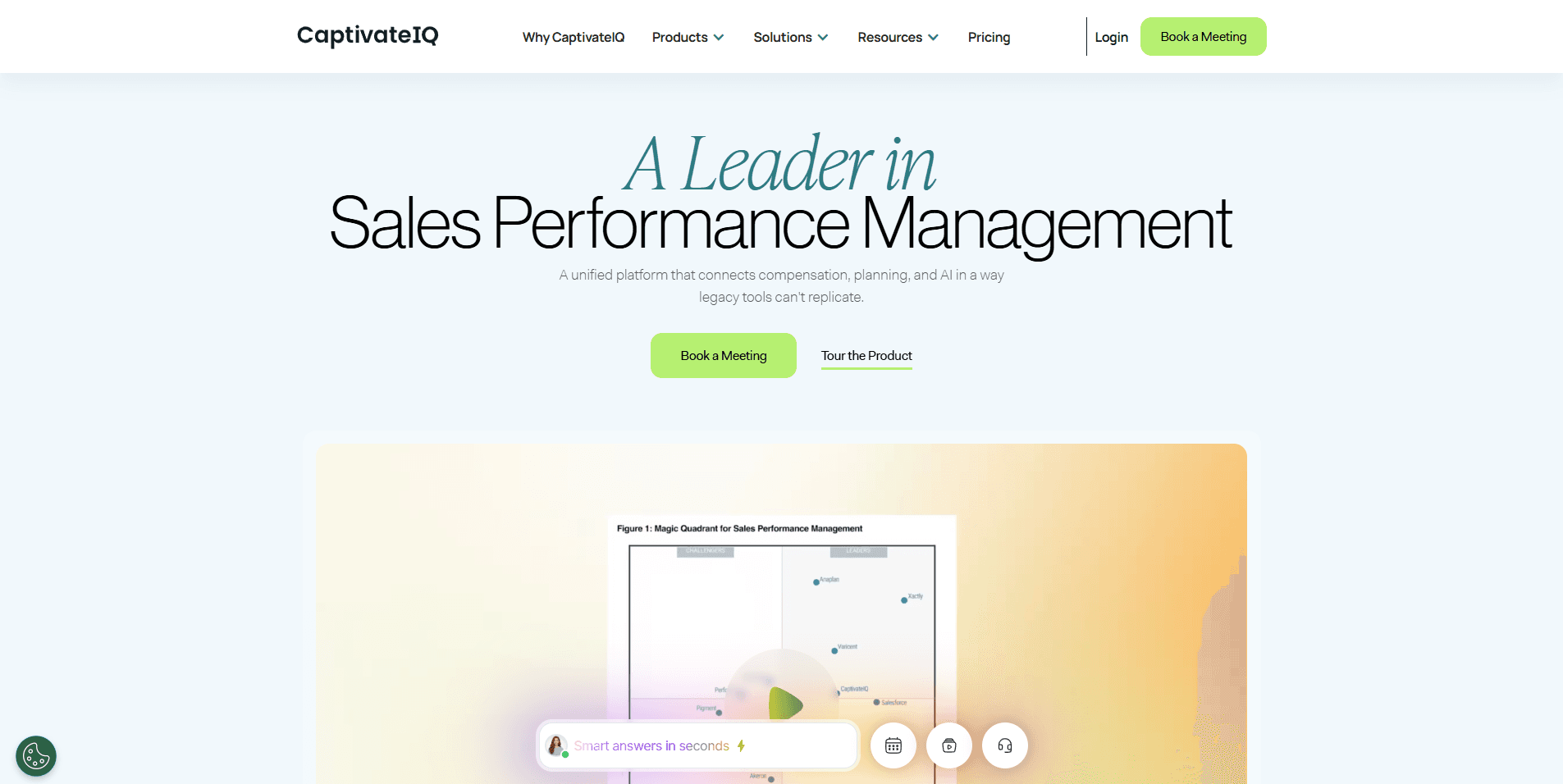
What it does: CaptivateIQ calculates and manages commissions with a no-code designer that lets RevOps build and change plans without engineering help.
Best for: Mid-market to enterprise RevOps teams that want flexibility without a consulting engagement every time a plan changes.
The SmartGrid engine is the real draw here. You model complex plans in something that feels like a spreadsheet, then wire comp into your broader planning, so quota and headcount decisions sit right next to the payout math. CRM and ERP integrations run deep, and the rep-facing statements are clear enough to head off most disputes.
The tradeoff is that CaptivateIQ leans upmarket. Pricing is quote-based, and the gnarliest plans still take real setup time even with all that no-code tooling. If you're a small team, this is more platform than you need.
Pricing: Custom. G2 rating: 4.7.
2. Performio
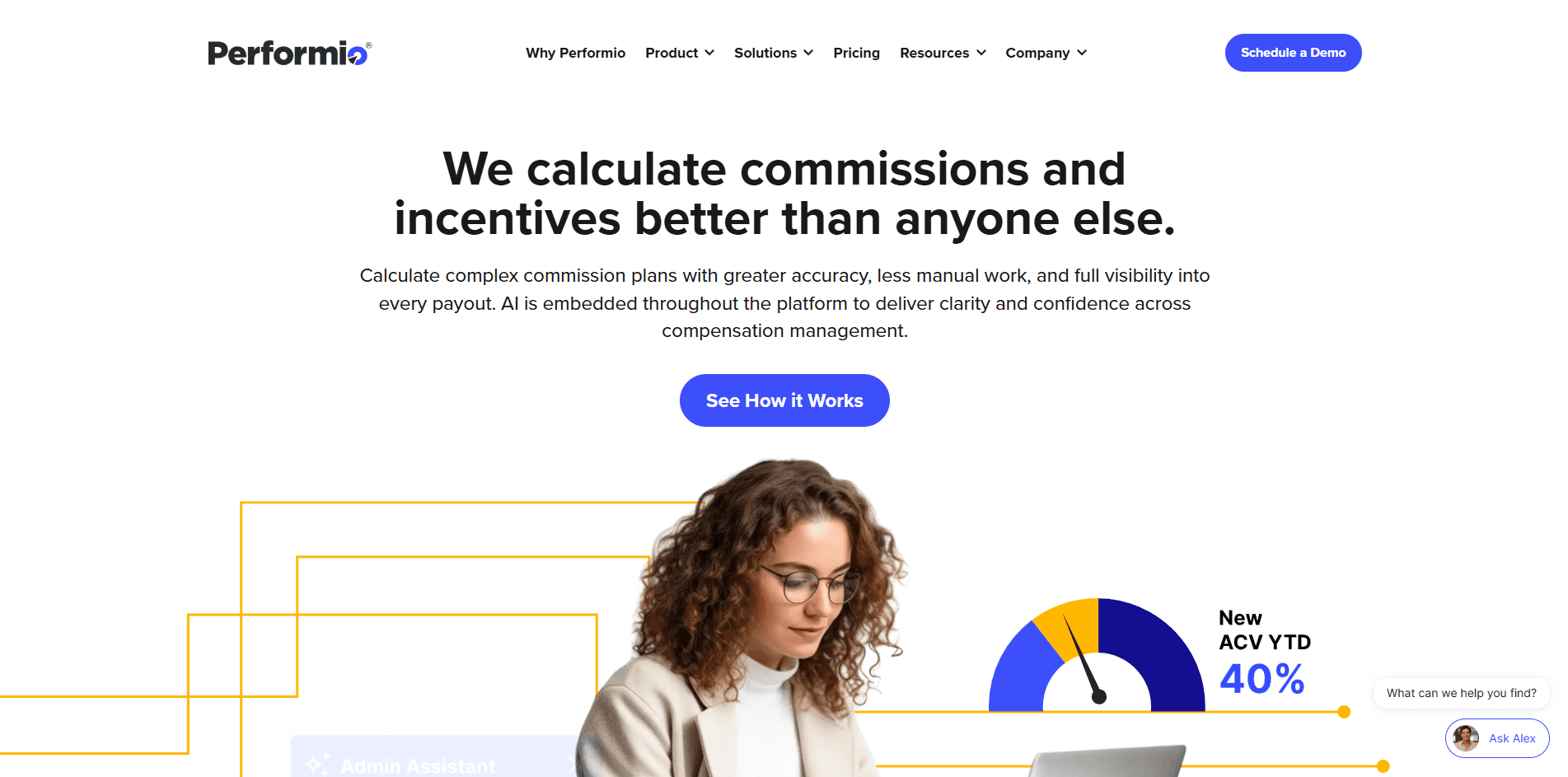
What it does: Performio runs commission calculations on a reliable engine built around pre-configured comp components, aimed at finance and payroll teams.
Best for: Mid-market and enterprise orgs (often 70-plus payees) where finance owns comp and wants dependable, auditable math.
Performio ships with a library of pre-built plan components, so you're not rebuilding common structures from scratch every time. It also has industry-specific templates and a reputation for getting the numbers right at scale, which is usually the only thing finance leaders care about.
Where it shows its age is the interface. Reviewers regularly call the UI dated next to newer tools, and it's overkill if your plans are simple. Most teams land on Performio after they've outgrown something lighter.
Pricing: Custom. G2 rating: 4.4.
3. Xactly
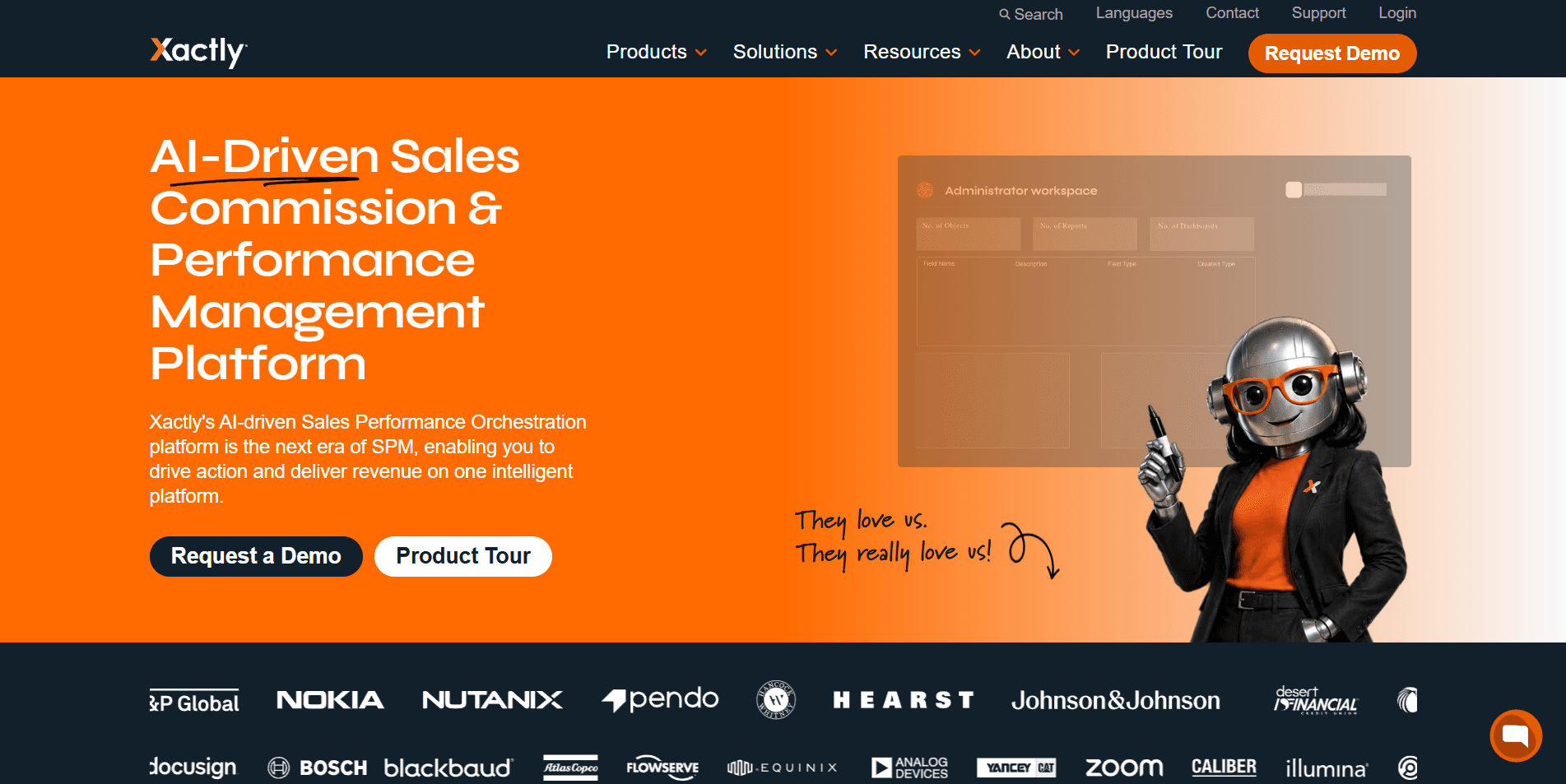
What it does: Xactly is a mature sales performance management suite that handles incentive compensation alongside planning, with a large benchmarking dataset behind it.
Best for: Large, global enterprises running complex, multi-region comp plans.
Xactly has been doing this a long time, and the depth shows. Its Insights data lets you benchmark your own plans against market norms, and the platform absorbs the kind of complexity that would flatten a lighter tool. If you're running thousands of payees across regions, that maturity counts for a lot.
All that depth costs you, in budget and in admin time. Implementation is a real project with dedicated people behind it, and smaller teams end up paying for capabilities they'll never touch.
Pricing: Custom. G2 rating: 4.2.
4. Salesforce Spiff
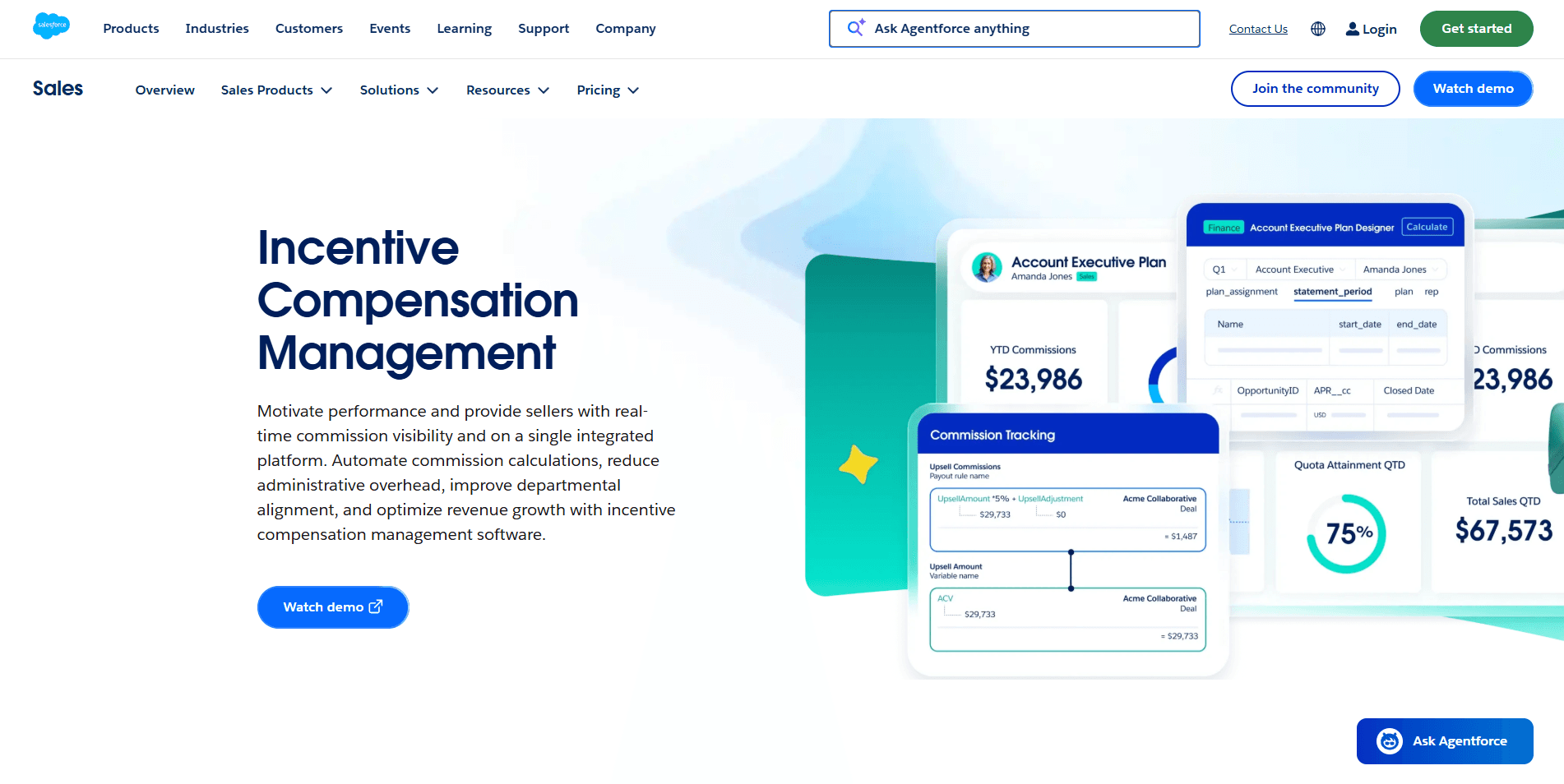
What it does: Salesforce Spiff, a paid add-on to Sales Cloud rather than a bundled feature, manages commissions natively inside Salesforce, giving reps real-time visibility into their earnings where they already work.
Best for: Teams already standardized on Salesforce.
The native integration is the whole pitch, and it's a good one. Commission data lives in the CRM itself, so there's no sync layer to babysit, no second login for reps, and no debate about which system holds the real number.
Spiff makes the most sense if Salesforce is already your system of record. If it isn't, the value drops off fast and a CRM-agnostic tool will serve you better. Pricing is billed annually and sits on top of what you already pay for Sales Cloud, at $75 per user per month.
Pricing: $75/user/mo, billed annually. G2 rating: 4.6.
5. Everstage
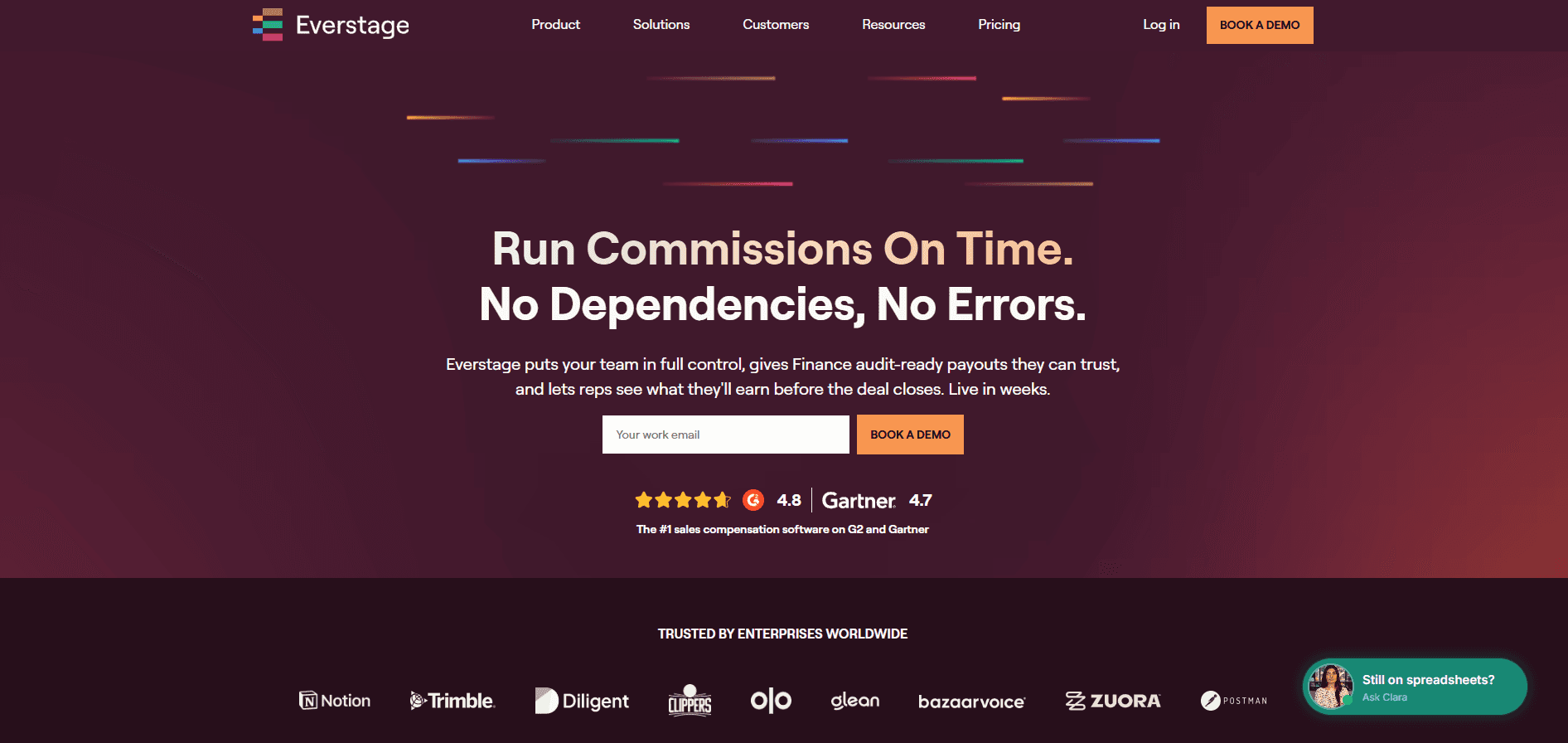
What it does: Everstage combines incentive compensation with quota planning and rep-facing payout visibility, with a strong focus on the rep experience.
Best for: Growth-stage through enterprise teams that want reps engaged with how their comp works, down to what's still in flight.
Everstage ties Qobra for the highest G2 rating on this list, and the rep experience is a big reason why. Reps get a clear, live view of what they've earned and what's still in flight, plus AI-assisted forecasting that shows them how a change to a deal moves their commission before they close it.
The caveat is track record. Everstage arrived in 2020 up against incumbents founded in 2005, and Forrester rated it a Strong Performer rather than a Leader in its Q1 2025 incentive compensation Wave. If you sit at the complex end of the market, pressure-test it against your ugliest edge cases first.
Implementation runs about four to six weeks per Everstage, faster than the enterprise incumbents.
Pricing: Per-payee, custom. G2 rating: 4.8.
6. Varicent
What it does: Varicent is an enterprise SPM platform covering territory, quota, and incentive compensation, with GenAI features across planning and AI-driven analytics.
Best for: Large enterprises that want territory, quota, and comp managed in one system.
Reach is the argument for Varicent. The analytics are strong and the engine chews through enormous, intricate plans, which is why enterprises that want one vendor from planning through payout keep shortlisting it.
It's priced and scoped for that buyer too. Cost and complexity rule it out for SMB and even leaner mid-market teams, and standing it up takes people you can dedicate to the job.
Pricing: Custom. G2 rating: 4.5.
7. QuotaPath
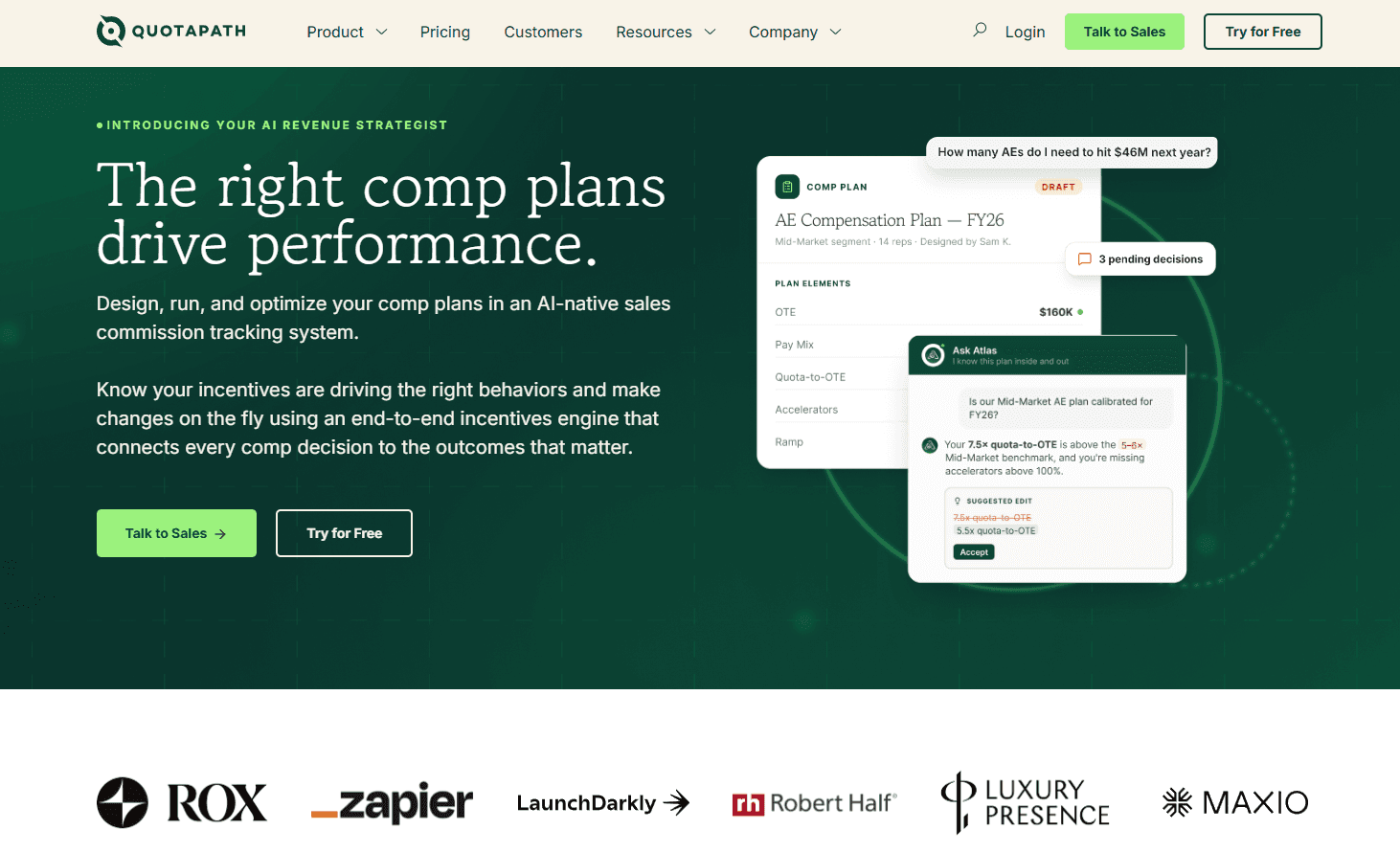
What it does: QuotaPath tracks commissions and quota attainment with a clean rep experience and, unusually for this category, publicly listed pricing.
Best for: Growing SMB and mid-market RevOps and finance teams that want to know the price before they book a call.
QuotaPath is the most SMB-friendly option on this list. It publishes its pricing on its own site, which almost nobody else in this category does, and its AI plan builder gets plans running without anyone needing SQL. Reps get a straightforward view of their earnings, which keeps the disputes down.
Its limits show up on price more than capability. That platform fee plus per-seat model climbs steeply once you're paying several hundred people, so run the real total before you commit if you're at that scale.
Pricing: Growth is $525 a month plus $35 per user; Premium is $800 a month plus $50 per user. Both are billed annually and include the first five users. Strategic is quote-based. G2 rating: 4.7.
8. Qobra
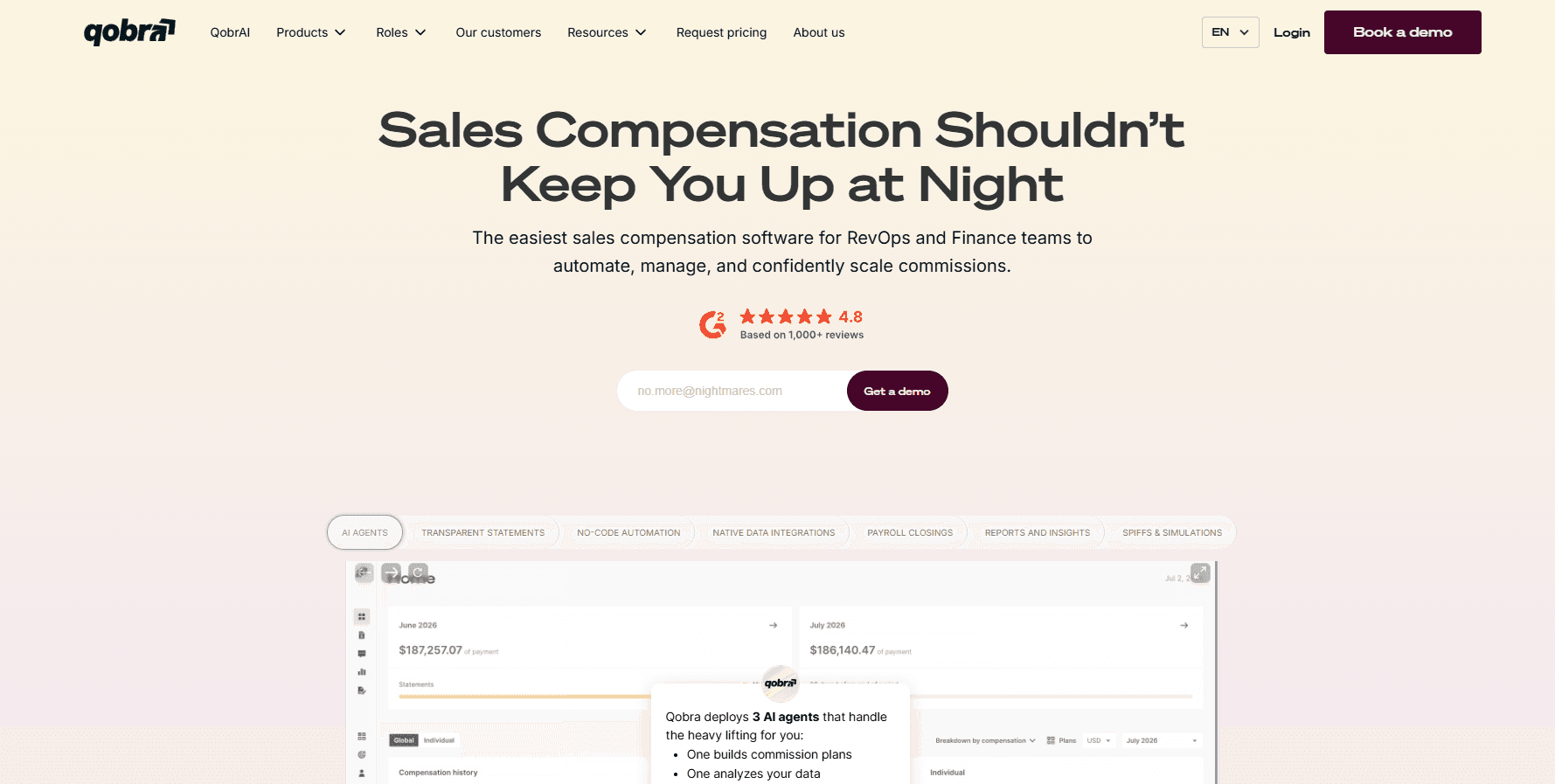
What it does: Qobra manages commissions in real time with a no-code builder and a mobile app, popular with RevOps and GTM teams and especially strong in Europe.
Best for: Flexible RevOps teams that want real-time visibility and quick configuration.
Qobra is quick to set up and easy to change, with no-code plan building and live commission tracking reps can pull up on their phones. Its European footprint runs deeper than most tools here, which matters a lot if that's where your team sits.
North America is the newest thing about it. Qobra opened a New York office in September 2026 after years of serving US customers from six time zones away, so if a long local track record matters to you, ask how long your support team has been in place.
Pricing: Custom. G2 rating: 4.8.
Key capabilities to evaluate
Once you're down to a shortlist, the profiles start to blur together. These are the capabilities that separate one platform from another, each tied to the failure it prevents:
AI-assisted plan design: speeds up building and editing plans, so a mid-year change doesn't cost you a week of manual formula surgery.
Complex component support: accelerators, tiers, draws, clawbacks, and SPIFs should be native to the engine, because workarounds built on top of it break at the worst time.
Real-time rep statements: reps who can see their own earnings stop filling your inbox with payout questions.
CRM, ERP, and payroll integrations: deep connections keep the source data clean, which is where most commission errors start.
Approval workflows and dispute handling: a clear trail for adjustments keeps disputes from becoming trust problems.
Scenario modeling: what-if tools let finance test a plan change before it lands on real paychecks.
Audit trails and compliance: ASC 606 and 340-40 support plus immutable logs make audits routine rather than painful.
Reporting and analytics: the reporting layer is what turns comp data into decisions about plan design.
Score your top two or three against this list using your own comp plans. The demo plan a vendor walks you through will always pass, which is rather the point of it.
How to choose the right platform
Here's a five-step read that keeps the decision anchored to how your team really works:
Audit your comp pain and plan complexity. Write down what breaks today: the errors, the disputes, the hours lost, the audit gaps. That list is your requirements doc.
Define your must-have components and integrations. Which plan structures are non-negotiable, and which systems (CRM, ERP, payroll) must connect cleanly?
Shortlist by size and stack. SMB and mid-market lean toward QuotaPath, Everstage, or Qobra; enterprise toward Xactly, Varicent, or CaptivateIQ; Salesforce shops toward Spiff.
Test with your messiest plan. Any tool can handle a flat commission. Hand it your ugliest accelerator-and-clawback plan and watch what happens.
Pressure-test cost and implementation. Get the real total, including implementation and admin time, plus a go-live date someone will stand behind, before you sign.
Do that and the right tool tends to pick itself. What you're really investing in is a team where every rep is performing closer to your best, and that is where a comp platform stops being able to help.
The gap a sales compensation platform doesn't close
A comp platform pays reps accurately for the performance they already deliver. It does nothing to change that performance.
Picture the floor of a high-volume inside-sales team. Two reps work the same leads off the same script, and one of them closes at two to three times the rate of the other. Your comp plan pays that gap out every month without ever explaining it.
The platform will calculate both checks perfectly. What it can't tell you is why the second rep keeps losing the deal, or what the top rep does in the first thirty seconds that everyone else skips.
That gap is the rule rather than the exception in high-volume inside-sales environments, where the top of the roster consistently outproduces the middle by that same two-to-three-times margin.
Closing that spread across a whole team is hard, and the research backs that up: Gartner found that only 11% of sales organizations manage to drive commercial success while executing a major change.
A comp plan defines what "good" pays. Getting more of your team there is a coaching problem, and sales coaching software lives in a completely different category.
Where the rest of your team catches up to your top reps
The honest version first. Alpharun is not a sales compensation platform, and you shouldn't buy it to run commissions. If what you need is to calculate and pay variable comp, go pick one of the eight tools above.
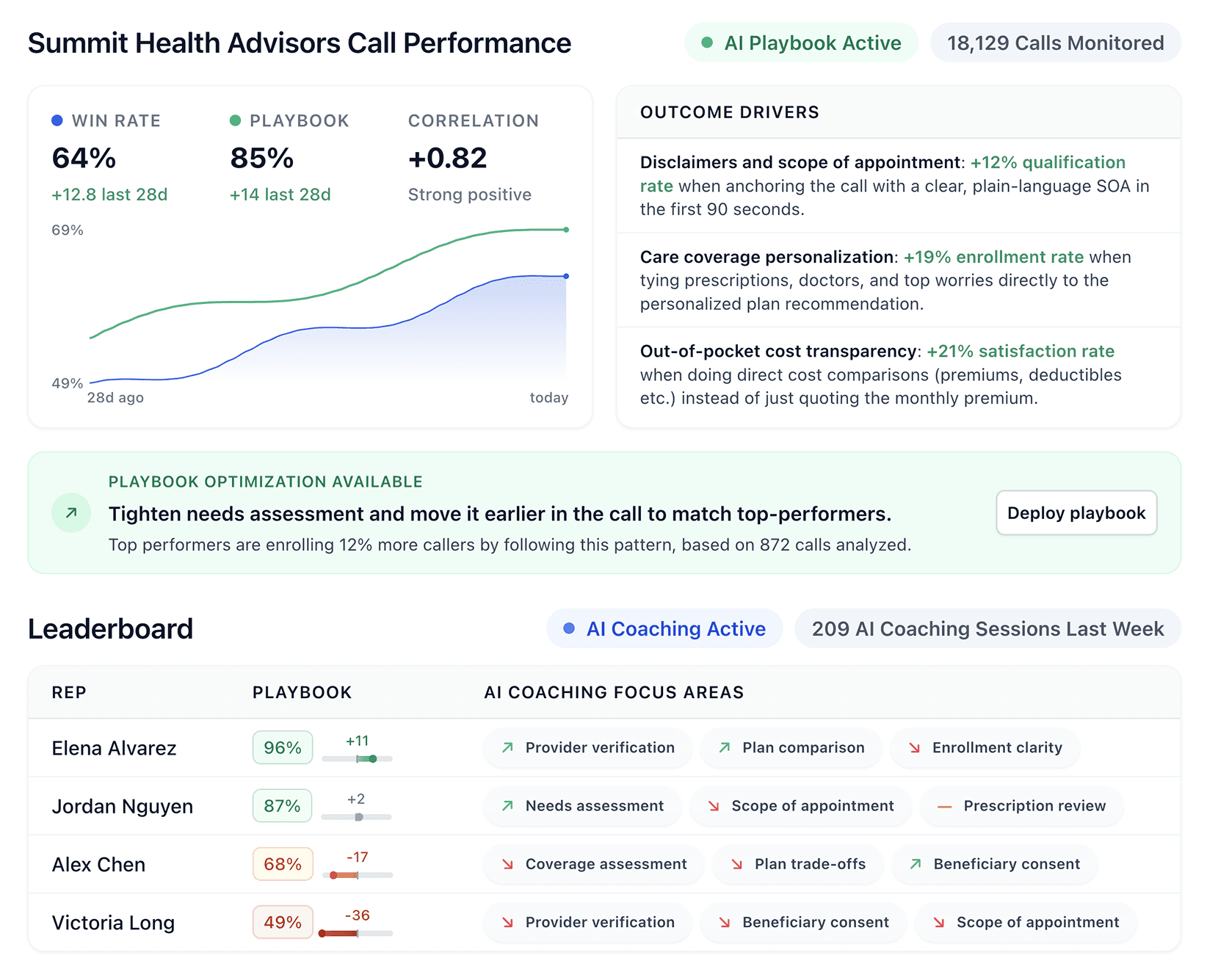
That performance gap is the layer Alpharun works on. It sits on top of the call system you already have and studies your real calls, so the performance your comp plan is paying for gets easier to reproduce across the rest of the team.
With Alpharun, high-volume sales teams can:
Build a playbook from your best calls: it turns what your top reps do into something repeatable, so that knowledge isn't locked up with three people.
Score every call at the sentence level: it grades each conversation against your own playbook and your compliance rules, so the score reflects the way your team sells.
Coach every rep every week: it delivers personalized, data-driven coaching tied to real moments in each rep's calls.
Show managers where deals slip: it pinpoints where the middle of the roster loses deals, so coaching time goes where it moves revenue.
Give leaders drill-down and trends: managers get aggregate performance views and can drop into any individual call.
Automate the repetitive parts: AI voice agents can pick up after-hours callers and handle scheduling, so reps keep the conversations that need a human.
Alpharun already does this for teams like Chapter, a Medicare advisory service whose advisors handle hundreds of thousands of calls during the seven-week enrollment period. Your comp platform rewards the performance you already have. Alpharun helps you make more of it, and the two work better together than either does on its own.
Book a demo to see what your top reps do that the rest of the floor doesn't.
Frequently asked questions
What's the difference between sales compensation software and SPM?
Sales compensation software handles the incentive and commission slice: calculating, tracking, and paying out variable comp. Sales performance management (SPM) is the wider category that wraps territory and quota planning around all of that. Pure comp tools cover payouts. SPM suites cover the whole planning-to-payout lifecycle.
How much does a sales compensation platform cost?
Most sales compensation platforms price by quote, tied to your payee count and how complex your plans are. Salesforce Spiff lists a public rate of $75 per user per month, billed annually, and QuotaPath publishes its tiers outright: $525 a month plus $35 per user for Growth, $800 a month plus $50 per user for Premium.
Budget for implementation and admin time on top of the license.
How long does implementation take?
It ranges from a few weeks on the simpler SMB-focused tools to several months on the enterprise suites. Everstage says four to six weeks, while QuotaPath publishes a 45 to 60 day average on Growth and 60 to 90 days on Premium. Qobra is quick to configure too. Xactly and Varicent are larger projects that need dedicated resources.
Do small teams need a sales compensation platform?
Small teams with flat, simple commission plans usually don't need one yet. A spreadsheet holds up fine until headcount rises, plans add accelerators or clawbacks, a plan changes mid-year, disputes climb, or audit requirements appear. When two or more of those hit, a platform starts paying for itself.
Does a sales compensation platform improve rep performance?
It improves payout accuracy and rep trust in the numbers, which does help morale. What it won't do is coach reps to close more, or shrink the gap between your top and average sellers. That takes performance tooling like coaching and call-analysis software, running alongside your comp platform.