Compare the 8 best Second Nature AI competitors tested in 2026. See which tools fit roleplay, coaching, QA, and sales training needs for high-volume teams.


After reviewing 8 Second Nature AI competitors, the strongest alternatives are Hyperbound for pure AI roleplay software, Mindtickle for broader enablement, and Cresta or Balto for teams that need live coaching during real customer calls.
Below is a breakdown of what each platform does well, where it falls short, and the types of teams it fits best.
8 best Second Nature AI competitors: At a glance
💻 Tool | 🎯 Best for | 💪 Core strength | ⚠️ Biggest limitation | 💸 Pricing |
Hyperbound | Enterprise sales teams | Custom AI roleplays with multilingual support | Quote-based enterprise setup | Custom |
Mindtickle | Full revenue enablement | Training, coaching, and readiness in one platform | Can feel heavy for roleplay-only needs | Custom |
Allego | Enterprises consolidating tools | Unified coaching, content, and conversation intelligence | Large platform footprint | Custom |
Quantified | Regulated industries | Realistic compliance-focused simulations | Enterprise-only focus | Custom |
Yoodli | Small teams and solo reps | Affordable AI coaching with multi-person simulations | Limited sales-specific depth | Free + paid from $8/month |
Gong | B2B SaaS revenue teams | Conversation intelligence and forecasting | No roleplay training | Custom |
Cresta | Large contact centers | Real-time agent assist and AI voice agents | Complex implementation | Custom |
Balto | Compliance-heavy call centers | Live compliance prompts and QA automation | Less strategic sales coaching | Custom |
Disclaimer: Pricing is accurate as of May 2026 and may change without notice. Please check the official company website for the latest pricing details.
Why look for Second Nature AI competitors?
Second Nature AI is a sales training platform that uses AI-driven roleplay to help reps rehearse customer conversations with AI avatars before live calls.
It does the practice side well: Rehearsal at volume, persona variety, per-session scoring, and a library of customizable scenarios.
Where it stops is where most teams start looking elsewhere:
Pricing opacity: Second Nature does not publicly disclose pricing, so you’ll need to contact their sales team for a custom quote.
For a closer look at costs, contract structure, and what to expect during the sales process, check out our full Second Nature AI pricing review.
No live-call coaching layer: Second Nature trains reps before the call. It doesn’t grade or guide what happens during the real customer conversation. For teams whose conversion lift sits on the live call (most regulated B2C inside sales), that limit matters.
Practice happens in a vacuum: Scoring isn’t tied to real-call outcomes. A rep can ace certifications and still underperform on the floor. There’s no feedback loop from production calls back into the practice scenarios.
Steep learning curve and slow setup: Reviewers consistently flag the onboarding time. Smaller teams or scoped use cases struggle to justify the ramp.
Cost-to-value tightens at scale: Enterprise-tier pricing makes sense for large training programs. For mid-market teams using it solely for roleplay, the dollars start to feel heavy.
Which Second Nature AI alternative should you choose?
Choose Hyperbound if you want the deepest enterprise AI roleplay with global language coverage and integrations into the standard sales stack. It’s not the right pick if you need in-call live coaching.
Choose Mindtickle or Allego if you’re consolidating training, content, coaching, and conversation intelligence into one platform. Skip it if you just want better roleplay.
Choose Quantified if you sell in life sciences, financial services, or insurance and need scenario depth tuned to regulated conversations. Skip it if you’re not in those verticals.
Choose Yoodli if you want affordable AI roleplay coaching, with individual plans starting at $8/month. Skip it if your team needs deep integration with sales methodology and advanced enterprise customization.
Choose Gong if you run B2B sales with multi-stakeholder deals and prioritize forecasting and deal intelligence. Skip it if your bottleneck is rep practice or live coaching. We cover the alternatives to Gong in a separate roundup.
Choose Cresta or Balto if you’ve outgrown practice tools and need real-time agent assist during live calls. Pick Balto specifically if compliance scripting is your primary driver.
Stick with Second Nature AI if your primary need is structured AI roleplay practice for scripted pre-call rehearsal, your team has the training budget, and live-call performance is already where you want it.
The 8 best Second Nature AI competitors
1. Hyperbound
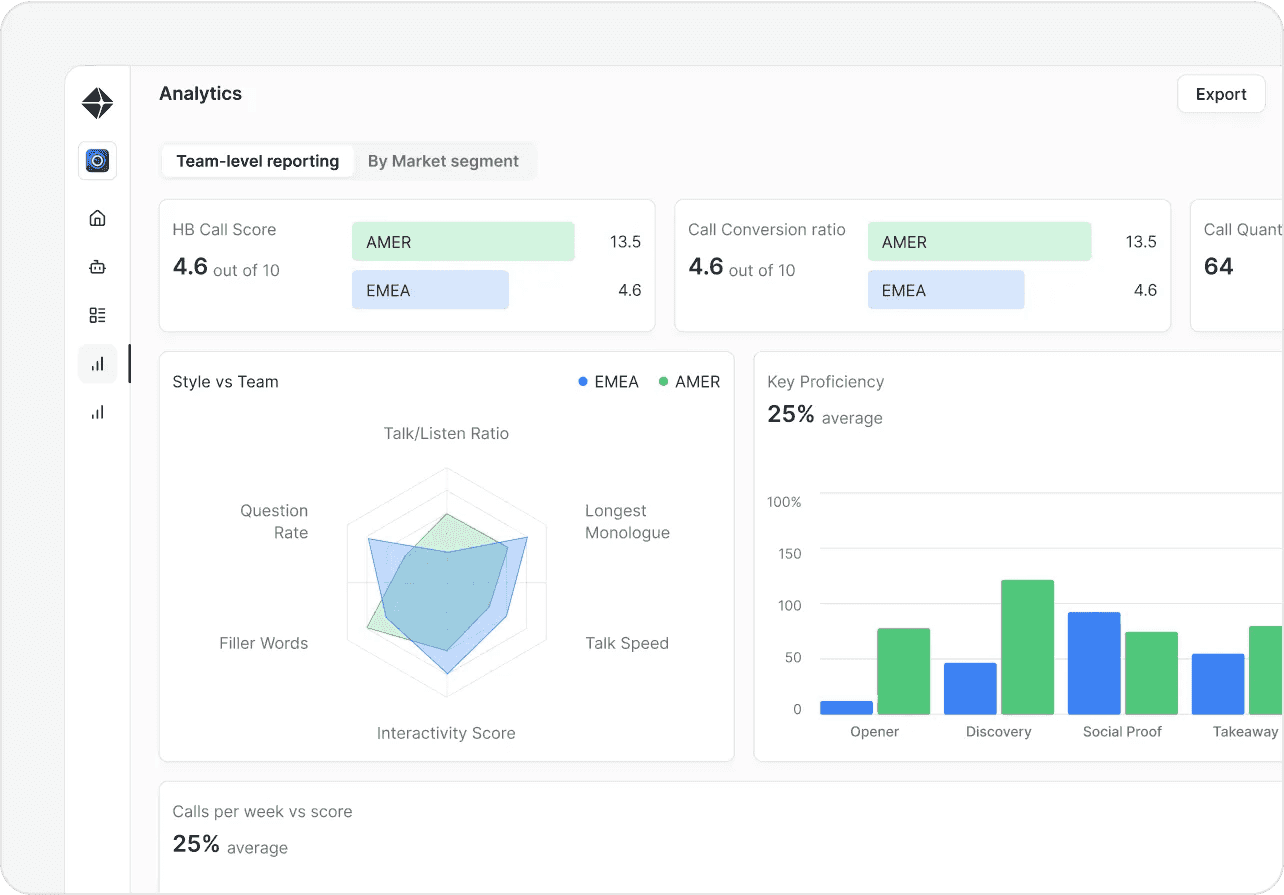
What it does: AI sales training platform built on 2 million+ hours of B2B sales call data and 250,000+ simulations that have been delivered across 7,000+ companies, offering lifelike AI buyers across cold calls, discovery, demos, renewals, and more.
Best for: Enterprise sales teams that need scalable roleplay training with custom scenario building and multilingual support across global teams.
Hyperbound is a strong Second Nature AI competitor because it offers deeper, more flexible training scenarios. Teams can build roleplays using their own ICP, objections, and sales approach, with AI bots that vary in behavior across 25+ languages.
Key features
AI Sales Roleplays: Practice cold calls, discovery, demos, renewals, and more with AI buyers that respond realistically to rep behavior.
Custom Scenario Builder: Build roleplay scenarios using your own ICP details, objections, and sales methodology for practice that reflects your actual sales environment.
AI Real Call Scoring: Analyze real or imported sales calls with AI scorecards measuring talk ratios, objection handling, and key coaching moments.
Pre-Call Preparation: Build AI buyers aligned to your messaging, products, and target personas for targeted pre-call practice.
Gamified Learning: Leaderboards, competitions, and progress tracking to drive rep engagement with training.
Pros and cons
✅ Pros | ❌ Cons |
Built on 2M+ hours of B2B sales call data, which makes AI buyer behavior feel realistic. | Pricing requires a custom quote, making upfront planning more difficult. |
Supports 25+ languages, useful for global team training. | Enterprise focus can feel heavy for smaller teams. |
Custom Scenario Builder lets teams train using their own ICP and objections. | The free demo is limited to 9 bots. |
What users say
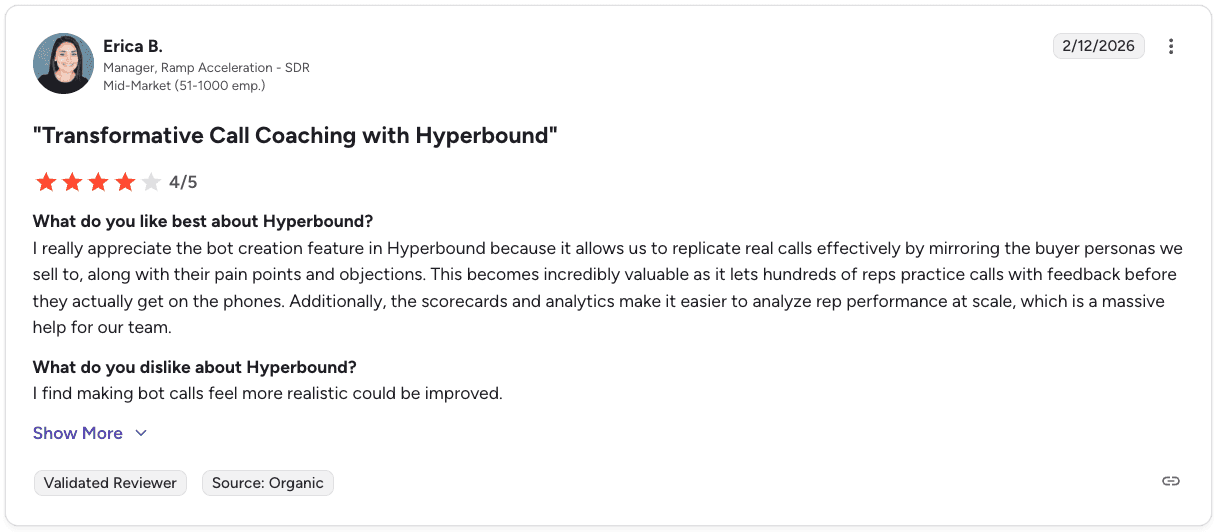
Pro: “It lets hundreds of reps practice calls with feedback before they actually get on the phones.” — Erica B., G2
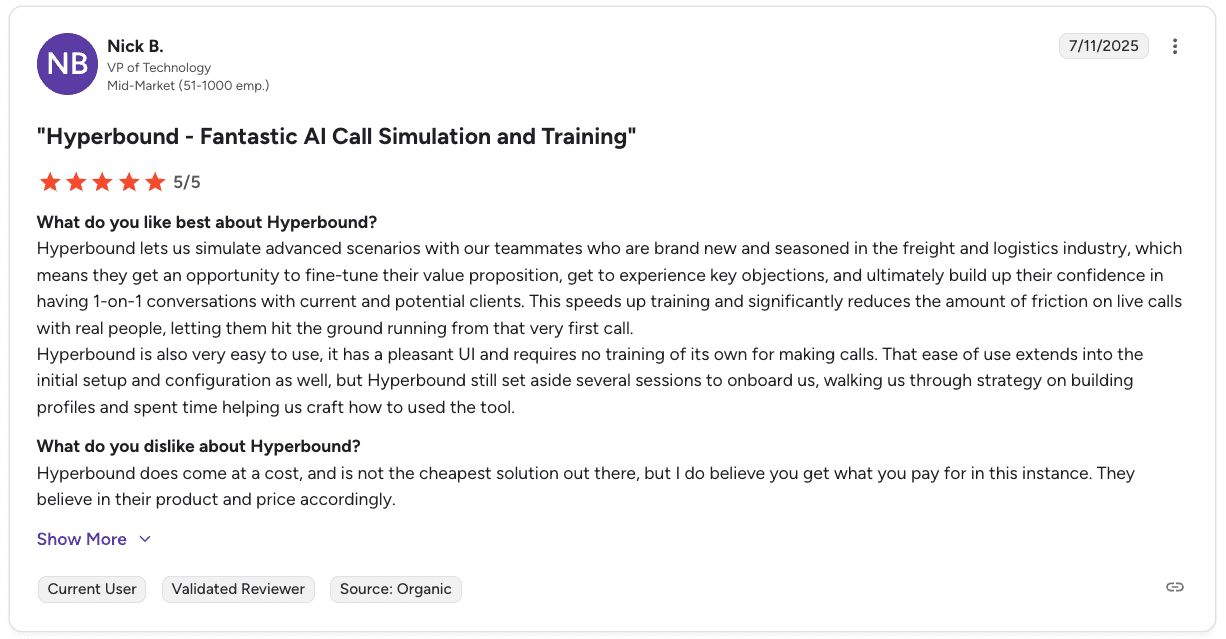
Con: “Hyperbound does come at a cost, and is not the cheapest solution out there.” — Nick B., G2
Pricing
Hyperbound uses custom, enterprise-style pricing with a free demo. Most teams need to book a call for a tailored quote based on size and use case.
Bottom line
Choose Hyperbound if your team needs deeper, more customizable roleplay training that reflects your actual sales environment. It’s a better fit for larger or global teams that want control over scenarios and multilingual coverage.
If you prefer a simpler setup and clearer pricing upfront, the demo process is something to factor in before deciding.
2. Mindtickle
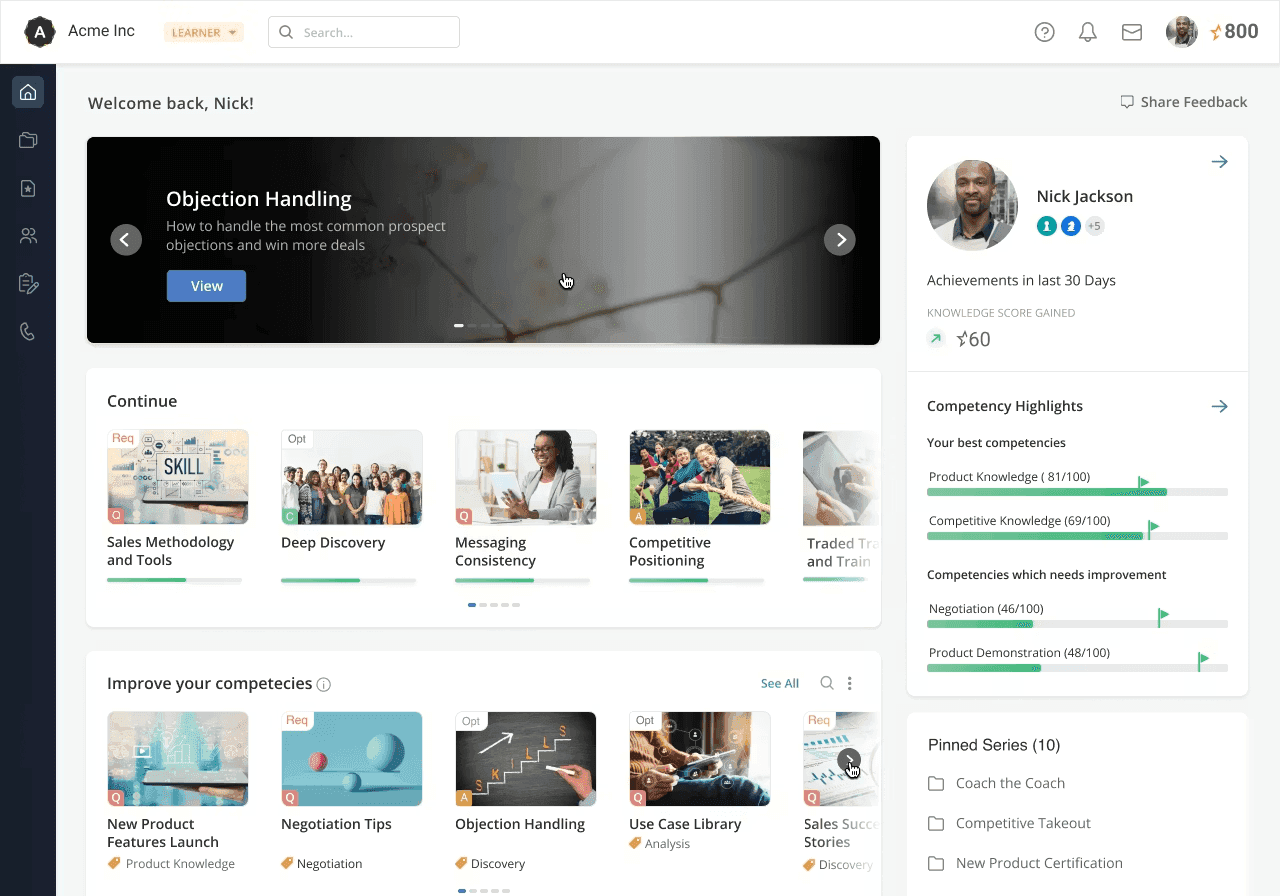
What it does: AI-powered revenue enablement platform that combines sales training, roleplay coaching, content management, and performance analytics in one system.
Best for: Enterprise revenue teams that want to manage training, coaching, and rep readiness in a single platform.
Mindtickle stands out against Second Nature AI by tying training directly to measurable performance. Its Readiness Index tracks rep progress using real activity data, giving teams a clearer view of how training translates into results.
Key features
AI Copilot: AI-guided call prep, follow-ups, recommendations, and workflow support for revenue teams throughout the sales process.
Digital Sales Rooms: Deal-specific spaces for sharing content, collaborating with buyers, and tracking engagement.
AI Role-Plays and Coaching: Practice sales conversations with an AI buyer and receive automated skill feedback after each session.
Conversation Intelligence: Record, transcribe, and analyze calls to surface buyer signals, risks, and coaching insights.
Onboarding and Continuous Training: Structured onboarding, micro-learning, certifications, and ongoing readiness programs in one system.
Pros and cons
✅ Pros | ❌ Cons |
Combines training, content management, coaching, and conversation intelligence in one platform, reducing tool sprawl. | Enterprise pricing doesn’t include the add-on fees like a one-time Professional service charge, Single-Sign-On charges, integration charges, or implementation fees. |
Trusted by enterprise customers like Cisco. | A broad feature set can feel overwhelming for teams focused only on roleplay or coaching. |
Readiness Index tracks and validates rep progress automatically without manual reporting. | No published pricing. |
What users say
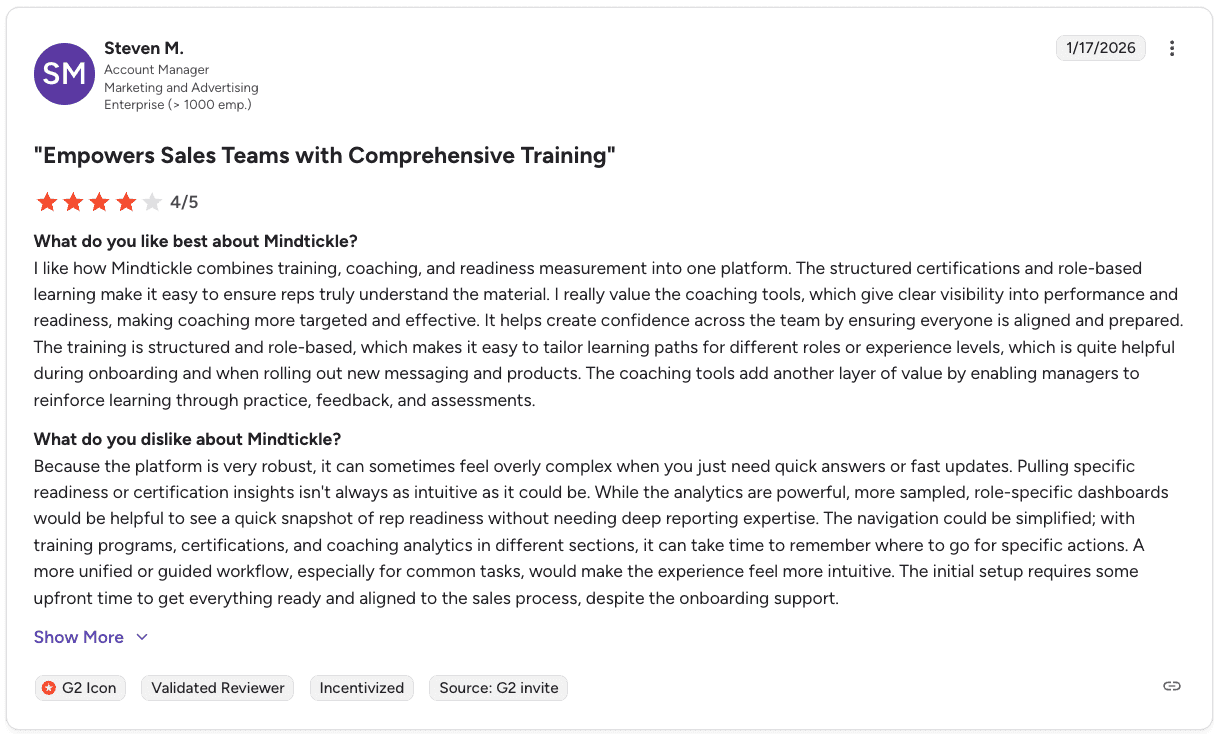
Pro: “Mindtickle combines training, coaching, and readiness measurement into one platform.” — Steven M., G2
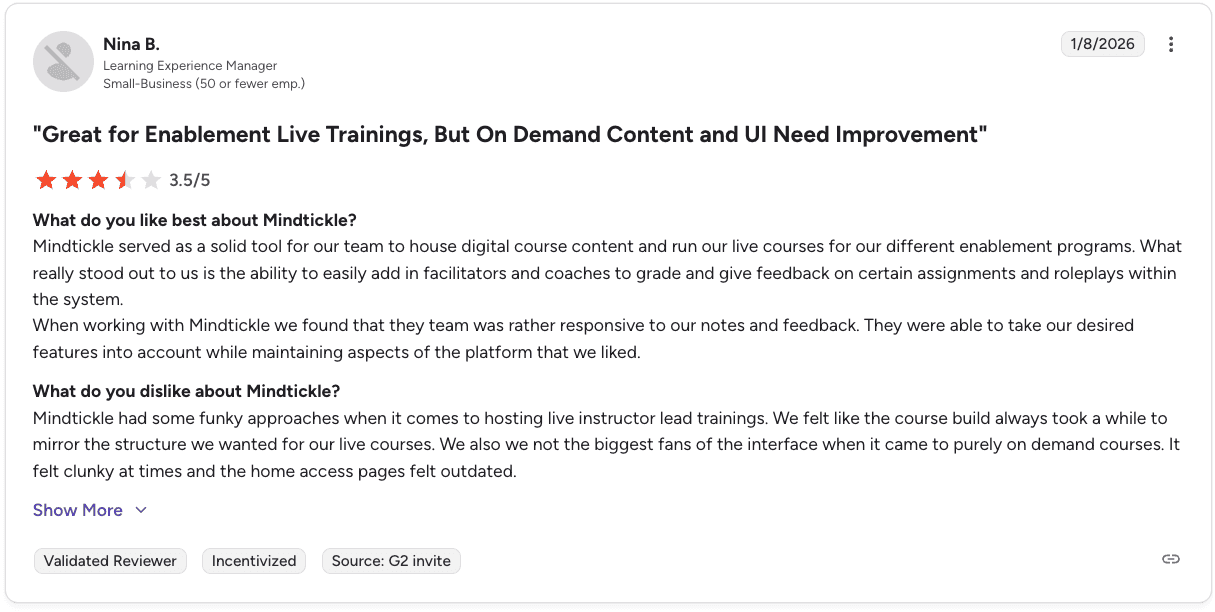
Con: “The interface for on-demand courses felt clunky at times, and the home pages seemed outdated.” — Nina B., G2
Pricing
Mindtickle uses custom, enterprise pricing with no public tiers. You’ll need to book a demo and go through a sales process to get a tailored quote based on team size, features, and contract terms.
Bottom line
Choose Mindtickle over Second Nature AI if you want a broader platform that connects training, coaching, and performance tracking in one place. It’s a better fit for enterprise teams that need structure, reporting, and long-term enablement across large teams.
If your focus is mainly on roleplay training, with a faster setup and less commitment, Mindtickle can feel heavier than you need.
3. Allego
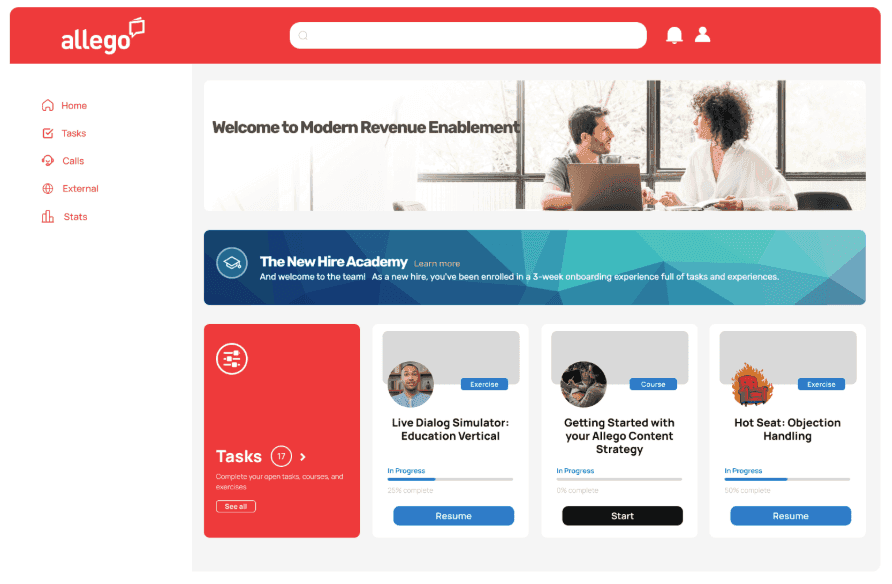
What it does: Unified sales enablement platform combining content management, coaching, training, conversation intelligence, and digital selling for enterprise sales teams serving over 1 million professionals globally.
Best for: Large enterprise sales organizations that want to consolidate multiple sales tools into a single platform with strong content management, coaching, and conversation intelligence.
Allego broadens the scope beyond roleplay alone. It brings training, coaching, and deal execution into one place, which appeals to teams that prefer a centralized system over managing multiple tools.
Key features
Adaptive AI roleplay simulations: Reps practice unscripted conversations that evolve in real time, helping them handle objections, messaging shifts, and high-pressure scenarios with confidence.
Multi-language and voice support: Train across 30+ languages with varied voices and accents, making it easier to prepare global teams for real-world conversations.
AI scoring and instant feedback: Every session is evaluated against defined skills, with immediate, structured guidance that reps can apply on their next call.
Skill tracking and readiness insights: Performance data shows where reps are improving, where they struggle, and what to focus on next, giving teams a clear view of readiness over time.
Pros and cons
✅ Pros | ❌ Cons |
Consolidates training, content, coaching, and analytics into one platform, reducing vendor complexity. | No published pricing. Requires a sales consultation. |
Used by over 1M professionals with strong enterprise scalability. | Enterprise scope and setup can feel heavy for teams wanting a simpler solution. |
Covers a wide range of real sales scenarios like objection handling, messaging rollouts, and high-pressure conversations in one system. | Significant investment for teams focused only on roleplay training. |
What users say
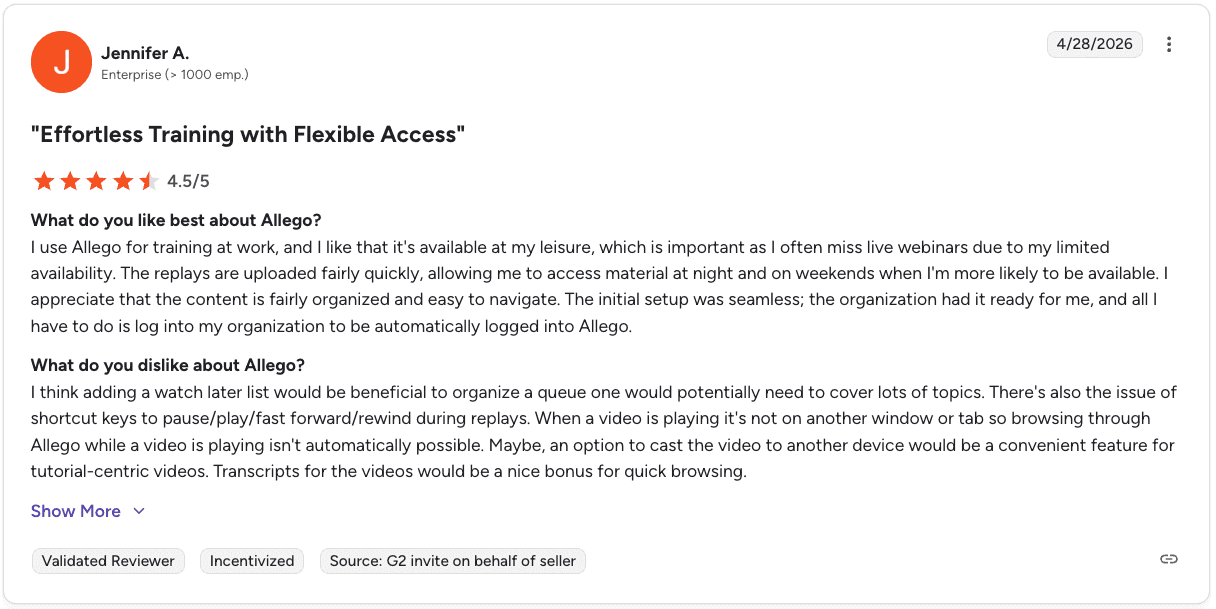
Pro: “Content is easy to access anytime, with quick replays and simple navigation.” — Jennifer A., G2
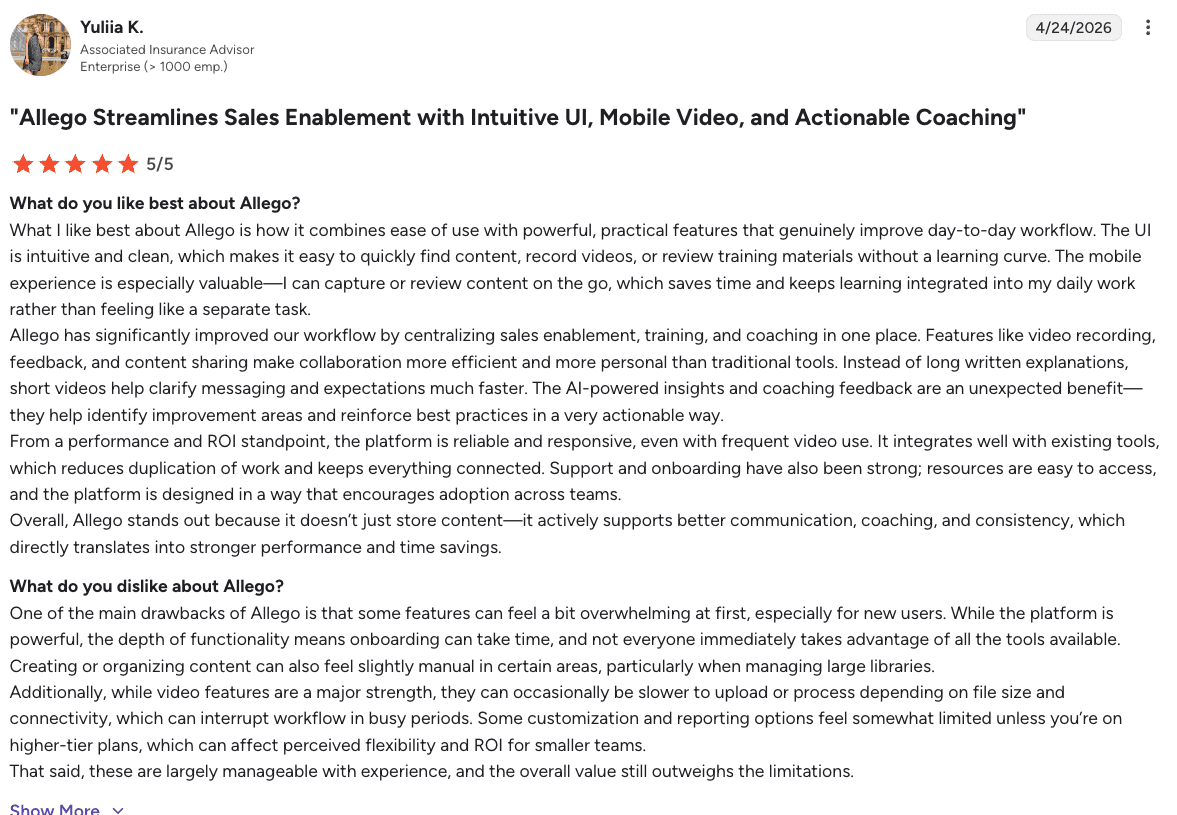
Con: “Some customization and reporting options feel somewhat limited unless you’re on higher-tier plans.” — Yuliia K., G2
Pricing
Allego pricing is custom and quote-based, structured per user per month and billed annually, with final costs depending on team size, contract length, and selected modules.
Bottom line
Choose Allego if your team wants to replace multiple tools with one platform that connects training, coaching, and conversation intelligence. It creates a shared system across your entire revenue org, which helps with consistency and visibility.
It’s not ideal if your team prefers a simple setup focused only on quick roleplay practice.
4. Quantified
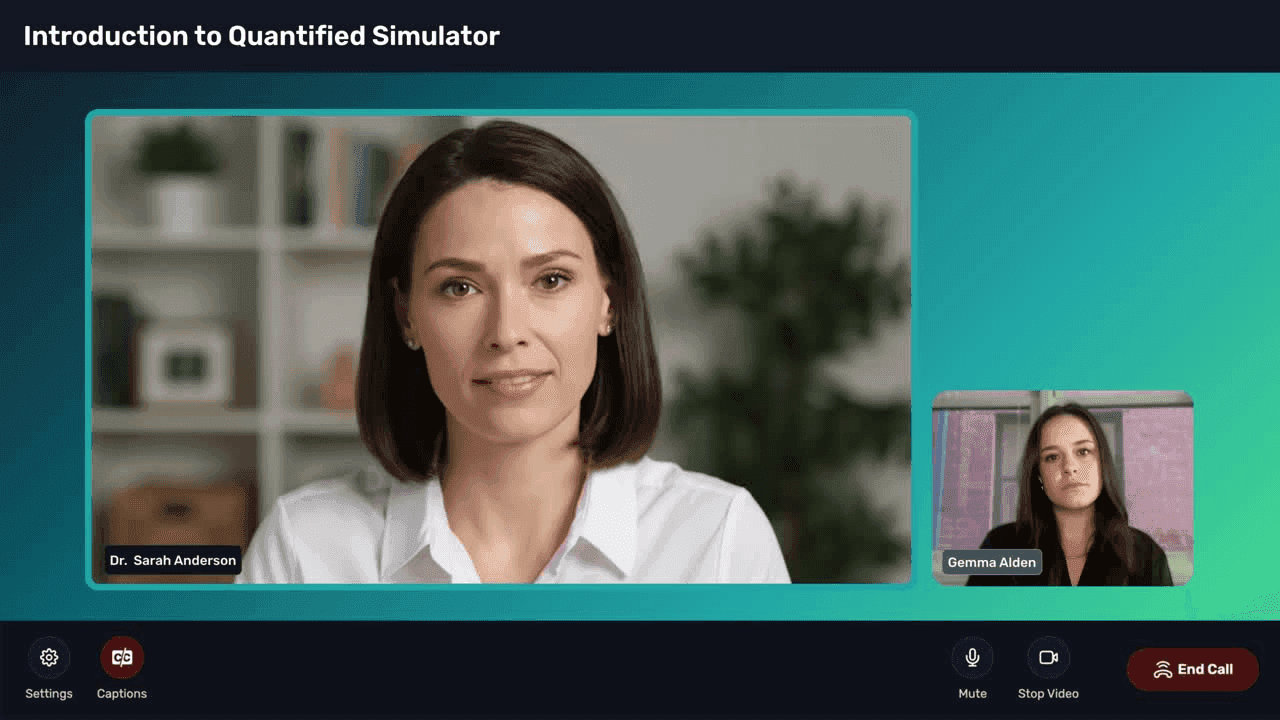
What it does: AI sales roleplay platform focused on highly realistic simulations for regulated industries like pharma, financial services, insurance, and medical devices.
Best for: Enterprise sales teams in regulated industries that need realistic practice environments, compliance-sensitive scenarios, and industry-specific coaching.
Quantified focuses heavily on realism and vertical specialization. The platform is designed for teams that need reps to practice nuanced, high-stakes conversations where accuracy, compliance, and messaging consistency matter.
The platform emphasizes repeat practice, offering unlimited roleplay sessions per seat along with long-term behavioral tracking to measure rep development over time.
Key features
High-realism AI conversations: Tuned for regulated vertical scenarios.
Industry-specific paths: Pharma, financial services, insurance, medical devices.
Unlimited practice: No cap on roleplay sessions.
Behavior analytics: Per-rep skill tracking over time.
Enterprise customer base: Multiple Fortune 500 pharma logos.
Pros and cons
✅ Pros | ❌ Cons |
Vertical depth for regulated industries. | No public pricing. |
Pharma and life-sciences customer base reinforces its realism focus. | Enterprise-only positioning. |
Unlimited practice sessions on a per-seat basis. | Smaller teams may struggle to justify the cost. |
What users say
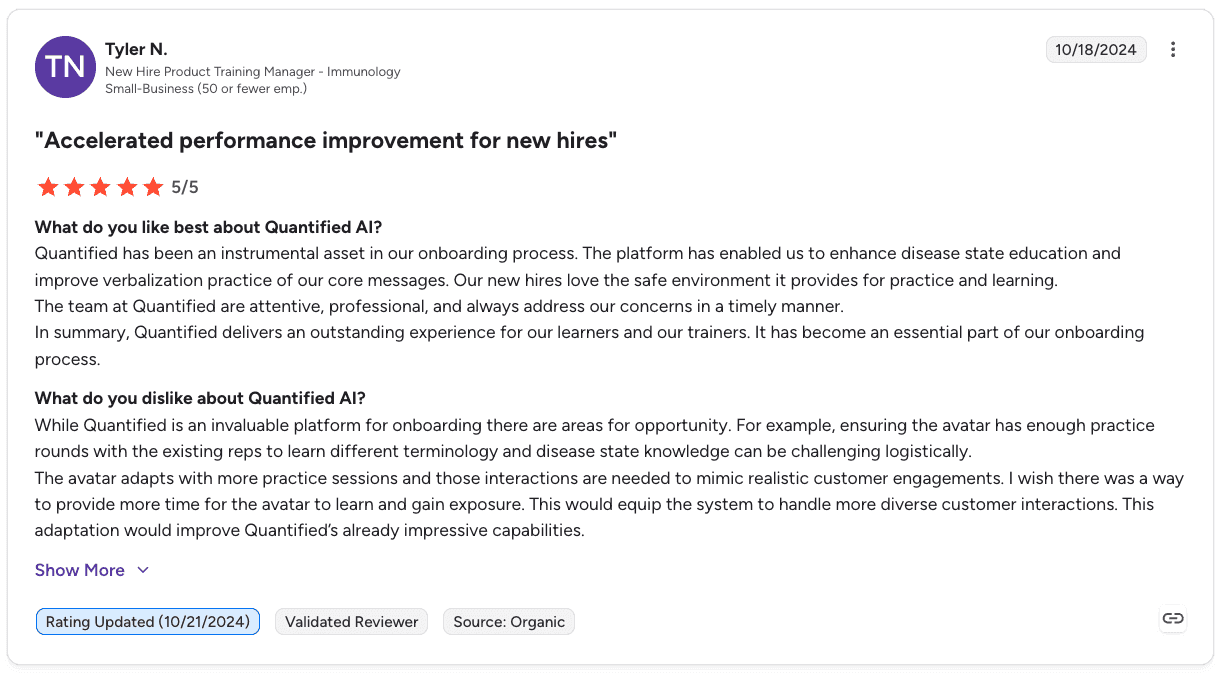
Pro: “Our new hires love the safe environment it provides for practice and learning.” — Tyler N., G2
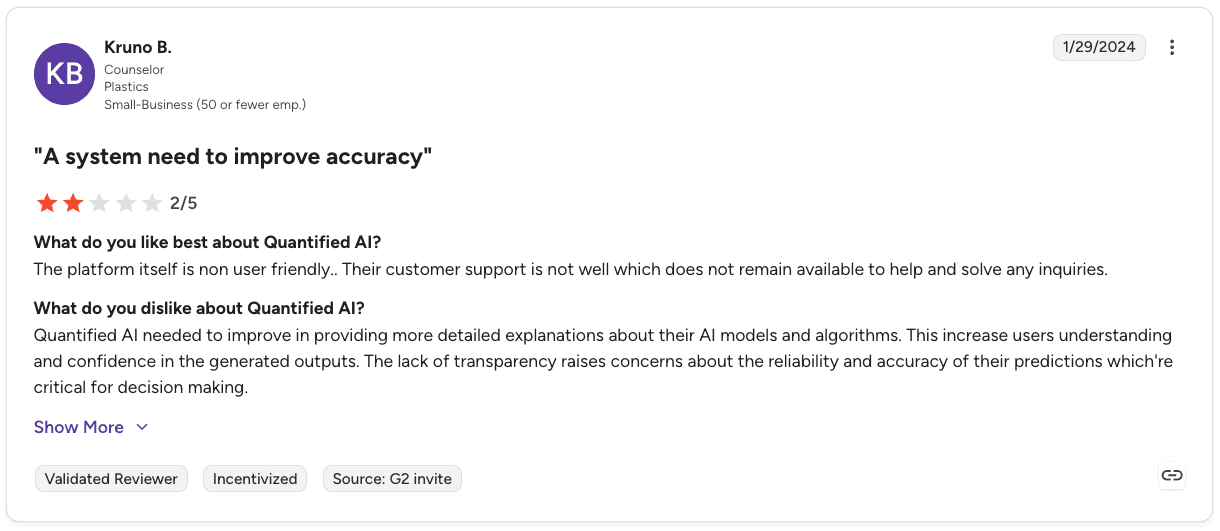
Con: “The lack of transparency raises concerns about the reliability and accuracy of predictions.” — Kruno B., G2
Pricing
Quantified uses custom enterprise pricing and doesn’t publish public rates or self-serve plans.
Bottom line
Choose Quantified if your team sells regulated products and needs realistic AI roleplay built around compliance-sensitive conversations. It’s a strong fit for pharma, medical device, insurance, and financial services teams that prioritize training depth over lightweight simplicity.
Smaller teams looking for transparent pricing or quick self-serve onboarding may find it too enterprise-focused.
5. Yoodli
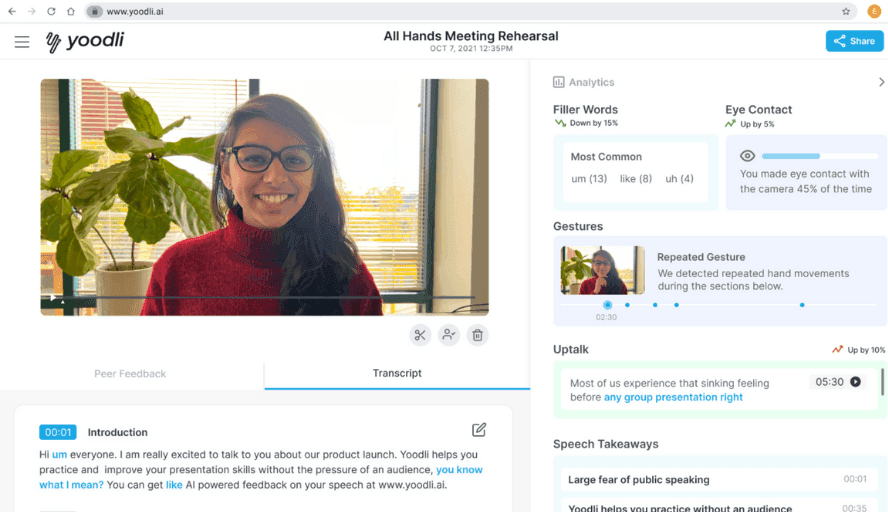
What it does: AI coaching platform focused on communication training, presentation practice, and conversational roleplay with support for multi-person simulations.
Best for: Small sales teams, solo sellers, and consultants looking for affordable AI roleplay practice without enterprise-level complexity or pricing.
Yoodli stands out for its transparent pricing and approachable entry point. It’s one of the few platforms in this category with both a free tier and publicly listed paid plans, making it easier for smaller teams to start practicing without a sales process.
The platform’s biggest differentiator is multi-persona simulation. Teams can practice panel interviews, buyer committees, group pitches, and other multi-speaker conversations that many sales-focused roleplay tools do not handle well.
Key features
Multi-persona simulations: Practice panel discussions, buyer committees, and group pitch scenarios.
Free starter tier: Includes five roleplays with no credit card required.
Unlimited practice on Advanced plans: Higher-tier plans remove session caps for ongoing coaching and repetition.
AI communication feedback: Tracks pacing, filler words, clarity, and delivery quality.
Enterprise-ready infrastructure: Built on Google Cloud for scalability and enterprise deployment support.
Pros and cons
✅ Pros | ❌ Cons |
Transparent pricing with a free starter tier. | Built primarily for general communication coaching rather than sales enablement. |
Affordable entry point for individuals and small teams. | Lighter on sales methodology and deal-context coaching. |
Strong support for multi-person and committee-style simulations. | Less specialized depth than dedicated sales roleplay platforms. |
What users say
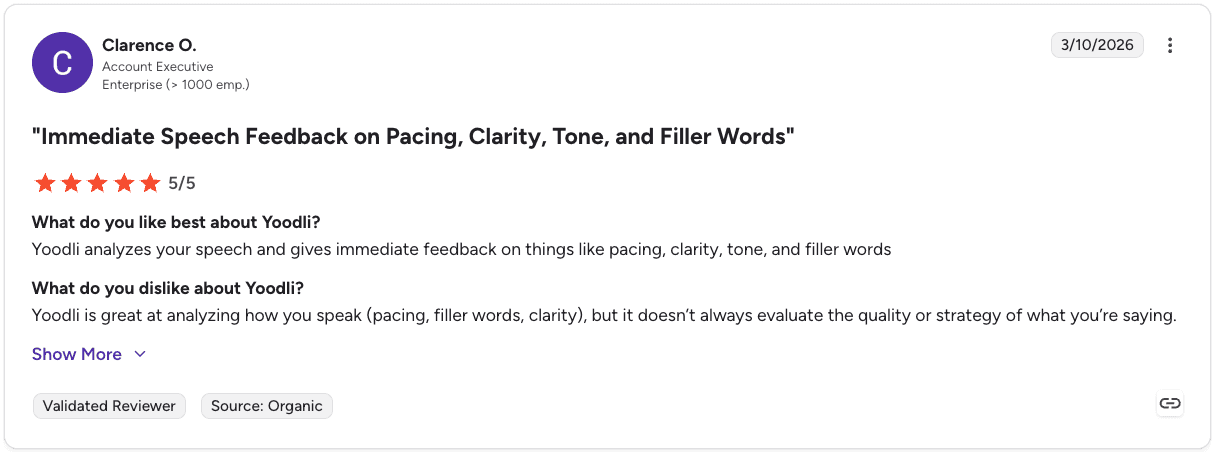
Pro: “Yoodli analyzes your speech and gives immediate feedback on pacing, clarity, tone, and filler words.” — Clarence O., G2

Con: “There can be a slight lag while the AI processes responses.” — Verified User in Computer Software, G2
Pricing
Yoodli offers a free starter tier with five roleplays included. Paid individual plans start at $8/month for Pro and $20/month for Advanced when billed annually. Team and Enterprise pricing is custom.
Bottom line
Choose Yoodli if you mainly want a flexible, low-cost way to practice conversations without getting locked into enterprise software. It’s especially useful for solo reps, small teams, and anyone working on presentations, pitches, or buyer committee scenarios.
If your team needs deep sales coaching workflows, CRM-driven context, or methodology-heavy training, you’ll probably outgrow it quickly.
6. Gong
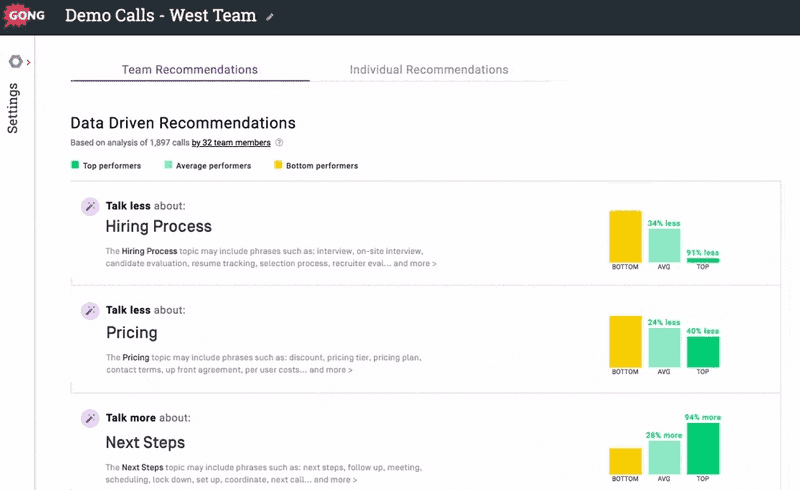
What it does: A revenue intelligence platform that records and analyzes customer interactions to improve forecasting, pipeline visibility, and sales coaching.
Best for: B2B sales organizations with longer, multi-stakeholder deal cycles that want deeper visibility into pipeline health and rep performance.
Gong is often compared with AI sales coaching platforms, but it serves a different purpose. Instead of running practice simulations or roleplay sessions, Gong analyzes real customer conversations after they happen.
The platform is built around deal intelligence. It captures calls, emails, and meetings, then surfaces patterns tied to deal risk, forecast accuracy, and sales performance. That makes it especially valuable for B2B SaaS teams managing complex sales cycles across multiple stakeholders.
Key features
Revenue intelligence platform: Captures and analyzes calls, emails, and meetings across the sales process.
Deal tracking and risk analysis: Highlights deal momentum, stakeholder engagement, and potential pipeline risks.
Forecast visibility: Provides forecasting insights and pipeline confidence scoring.
Coaching insights: Identifies conversation patterns associated with successful deals.
CRM integrations: Connects with Salesforce, HubSpot, and other major platforms.
Pros and cons
✅ Pros | ❌ Cons |
One of the strongest conversation intelligence platforms in B2B sales. | Not designed for AI roleplay or practice simulations. |
Strong forecasting and deal inspection capabilities. | Less relevant for high-volume B2C or transactional sales teams. |
Widely considered a category benchmark for revenue intelligence. | Premium enterprise pricing with no public plans. |
What users say
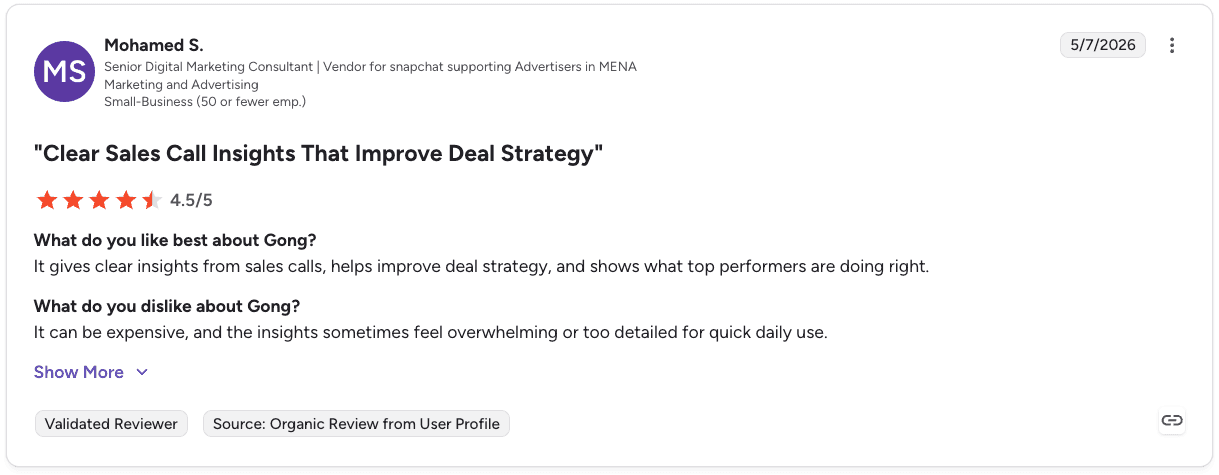
Pro: “It gives clear insights from sales calls, helps improve deal strategy, and shows what top performers are doing right.” — Mohamed S., G2
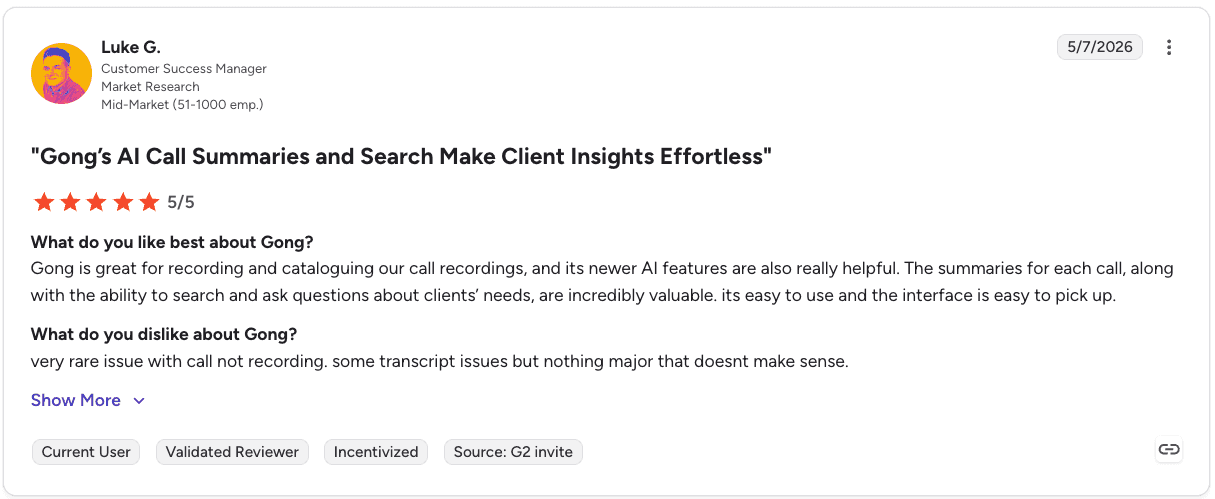
Con: “There are occasional issues with calls not recording and some minor transcript errors.” — Luke G., G2
Pricing
Gong uses custom enterprise pricing and doesn’t publish public rates. For a detailed breakdown, see our Gong pricing guide.
7. Cresta
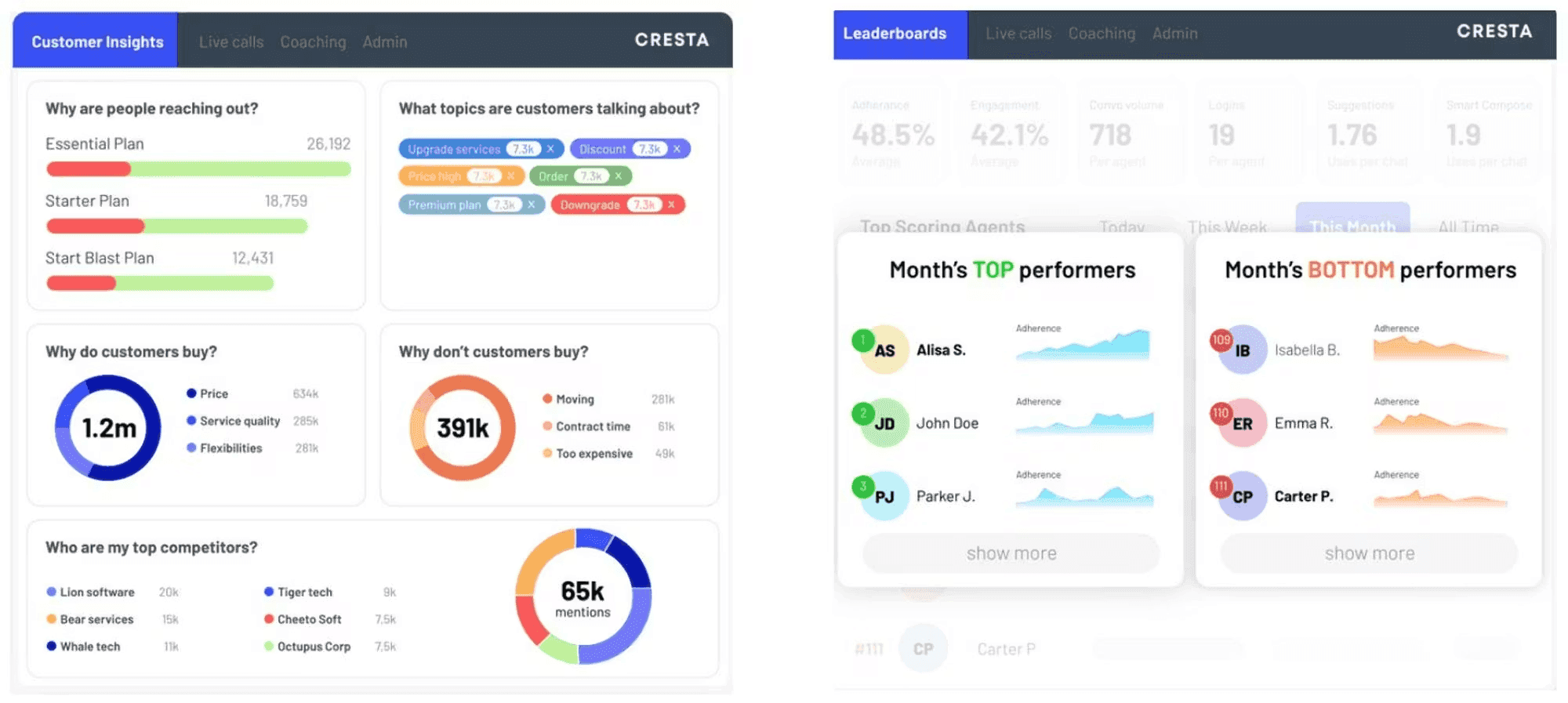
What it does: AI-powered contact center platform that provides real-time coaching, live agent assistance, and AI voice agents for sales and support teams.
Best for: Large contact centers that want live call guidance, AI automation, and coaching built directly into customer conversations.
Cresta is built for teams that want coaching during real customer conversations. The platform listens to live calls and surfaces real-time prompts while agents are actively selling or supporting customers.
It also includes AI voice agents for qualification and support workflows, making it a strong fit for large contact centers handling both sales and service. Over time, insights from past calls feed back into the system to improve future live guidance.
Key features
Real-time agent assist: Delivers live prompts and guidance during customer conversations.
AI voice agents: Automate support tasks and lead qualification workflows.
Post-call coaching insights: Uses completed conversations to improve future recommendations and coaching.
Sales and support workflows: Built for blended contact center environments.
Enterprise scalability: Designed for large operations with complex support and sales teams.
Pros and cons
✅ Pros | ❌ Cons |
Strong real-time coaching during live calls. | A hybrid sales-and-support focus may feel broad for sales-only teams. |
Includes AI voice agents alongside agent assist tools. | Enterprise rollout can require significant implementation time. |
Coaching insights improve guidance over time. | More operationally complex than lightweight coaching tools. |
What users say
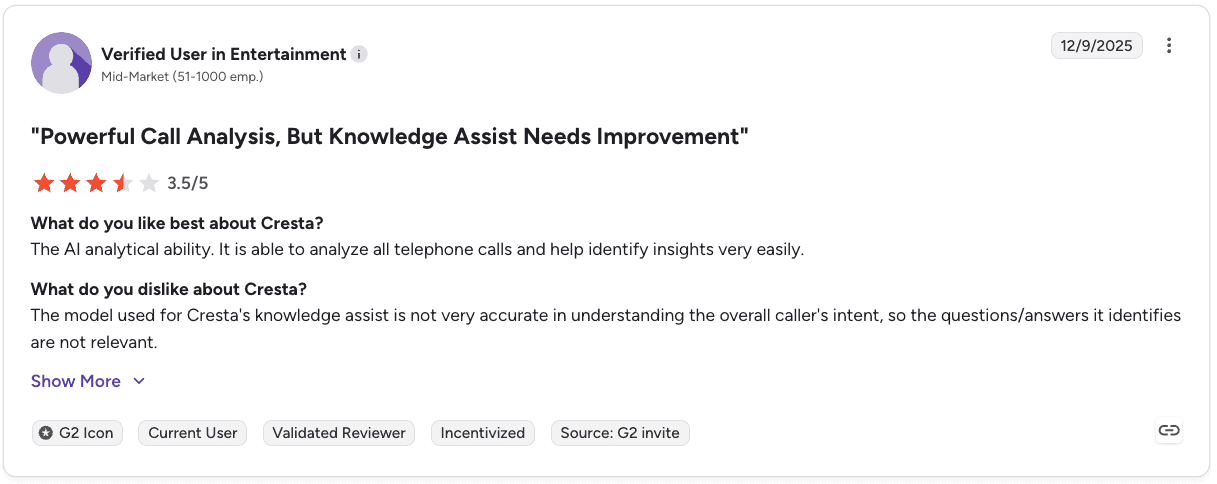
Pro: “The AI analytical ability helps identify insights from telephone calls very easily.” — Verified User in Entertainment, G2
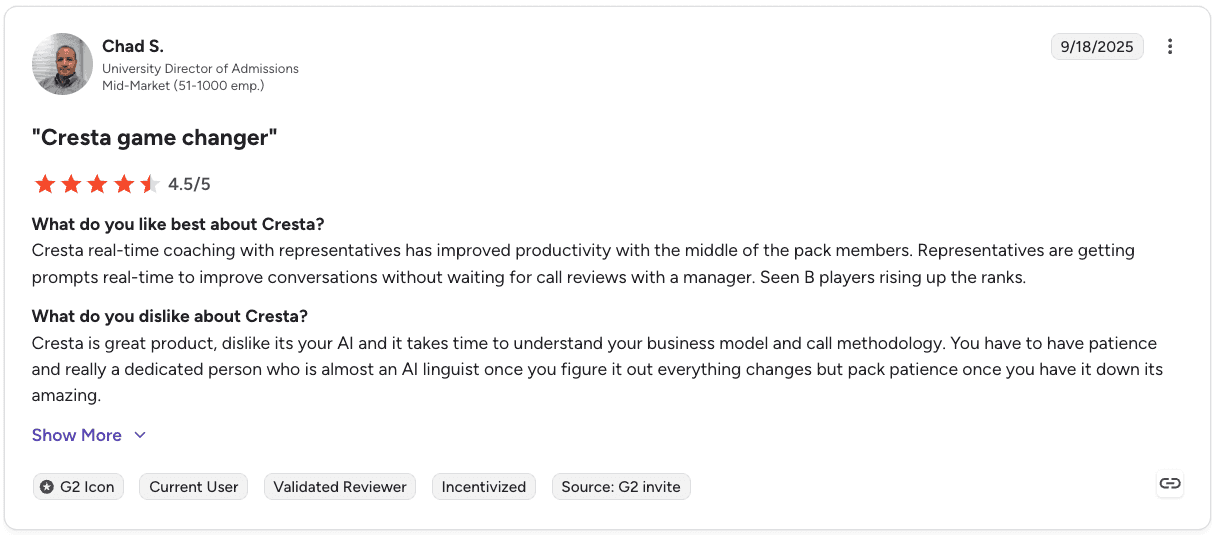
Con: “It takes time to understand your business model and call methodology.” — Chad S., G2
Pricing
Cresta uses custom enterprise pricing based on seat count and selected modules.
For a closer look at costs, platform capabilities, and implementation details, check out our full Cresta pricing and product guide.
8. Balto
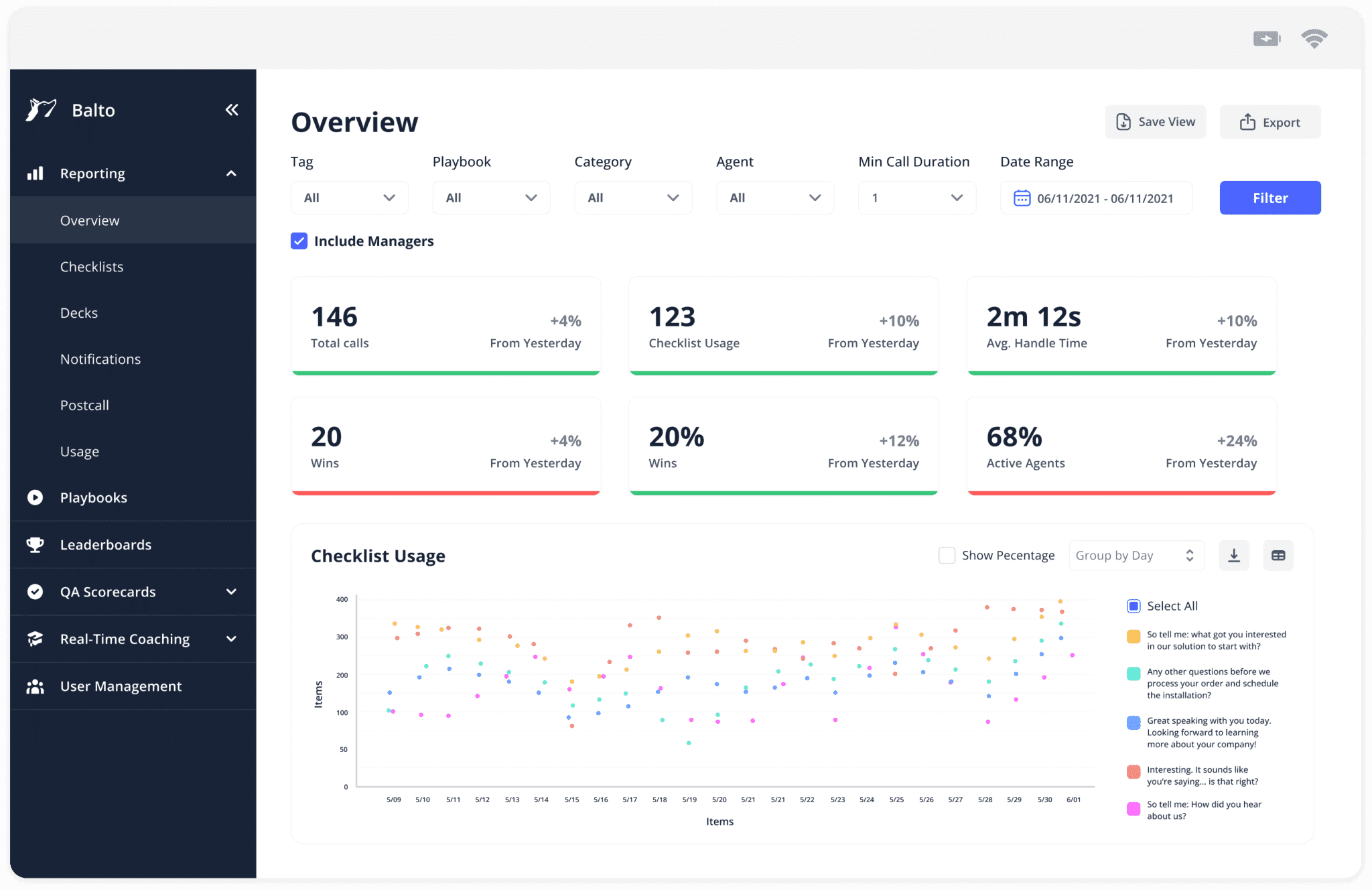
What it does: Real-time call guidance platform that helps agents stay compliant during live customer conversations through on-screen prompts and automated QA scoring.
Best for: Insurance, financial services, and other compliance-heavy sales teams that rely on structured scripts and accurate disclosure.
Balto is built for regulated sales environments where script accuracy and disclosures matter on every call. The platform listens to conversations in real time and surfaces live prompts to help agents stay compliant and on message.
Its biggest strength is reducing disclosure mistakes and script drift during high-volume sales calls, especially in insurance and financial services. Managers also get automated QA scoring for every interaction, reducing manual call reviews as teams scale.
Key features
Real-time on-screen prompts: Live guidance triggered by customer responses during calls.
Compliance checklists: Help agents deliver required disclosures consistently.
QA automation: Scores and reviews calls automatically across large teams.
Dialer and CCaaS integrations: Connects with platforms like Five9 and Genesys.
Script-adherence tracking: Identifies missed disclosures and deviations from the script.
Pros and cons
✅ Pros | ❌ Cons |
Strong real-time compliance guidance during live calls. | No public pricing. |
Well-suited for insurance and regulated sales environments. | More focused on script adherence than advanced coaching workflows. |
Reduces manual QA workload for managers. | Requires clear scripting and process structure to get full value. |
What users say
Pro: “Seeing which representative is being the most compliant on calls helps me hone my skills.” — Norman P., G2
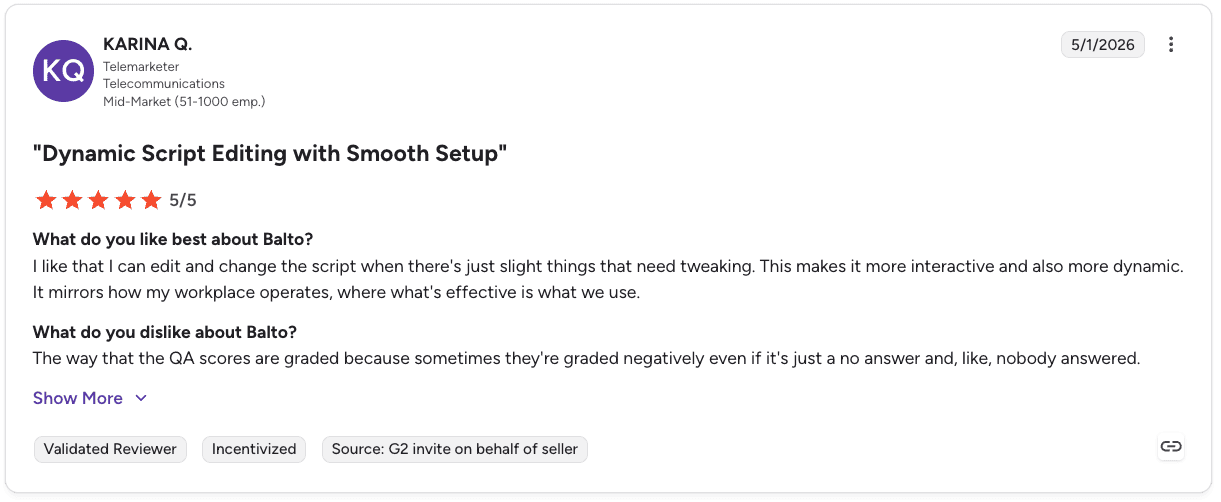
Con: “Sometimes QA scores are graded negatively even when there was simply no answer.” — Karina Q., G2
Pricing
Balto uses custom pricing based on team size and platform requirements. For a closer look at costs, features, and implementation details, check out our full Balto AI pricing guide.
Bottom line
Balto makes the most sense for teams operating in tightly scripted, compliance-heavy environments where missing disclosures can pose real risk. It’s a strong fit for insurance and financial services call centers that want live-agent guidance and automated QA within the same workflow.
If your priority is sales coaching, roleplay training, or deeper deal strategy insights, other platforms will offer more depth.
How to evaluate Second Nature AI alternatives
Before you make your decision, it helps to walk through a few practical questions.
These are the decisions that usually determine whether a platform ends up fitting your sales process or creating more complexity later on:
1. Are you fixing practice or performance?
Practice tools (Hyperbound, Quantified, Yoodli) help reps rehearse before live calls. Live-coaching tools (Cresta, Balto) help them perform during the call. The tool that fits depends on which side of that line your bottleneck sits.
2. How realistic do the AI buyers need to be?
For regulated verticals (pharma, life insurance, mortgage), generic personas don’t cut it. Quantified leans into industry-specific realism. Most others are general-purpose. Match the tool’s scenario depth to your actual sales motions.
3. Does it connect to your real call data?
Hyperbound and Mindtickle pull from imported call recordings. Cresta and Balto sit on top of live dialers like Five9 and Genesys. Tools that work in a vacuum cap how much they can change rep behavior on the actual floor.
4. What compliance does it actually monitor?
For Medicare brokers, life insurance, and mortgage call centers, generic SOC2 isn’t the right question. The right question is whether the tool monitors TPMO disclaimers, NAIC disclosures, TILA/RESPA phrasing, or whatever your reviewer audits against.
5. Can you budget without a sales call?
Yoodli publishes pricing, but most of the rest don’t. If you need to compare quotes across vendors before shortlisting, factor in the time cost of every demo.
6. Does the vertical fit your category?
Quantified is strongest in pharma, Allego in life sciences and medical devices, and Cresta in blended contact centers. Focus on platforms already serving teams like yours.
For a broader category context, our review of the sales coaching software landscape covers how live-coaching tools differ from generic enablement.
Add real-time coaching and QA to your training stack
Adding real-time coaching and QA to your training stack means reps get guidance during the call, and every conversation gets reviewed without adding to the manager's workload.
Most Second Nature AI competitors focus on practice before calls or review after. The problem is that neither helps when a rep is in the middle of a real conversation and unsure what to say next.
Alpharun solves that for high-volume B2C teams by guiding reps during live calls while giving managers full visibility across every conversation, since QA runs on 100% of calls automatically.
Here’s what that looks like in practice:
Real-time coaching: Prompts reps during live calls based on what they say.
Automated QA: Scores every call against your playbook and compliance rules.
Custom playbooks: Built from thousands of your team’s own calls, not generic scripts.
Fast setup: Onboarding in about a week with low overhead.
Dialer integrations: Works with Five9, Genesys, and other major platforms.
SOC 2 Type 2 compliance: Supports regulated Medicare and insurance environments.
This changes how teams improve because reps can adjust in the moment, while managers finally see what is happening across every call, rather than relying on a small sample.
You get both: Coaching that spreads your best reps’ behaviors across the team and AI agents that take care of repetitive tasks.
If your stack handles training before or after calls, Alpharun adds what’s missing during the call. Schedule a demo to see how it fits into your workflow.
Frequently asked questions
1. Does Second Nature AI offer a free trial?
Second Nature AI offers a free trial with no credit card required. You can run a simulation on their site before committing to a paid plan.
2. How much does Second Nature AI cost?
Second Nature AI uses custom enterprise pricing and doesn’t publish rates publicly. Pricing depends on factors like team size, onboarding scope, and training requirements, so you’ll need to contact sales for a quote.
3. What’s the difference between Second Nature AI and Alpharun?
Second Nature AI runs AI roleplay simulations for reps to practice before live calls. Alpharun grades and coaches real customer calls in production, then builds custom playbooks from your actual top performers’ calls.
4. Which Second Nature alternative is best for small teams?
Yoodli is one of the more accessible options for small teams and solo sellers. The platform offers a free starter tier with five roleplays included, while paid plans start at $8/month for Pro and $20/month for Advanced when billed annually.
5. Which Second Nature alternative is best for regulated industries?
For pre-call practice in regulated industries, Quantified stands out for realistic pharma and insurance simulations. For live calls, Balto focuses on real-time compliance prompts, while Alpharun adds compliance-aware coaching and playbooks built from real regulated sales conversations.

