Compare the 8 best call intelligence solutions for sales in 2026, ranked on merit with honest pricing, real G2 ratings, and who each tool fits.

Your reps made 400 calls this week. You listened to maybe three. Somewhere in the other 397 is the reason your best closer is beating quota and your new hire keeps stalling at the same moment, and you do not have the spare afternoons to go dig it out.
That is the job call intelligence software does for you: it records every sales call, transcribes it, scores it, and surfaces what's working so coaching stops being a guessing game. Here are the 8 best call intelligence solutions for sales teams in 2026, ranked on merit, with real prices wherever the vendors publish them.
What call intelligence software does
First, a quick translation. Call intelligence and conversational intelligence software are the same category, and vendors swap the terms freely, so don't let the labels trip you up.
A call intelligence solution records and transcribes your sales calls, then uses AI to score them, flag deal risk, track objections and competitor mentions, and surface coaching moments. Plain call recording software hands you the tape. Call intelligence tells you what happened on it and what to do next.
There's one distinction the category pages skate past, and it matters before you spend a dollar. Sales call intelligence (Gong, Avoma, Jiminny) is built around reps and deals: talk ratios, deal risk, coaching. Contact-center CX intelligence (CallMiner, Observe.AI) is built around support quality and compliance across millions of interactions. Teams buy the wrong one all the time, because the marketing reads identically.
How we evaluated these tools
We weighed each tool on what changes rep performance, then checked the receipts: official pricing pages, G2 and Capterra reviews, and product documentation.
What we looked at:
Coaching depth: how well it scores calls and turns them into feedback reps can use, the same job dedicated sales coaching software does
Real-time vs post-call: whether it guides reps live or after the call wraps
Integrations: CRM and dialer fit (Salesforce, HubSpot, Five9, Genesys)
Pricing transparency: what you can find out before you sit through a sales call
Honest fit: who the tool is built for, and who should skip it
8 best call intelligence solutions: Quick comparison
💻 Tool | 🎯 Best for | ⭐ Standout | 💰 Starting price | ⏱️ Real-time coaching |
|---|---|---|---|---|
Gong | Enterprise deal intelligence | Revenue + deal insights | Custom | Post-call |
Avoma | Affordable all-in-one CI | Live answer cards + scoring | $29/user/mo | Yes |
Jiminny | Coaching-first mid-market | CRM-synced coaching | Quote-based | Post-call |
Clari Copilot | CI tied to forecasting | Real-time cue cards | Custom | Yes |
CallMiner | Compliance-grade contact centers | 100% omnichannel analytics | Custom | Real-time alerts |
Fireflies.ai | Budget transcription and summaries | Free plan + AI search | Free; from $10/user/mo | Post-call |
Alpharun | High-volume, regulated sales | Playbook from top-rep calls | Custom (demo) | Post-call |
Observe.AI | Contact-center QA and CX | Agentic CX + live assist | Custom | Yes |
Prices marked "custom" or "quote-based" mean the vendor makes you talk to sales. We flag that honestly below; we don't pretend a number exists.
1. Gong: Best for enterprise deal intelligence and coaching
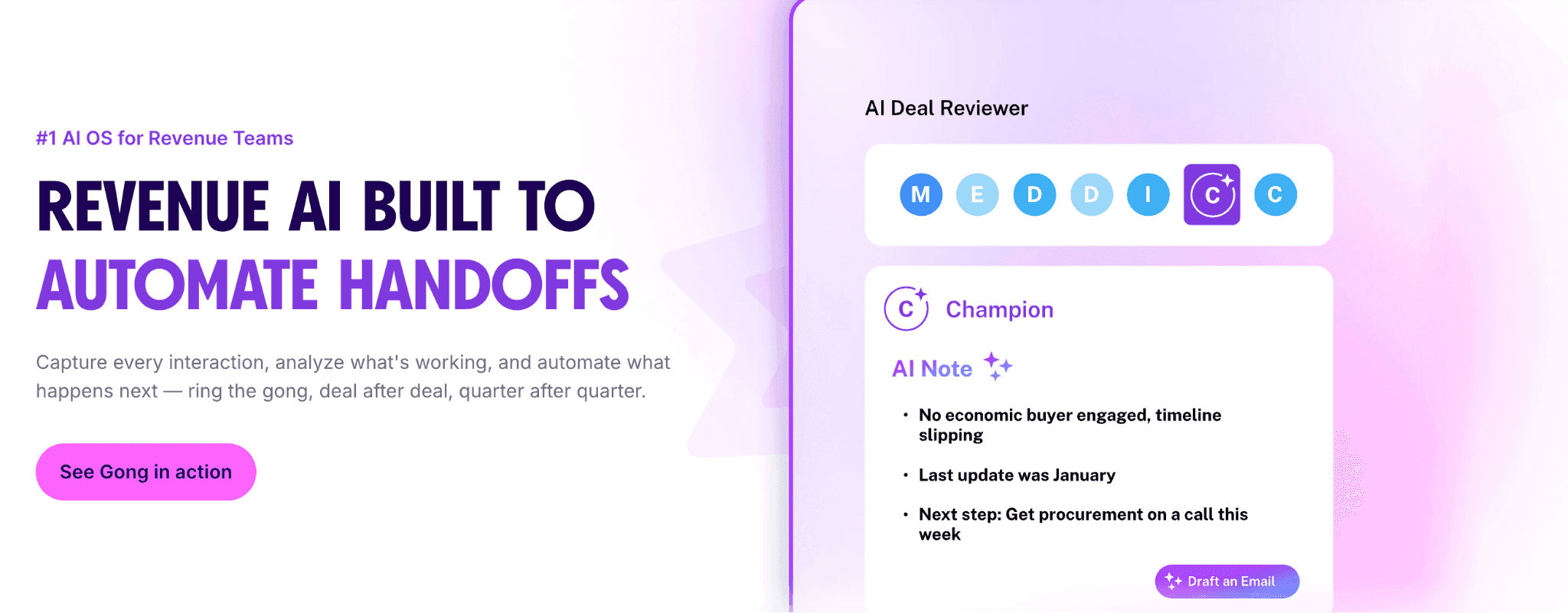
What it does: Gong records, transcribes, and analyzes sales calls across your team, then surfaces deal risk and coaching opportunities at scale.
Best for: Mid-market and enterprise revenue teams that want deep deal intelligence and coaching analytics, and have the budget to match.
Gong is the name most people picture when they hear "conversation intelligence," and the analytics live up to it. It scores calls automatically, tracks talk ratios and competitor mentions, and rolls everything into coaching dashboards that show managers where each rep is leaking deals.
The tradeoff is scope and price. Gong is built for whole revenue orgs, so a small team often pays for more platform than it can use.
Key features
AI call scoring: Auto-scores calls so managers skip manual review
Deal intelligence: Flags at-risk deals from conversation signals
Smart trackers: Surfaces objections, competitors, and key topics across calls
Pros and cons
✅ Pros | ❌ Cons |
|---|---|
Deepest deal and conversation analytics here | Enterprise pricing, opaque until you talk to sales |
Huge, mature review base and integrations | Overkill for small teams |
Strong coaching dashboards | No real-time in-call answer cards |
What users say
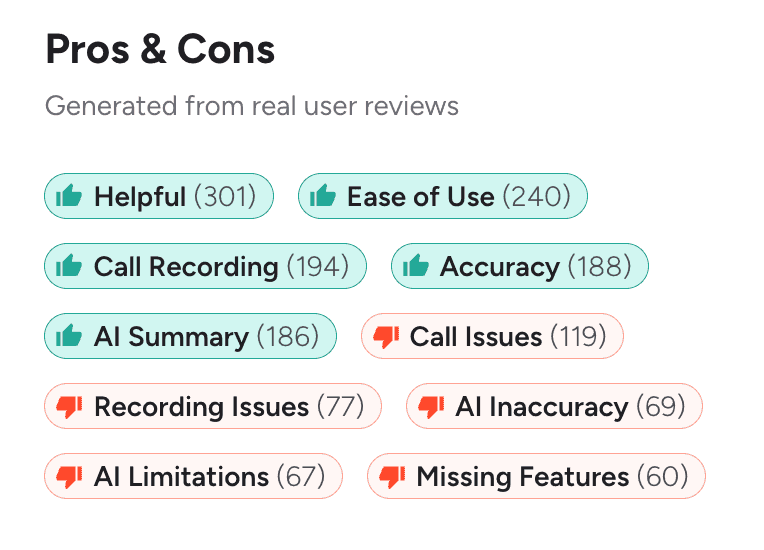
On G2, where Gong holds 4.7 out of 5 across more than 6,600 reviews, reviewers praise the AI call summaries and action items for saving review time. The most common complaint is cost, plus pricing you can't see without a sales call.
Pricing
Gong doesn't publish pricing. Expect a platform fee plus per-seat licensing, quoted on request.
Bottom line
If budget isn't the constraint and you want the deepest deal analytics available, Gong earns the top spot. Smaller teams will feel the price. If that price is the sticking point, we compared the top Gong alternatives in a separate guide.
2. Avoma: Best for affordable all-in-one call intelligence
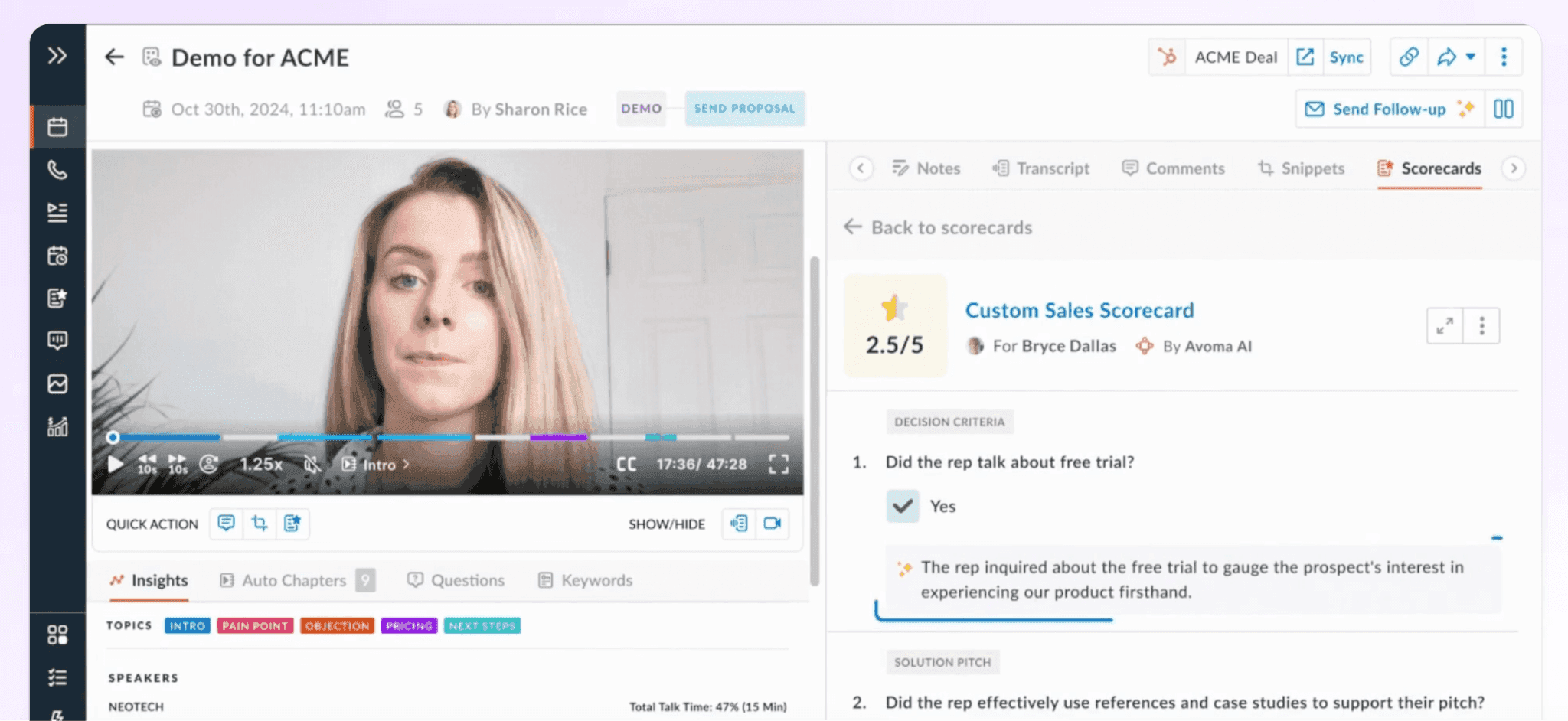
What it does: Avoma is an AI meeting assistant and conversation intelligence tool that records, transcribes, scores, and coaches across the whole sales-meeting lifecycle.
Best for: SMB and mid-market sales teams that want full-suite CI, including real-time cards, without enterprise pricing.
Avoma punches above its price. It surfaces live answer cards during calls, scores conversations against frameworks like MEDDIC, and tracks topics and talk patterns the way pricier tools do.
For a team graduating from plain recording to real coaching, it's the most approachable on-ramp here.
Key features
Live answer assistant: Real-time cards prompt reps mid-call
Customizable AI scorecards: Scores calls against your sales methodology
Smart trackers: Flags topics, objections, and next steps automatically
Pros and cons
✅ Pros | ❌ Cons |
|---|---|
Real-time coaching at a fraction of enterprise cost | Enterprise analytics less deep than Gong |
Accurate notes and summaries right after the call | Built for teams more than solo users |
Transparent, published pricing | Heavier setup to tune scorecards well |
What users say
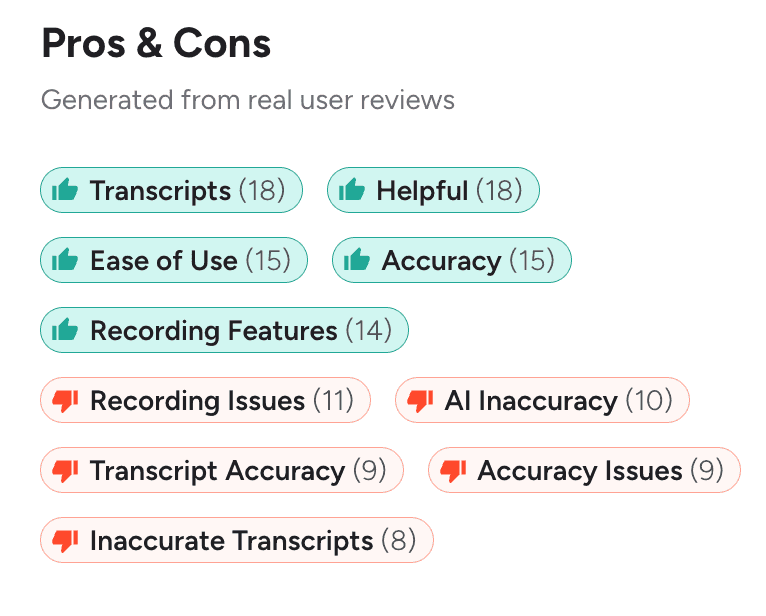
Avoma sits at 4.6 out of 5 on G2 across roughly 1,360 reviews. Reviewers love the accurate post-call notes and the price; the recurring note is that it shines for teams more than for solo users.
Pricing
The Conversation Intelligence tier starts at $29 per user per month billed annually, with a free 14-day trial.
Bottom line
The best value on the list. If you want real coaching features without an enterprise contract, start here.
3. Jiminny: Best for coaching-first mid-market teams
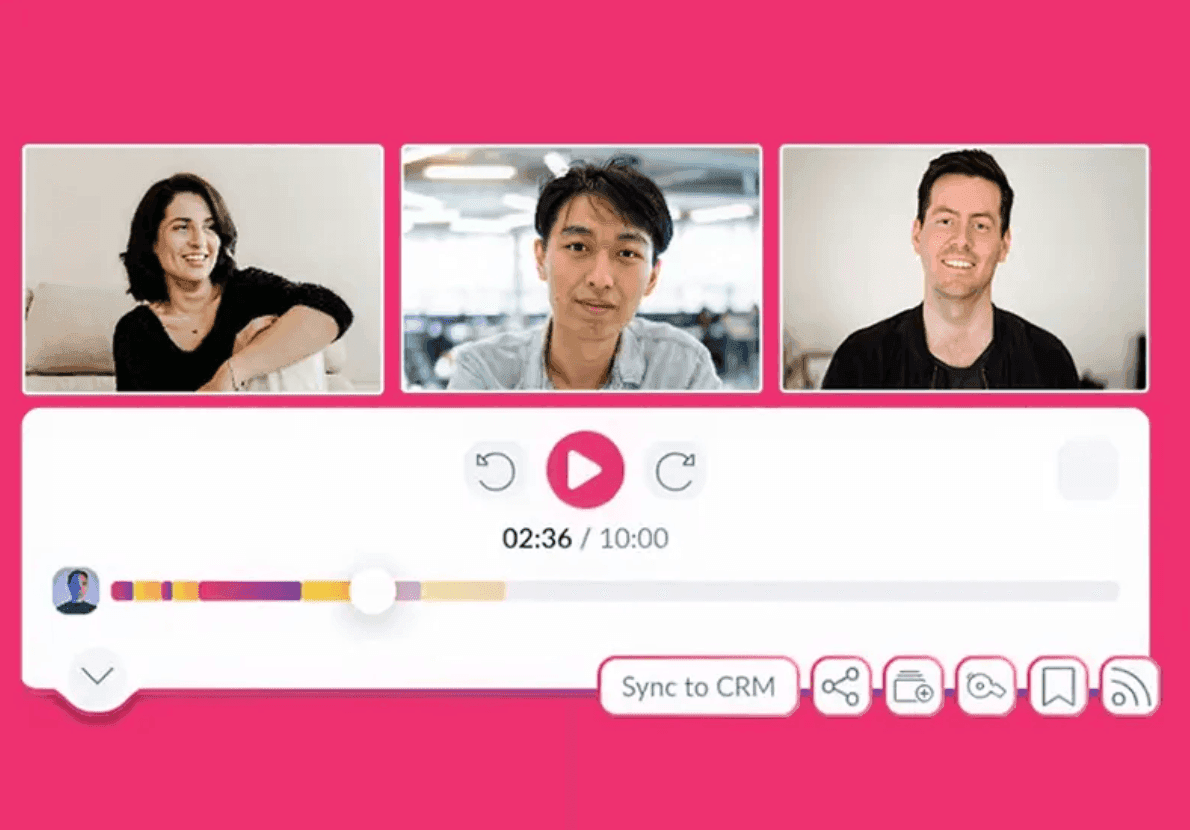
What it does: Jiminny records calls, surfaces deal risks, and tracks rep performance, then syncs the insights straight into your CRM.
Best for: Mid-market revenue teams that want strong coaching workflows and CRM-synced insights at a friendlier price than Gong.
Jiminny leans into coaching. It auto-logs calls and next steps to the CRM, flags deal risk, and answers questions across your calls with an AI search assistant, so managers spend less time hunting through recordings.
Key features
Call and deal summaries: Auto-logged to the CRM with next steps
Ask Jiminny: AI search across your call library
Deal-risk alerts: Surfaces deals going cold before they slip
Pros and cons
✅ Pros | ❌ Cons |
|---|---|
Easy coaching workflows on real call data | No real-time battle cards during calls |
CRM auto-logging saves admin time | Limited dashboard customization |
Responsive support | Starting price not published |
What users say
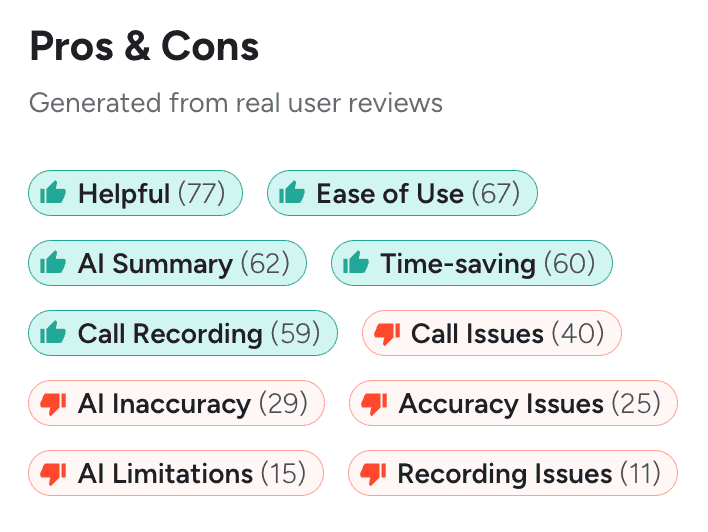
Jiminny holds 4.6 out of 5 on G2 across about 930 reviews. Reviewers like how quickly coaching workflows run on live call data and the searchable transcripts; the common gripe is the lack of live in-call guidance.
Pricing
Jiminny offers tiered plans with a 14-day free trial, but lists pricing on request and doesn't publish a starting number.
Bottom line
A coaching-first tool that doesn't carry Gong's price tag. Worth a demo for mid-market teams focused on rep development.
4. Clari Copilot: Best for call intelligence tied to forecasting
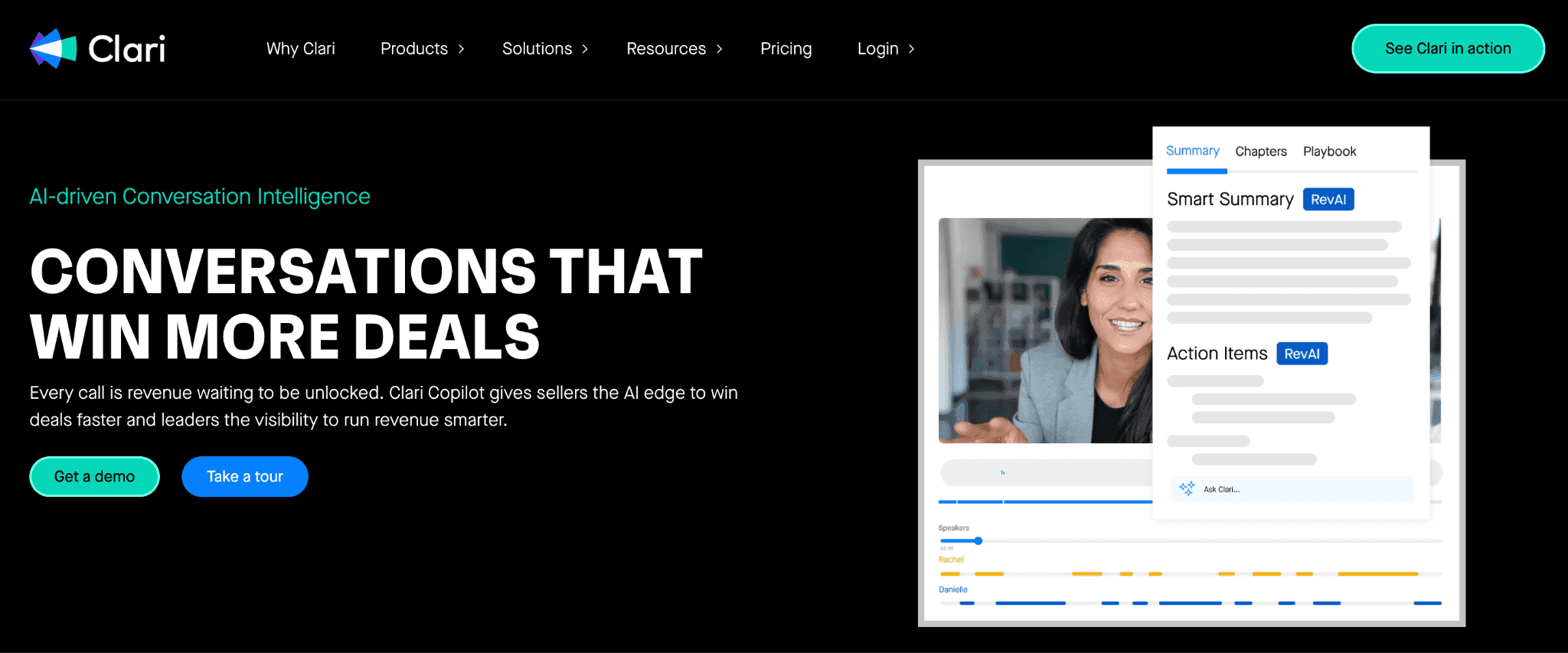
What it does: Clari Copilot (formerly Wingman) transcribes calls, scores reps against your methodology, tracks objections, and offers real-time cue cards, all inside the Clari revenue platform.
Best for: Revenue teams that want conversation intelligence connected to forecasting and RevOps, with live prompts for reps.
Copilot's strength is the link to Clari's forecasting. Live cue cards guide reps in the moment, custom scorecards grade against MEDDIC or SPICED, and smart trackers catch competitor and objection language.
Key features
Live answer cards: Real-time prompts during calls
Custom AI scorecards: Methodology-based rep scoring
Concept trackers: Flag objections, competitors, and risks
Pros and cons
✅ Pros | ❌ Cons |
|---|---|
Real-time prompts plus forecasting in one platform | Best value bundled with the broader Clari suite |
Customizable scorecards aligned to your process | Live prompts and scoring need configuration |
Strong talk-pattern analysis | Pricing not transparent |
What users say
Clari Copilot is reviewed as part of the broader Clari platform, which holds 4.6 out of 5 across more than 5,600 G2 reviews.
Reviewers highlight the forecasting and ease of use; the common critiques are a learning curve and limited customization.
That rating covers the whole Clari platform, so weigh it as a signal about Clari overall, not Copilot alone.

Pricing
Clari Copilot is quoted on request and usually sold alongside the Clari platform. Treat any third-party price you see as unconfirmed.
Bottom line
Compelling if you want CI and forecasting under one roof. Standalone, it's less of a slam dunk than Avoma.
5. CallMiner: Best for compliance-grade contact centers
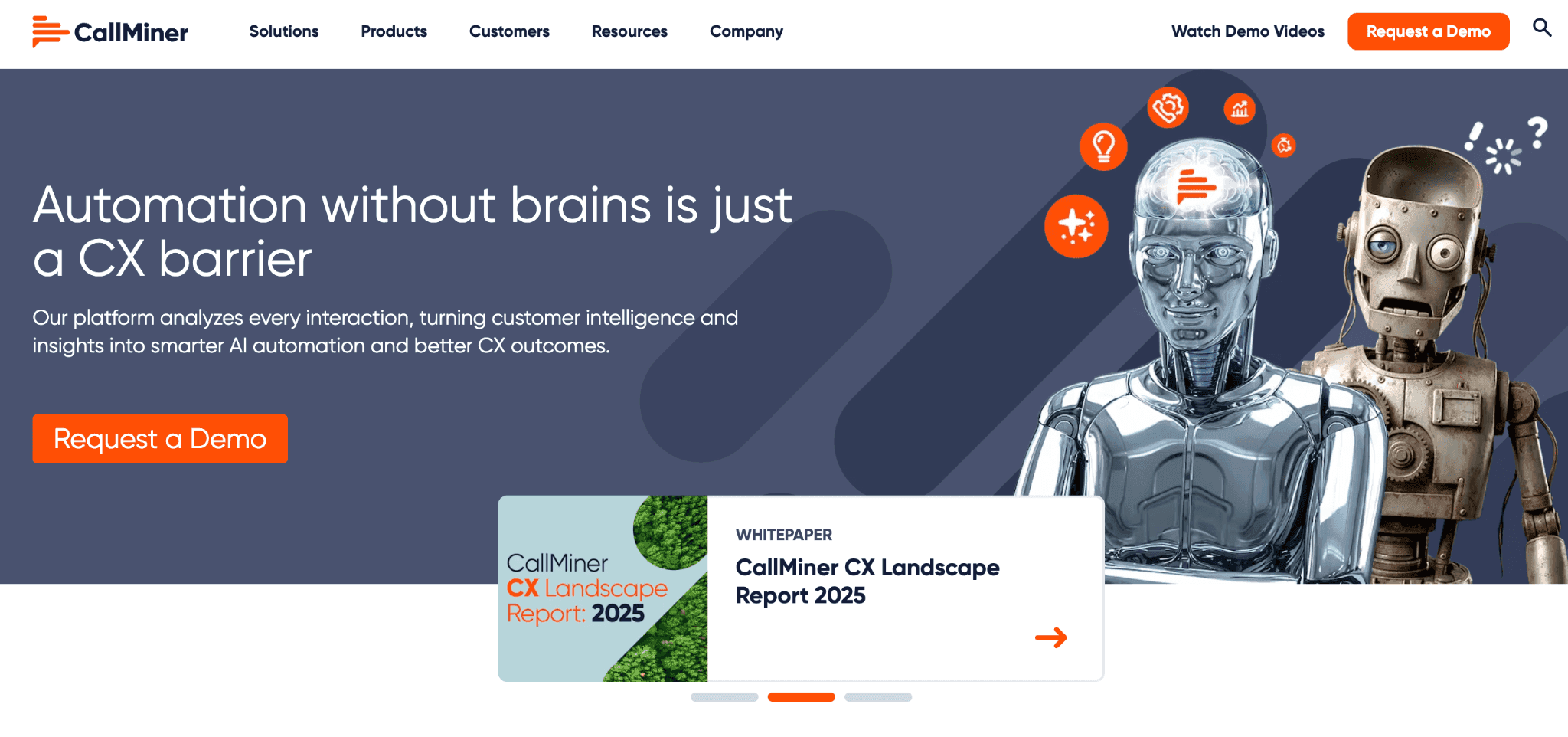
What it does: CallMiner Eureka captures, transcribes, and scores 100% of customer interactions across voice and text for analytics, QA, and compliance.
Best for: Large contact centers that need omnichannel, compliance-grade conversation analytics across support and sales.
CallMiner is built for scale and scrutiny. It analyzes every interaction, monitors for risky language in real time, redacts sensitive data, and powers performance coaching across thousands of agents.
It's a contact-center platform first, so a pure sales team usually finds it heavier than the job requires.
Key features
100% interaction analytics: Scores every call for full coverage
Real-time call monitoring software and alerts: Flags compliance risks live
PII redaction: Strips sensitive data automatically
Pros and cons
✅ Pros | ❌ Cons |
|---|---|
Compliance-grade analytics across all interactions | Steep learning curve and complex setup |
Omnichannel coverage (voice and text) | Needs analyst expertise to get value |
Strong track record in regulated industries | Heavier than a pure sales team needs |
What users say
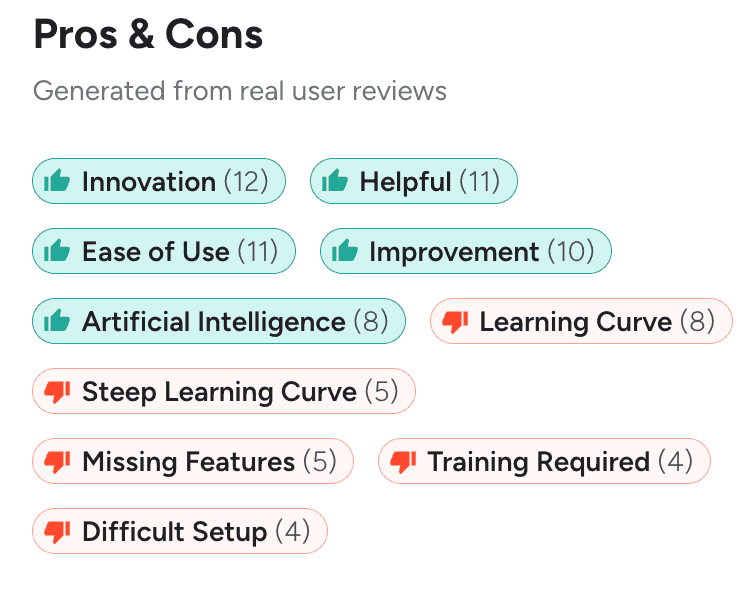
CallMiner Eureka holds 4.5 out of 5 across about 230 G2 reviews.
Reviewers credit the depth of the analytics and the AI; the recurring critique is a steep learning curve and a setup that needs analyst time to pay off.
Pricing
CallMiner is quote-based, sold either on an annual volume of analyzed hours or per seat. No public starting price.
Bottom line
The right call when compliance and QA across a big contact center drive the decision. For sales coaching alone, lighter tools fit better.
6. Fireflies.ai: Best for budget transcription and summaries
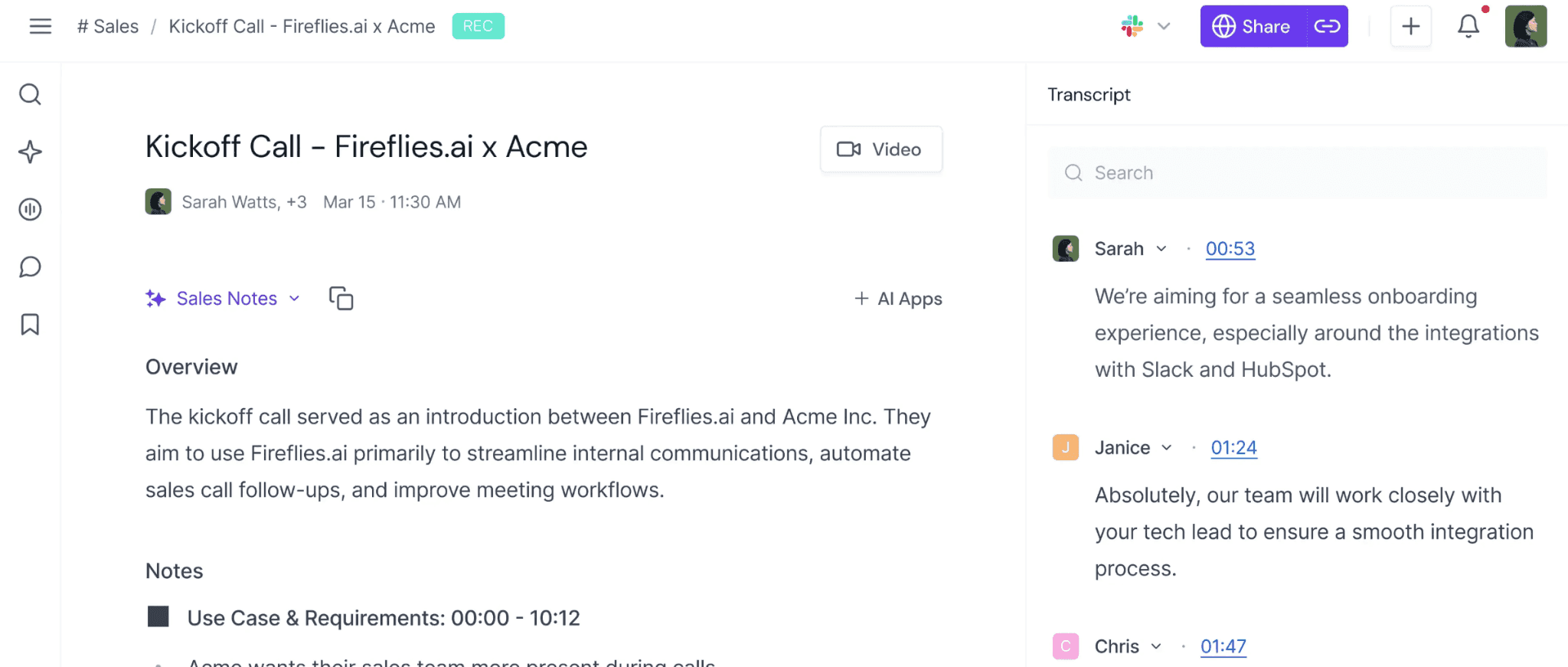
What it does: Fireflies records, transcribes, and summarizes calls and meetings, with conversation intelligence like topic trackers and talk-time analysis on its paid tiers.
Best for: Budget-conscious teams that mainly want accurate notes and searchable transcripts, with light conversation intelligence on top.
Fireflies is the most affordable way onto this list, and it starts free. It transcribes every call, writes an AI summary, and lets you search across your whole call history, so reps stop scribbling notes and managers can skim a deal in seconds.
The tradeoff is depth. It's a notetaker first, so the coaching and analytics run lighter than the dedicated sales-CI tools above.
Key features
AI summaries and transcription: Notes and action items right after the call
AI search: Ask questions across your entire call library
Conversation intelligence: Topic trackers and talk-time analysis on paid tiers
Pros and cons
✅ Pros | ❌ Cons |
|---|---|
Free plan and a low entry price | Notetaker first, so lighter coaching and analytics |
Accurate summaries and easy search | Transcript accuracy can slip on messy audio |
Fast to roll out across a team | Best CI features sit on the higher tiers |
What users say
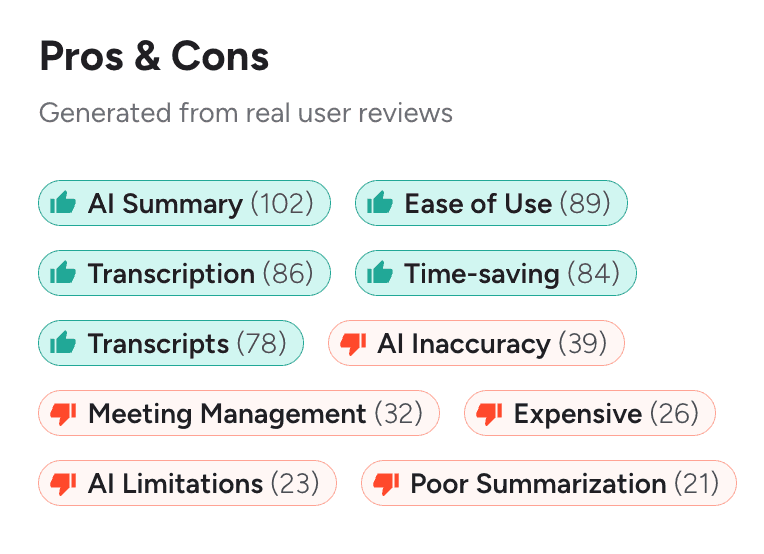
Fireflies holds 4.7 out of 5 on G2 across about 750 reviews. Reviewers praise the time saved by accurate AI summaries and the easy search; the common critiques are occasional transcript inaccuracy and that the stronger features sit on pricier plans.
Pricing
Fireflies offers a free plan, with paid tiers at $10 per user per month (Pro), $19 (Business), and $39 (Enterprise), billed annually.
Bottom line
If your priority is affordable, reliable notes with a bit of intelligence on top, Fireflies is the easiest yes. Teams that need real coaching depth will outgrow it.
7. Alpharun: Best for high-volume, compliance-heavy sales teams
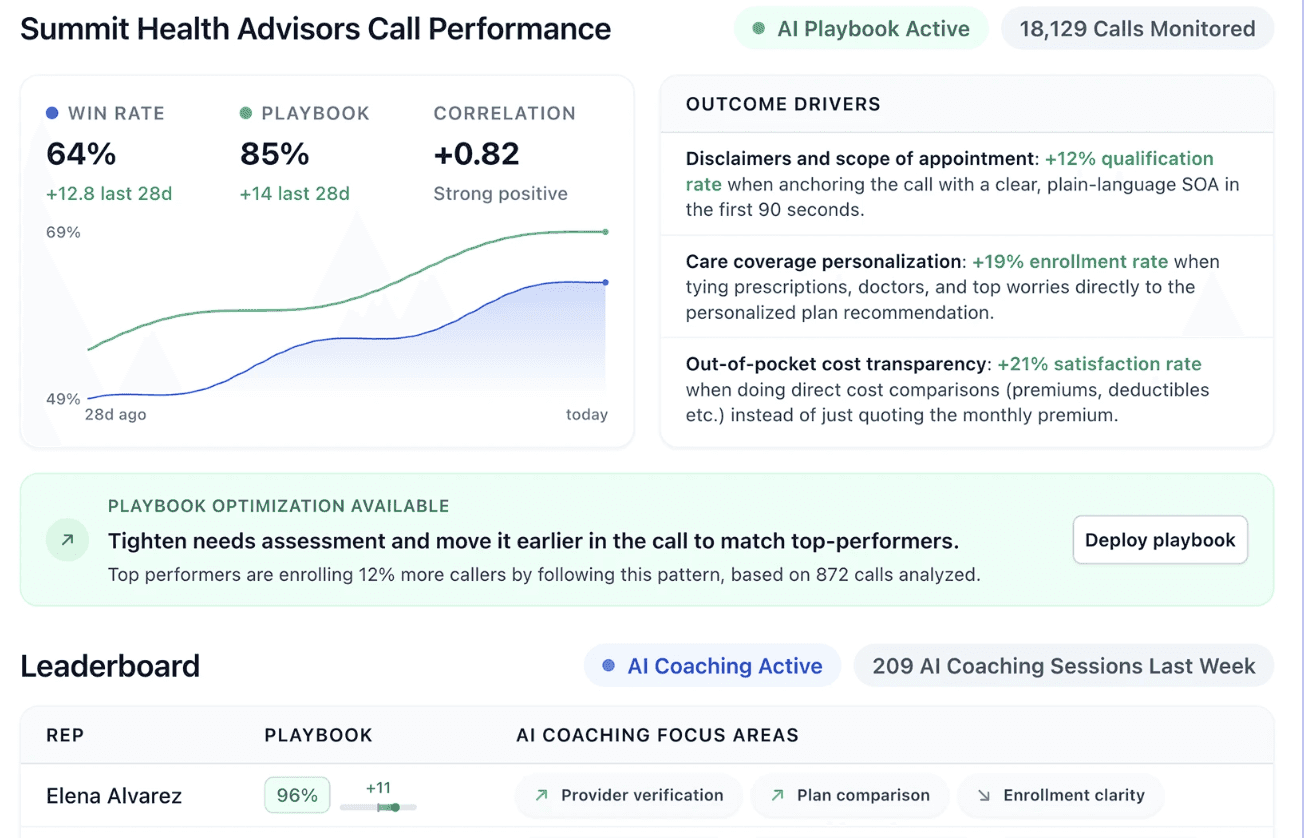
What it does: Alpharun analyzes sales calls, scores them against a playbook built from your own top reps, and coaches the rest of the team toward it, with compliance rules baked into the scoring.
Best for: High-volume inside-sales and call-center teams in regulated verticals like insurance, lending, and healthcare that need every rep following the same compliant playbook.
Alpharun takes a narrower swing than the generalists above. It studies your best reps' calls, turns the winning patterns into a playbook, and grades every rep against it, so the middle of the team starts sounding like the top.
For regulated sales floors, the compliance angle is the draw: scoring can check that required disclosures and qualification steps happened on every call, and AI voice agents can handle qualification and off-hours intake.
Key features
Playbook from your top reps: Builds the winning model from your real calls, so it reflects how your team sells
Per-rep AI coaching: Personalized feedback plus manager performance visibility
Compliance scoring: Checks that required disclosures and qualification steps happened on every call, for regulated industries like insurance and healthcare
Pros and cons
✅ Pros | ❌ Cons |
|---|---|
Purpose-built for high-volume, regulated sales | Newer entrant with a narrower focus than Gong or Avoma |
Compliance checks built into call scoring | No public pricing, and no G2 reviews yet |
Turns top-rep behavior into a team-wide playbook | Less of a fit for general B2B SaaS sales |
What users say
Customers describe coaching far more reps than before, with one saying the team can now coach several times as many people.
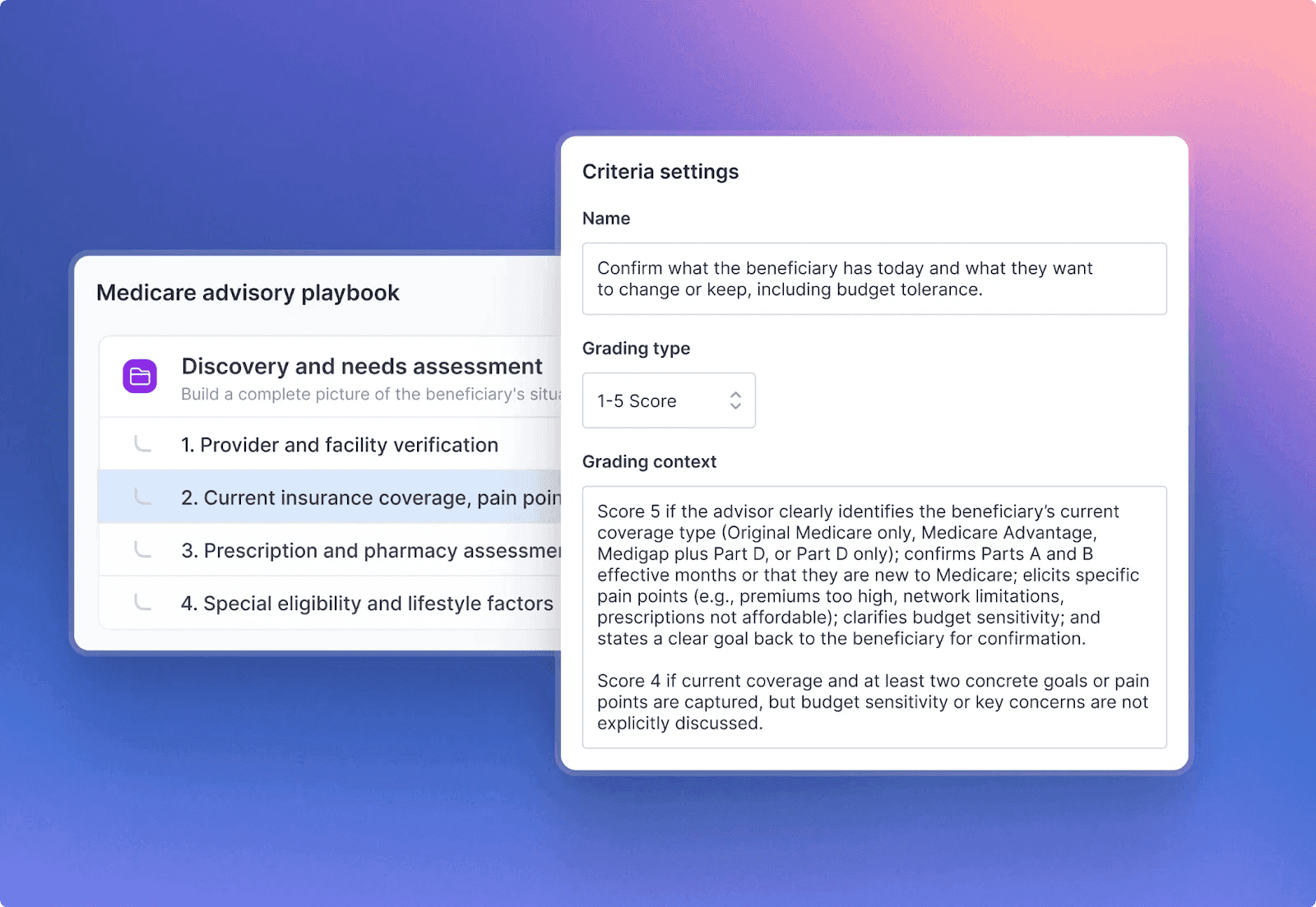
“Built a highly tailored solution that understands our niche… with custom call grading and workflows that match our exact process instead of generic best practices.” — Thomas Pruitt, Head of Advisory at Chapter
Pricing
Alpharun doesn't publish pricing. You book a demo to get a quote scoped to your team.
Bottom line
If you run a large, compliance-sensitive sales floor and want coaching that scales without adding managers, Alpharun is built for exactly that. A general sales team will likely find Gong or Avoma a broader fit.
8. Observe.AI: Best for contact-center QA and CX
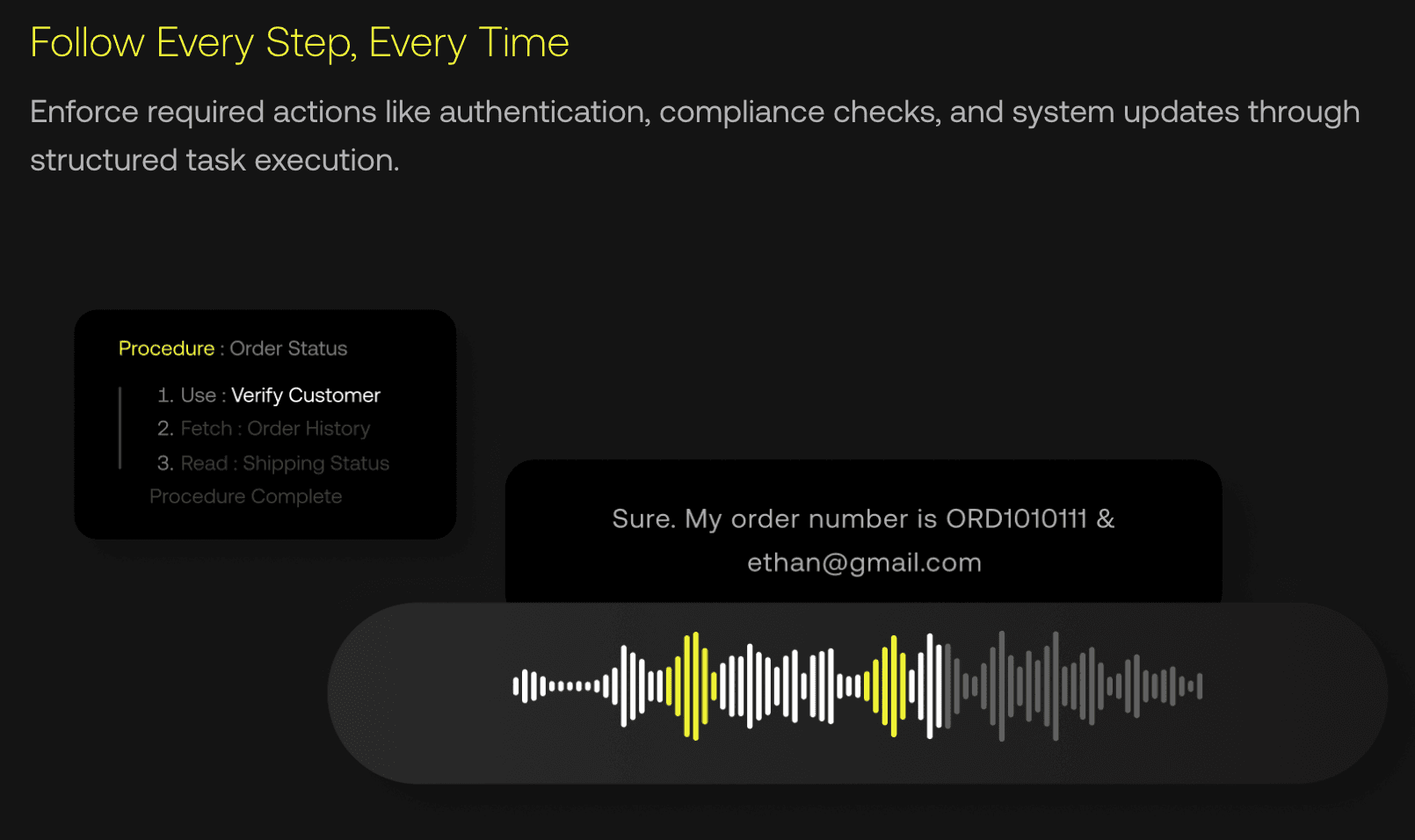
What it does: Observe.AI analyzes customer conversations at scale and layers in AI agents for support, with conversation intelligence and real-time assist as part of a broader contact-center AI platform.
Best for: Contact centers focused on customer experience, QA, and support quality more than pure sales coaching.
Observe.AI has shifted toward agentic CX: AI agents that handle customer interactions, plus QA and real-time assist for human agents. It scores interactions, guides agents live, and automates QA across large support operations.
For a sales-first team, it can feel oriented toward support workflows, so weigh it against the sales-native tools above.
Key features
Automated QA: Scores interactions against custom rubrics
Real-time agent assist: Live prompts during conversations
AI agents: Handle routine customer interactions end to end
Pros and cons
✅ Pros | ❌ Cons |
|---|---|
Strong QA and real-time assist at scale | Contact-center and CX first, less sales-native |
Highly rated, with G2 leader recognition | Quote-based pricing |
Agentic AI for support automation | Sales coaching depth depends on configuration |
What users say
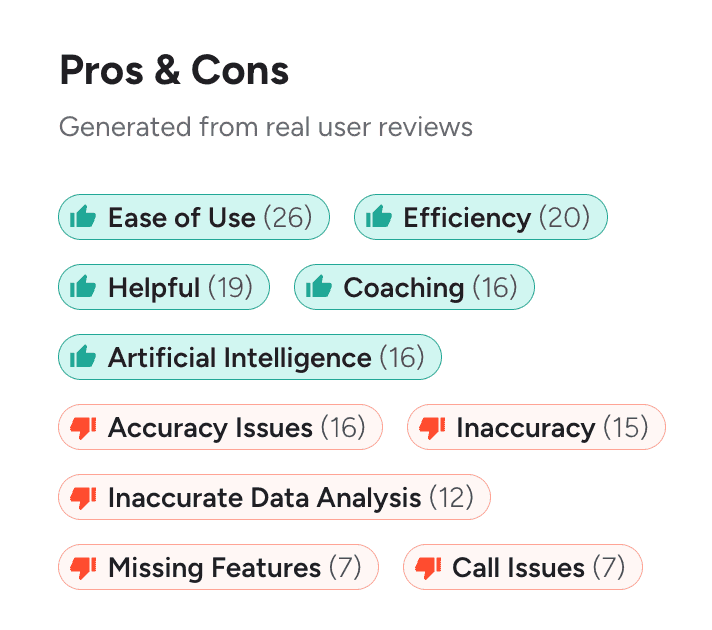
Observe.AI holds 4.6 out of 5 across about 230 G2 reviews.
Pro: "It breaks down calls into clear categories so I can quickly find team weaknesses and plan coaching... it saves me a lot of time and improves how I support my team." (Verified User in Consumer Services, G2)
Con: "The platform is powerful, but the setup is complex and requires careful management... hidden dependencies make it harder to fully understand its value." (Verified User in Health, Wellness and Fitness, G2)
Pricing
Observe.AI is quote-based and doesn't publish a starting price.
Bottom line
A solid pick if your priority is support QA and CX. For sales coaching specifically, the sales-native tools here will fit more cleanly.
Which call intelligence tool should you choose?
The right tool depends on what you're trying to fix and who you're fixing it for. Most teams don't need the biggest platform; they need the one that solves their current bottleneck.
Choose Gong if you:
Run a mid-market or enterprise revenue org with budget to match
Want the deepest deal and conversation analytics available
Choose Avoma if you:
Want real coaching features without an enterprise contract
Are an SMB or mid-market team that values transparent pricing
Choose Jiminny or Clari Copilot if you:
Want coaching-first CI (Jiminny) or CI tied to forecasting and RevOps (Clari)
Choose Fireflies if you:
Want affordable, reliable notes and transcripts to start, with light intelligence on top
Choose CallMiner or Observe.AI if you:
Lead a contact center where QA and compliance across support matter most
Choose Alpharun if you:
Run a high-volume, regulated sales floor and want top-rep calls turned into a playbook every rep follows
Skip a dedicated tool if you:
Have a handful of reps and low call volume, where basic recording is enough
So which call intelligence tool wins?
There's no single best call intelligence solution here. Gong wins on depth if you can afford it. Avoma wins on value. Jiminny and Clari win for coaching-first and forecasting-tied teams, Fireflies wins on price, and CallMiner and Observe.AI win for contact-center QA.
For high-volume sales teams in insurance, lending, or healthcare, picking a tool is the easy part. The hard part is getting hundreds of reps to run the same playbook on every call.
That's the specific problem Alpharun was built to solve. Book a demo to see how it turns your best reps' calls into the standard the whole floor hits.
Frequently asked questions
What is call intelligence software?
Call intelligence software records and transcribes sales calls, then uses AI to analyze them for coaching, deal risk, and compliance. It's the same category as conversation intelligence, and vendors use the two terms interchangeably.
How is call intelligence different from call recording?
Call recording captures the audio; call intelligence analyzes it. A call intelligence solution scores the conversation, flags objections and risks, and tells you what to coach, while recording alone just stores the file. For the wider view across voice, chat, and survey data, see cross-channel contact center analytics.
What features matter most for sales?
The features that matter most are call scoring, coaching workflows, CRM and dialer integrations, and whether the tool guides reps in real time or after the call. Match those to how your team works.
How much does call intelligence software cost?
Pricing ranges widely and many vendors quote on request. Fireflies starts free and runs $10 to $39 per user per month, Avoma's conversation intelligence starts at $29 per user per month, and enterprise tools like Gong and CallMiner are custom-quoted and typically cost considerably more.
What's the best call intelligence tool for a high-volume or compliance-heavy sales team?
For high-volume, regulated sales teams, a tool with built-in compliance scoring and playbook-based coaching fits best. Alpharun is built for that use case; CallMiner suits larger contact centers where omnichannel compliance is the priority.
Does call intelligence software integrate with my CRM?
Yes, the major call intelligence tools integrate with CRMs like Salesforce and HubSpot, and many connect to dialers like Five9 and Genesys so call data and coaching insights sync automatically.

